
Do bed bug bites itch?
Yes, bed bug bites usually itch, but the reaction depends entirely on how your immune system responds to the proteins left behind in your skin. On your very first exposure to bed bugs, you might experience zero reaction at all, and some individuals remain completely anergic with no itching whatsoever.
What is actually going on
You wake up on a Tuesday morning, scratch a raw red lump on your forearm, and immediately wonder if those hotel sheets were quite as clean as they looked. Yes, bed bug bites usually itch, but the real mystery is why your partner sleeping right next to you can wake up completely unmarked. The answer comes down to how your immune system reacts to the insect, not to any special immunity your partner possesses.
Bed bugs feed by piercing human skin with a needle-like beak to withdraw blood during a nocturnal meal. The bite itself is entirely painless because the insect injects saliva containing built-in anesthetics and anticoagulants right into your capillary. You sleep right through the feeding, waking hours later with no memory of the event.
The itching and visible welts develop later as an allergic reaction to those proteins left behind in your skin. On your very first exposure to bed bugs, you might experience zero reaction at all, or a delayed papule that takes days to appear. With repeated feedings over subsequent weeks, your immune system becomes sensitized, shortening that latency period down to a few hours or even triggering a sudden wheal-and-flare response within minutes.
Population studies show that a notable percentage of bitten individuals remain completely anergic, meaning they show no visible marks, redness, or itching whatsoever despite being fed upon repeatedly. This lack of reaction is even more common among older adults. So when two people share an infested mattress, a non-reacting partner is usually just quietly hosting bugs without showing the physical evidence.
Trying to diagnose a pest based on a red mark or a photograph of a skin lesion is usually a fool's errand. Fleas, mosquitoes, mites, scabies, and simple contact allergies can all produce identical red bumps that drive you crazy with itching. Instead of guessing from the symptoms on your skin, you need to hunt for physical evidence of the bugs themselves within an 8-foot radius of where you sleep.
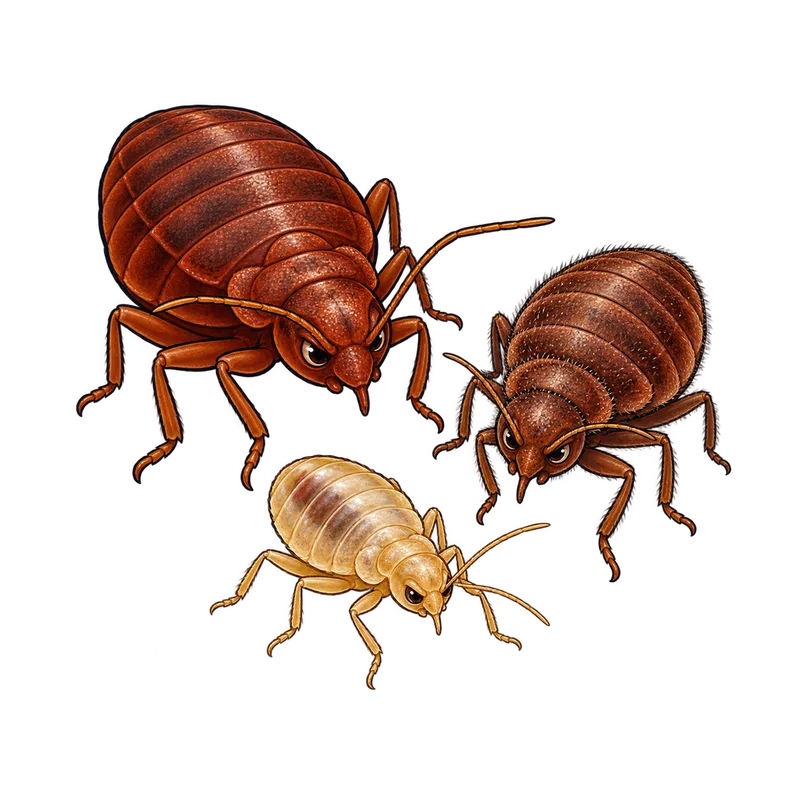
Unfed adult bed bugs usually measure a few millimeters in length, which is roughly the size of an apple seed, and sport a mahogany brown color. Newly hatched nymphs start out as tiny, clear or tan insects resembling a stray poppy seed. Because their bodies are exceptionally flat, they can squeeze into paper-thin cracks along mattress piping, wooden bed frame joints, and baseboard gaps.
You can also look for dark brown or black fecal spots left behind on mattress seams and box spring folds. A reliable field test involves touching one of those dark specks with a damp paper towel. Because the spots consist of digested blood, bed bug excrement will dissolve and smear dark red, which separates it from other household debris.
If you find small crawling bugs that you suspect might be bed bugs, you can capture them by pressing a piece of clear adhesive tape over the insect and sticking it to a white sheet of paper for an expert to inspect. If you live in an older home with a fireplace or an attic, keep in mind that bat bugs can occasionally migrate into living areas when their primary animal hosts leave. Differentiating bat bugs from true bed bugs requires specialized magnification to check the microscopic fringe hairs on the insect behind its head, so confirming the exact pest usually calls for professional eyes.
How to tell for sure
Once you spot physical evidence of bed bugs or start waking up with clusters of itchy bites, your most practical next decision is to stop guessing at home remedies and decide whether to call a licensed structural pest management professional. Over-the-counter bug bombs and random sprays usually fail because they only scatter the insects deeper into wall voids and furniture joints, turning a localized issue into a whole-house headache.
If you confirm an active infestation, especially in an apartment building or shared multi-family housing where bugs can travel easily through utility lines and wall penetrations, bringing in a professional is generally the safest route. While you wait for help to arrive, you can manage the physical discomfort by washing your infested bedding and clothes in hot water and running them through a dryer on high heat for at least 30 minutes, since sustained high temperatures kill all life stages, including eggs.
For the bites themselves, resist the urge to scratch no matter how intense the itching gets. Breaking the skin barrier with your fingernails invites secondary bacterial infections from your skin flora, which can turn a simple allergic reaction into a painful open sore requiring medical treatment. Apply cool compresses or over-the-counter anti-itch creams to calm the local inflammation while you sort out the structural problem.
What usually comes next
You should seek immediate medical evaluation from a physician or urgent care clinic if you develop signs of a severe systemic allergic reaction, such as difficulty breathing, wheezing, dizziness, swelling of the lips or face, or a rapidly spreading rash. While true anaphylaxis from bed bug bites is rare, certain regional look-alikes like kissing bugs found in the southern and western United States can trigger severe allergic responses requiring emergency medical care.
Consult a clinician if your bite sites show clear signs of a secondary bacterial infection, such as increasing pain, spreading redness, warmth, pus, or foul-smelling drainage caused by aggressive scratching. In regions like the United Kingdom, infected insect bites frequently require a formal general practitioner evaluation and a prescription for oral antibiotics to clear up the bacterial invasion.
You should also reach out to a professional pest control company whenever you confirm physical evidence of live bugs, shed skins, or eggs around your sleeping areas, or if you live in a shared rental building where management or landlords must coordinate building-wide treatments. If your inspection points to bat bugs or bird bugs instead of standard bed bugs, an experienced pest professional will need to handle both the insect removal and the necessary wildlife exclusion work to seal off attics or chimneys where the original animal hosts were nesting.
When to get help
Dealing with bed bugs often brings up questions about whether you can handle the problem yourself or if an expert is required. If you find yourself staring at physical specimens or waking up with recurring bites, the safest path is to contact a licensed pest control professional. DIY treatments rarely solve the underlying nesting sites and often worsen the infestation by scattering the insects.
Similarly, when skin reactions become severe, infected, or show signs of systemic allergy, consulting a healthcare clinician is necessary. Never try to diagnose an infestation based on a skin mark alone. Only the presence of physical insects, cast skins, or fecal spots provides the confirmation needed to take the correct next steps.