
Bed bug bites vs flea bites: how can you tell?
Skin marks alone cannot tell you whether a bite came from a bed bug or a flea because human immune systems react differently to insect proteins. Instead, you can identify the culprit by where the bites appear on your body, as flea bites concentrate on lower extremities while bed bugs target exposed upper skin.
What is actually going on
You wake up on a Tuesday morning, reach over to turn off your alarm, and immediately start scratching a burning red bump on your ankle. By noon, you notice two more itchy spots on your arm. You pull up your sleeve, compare the marks in the bathroom mirror, and pull out your phone to search for pictures online. Before you spend the next three hours zooming in on blurry photos of insect bites, let us clear up the central mystery right now: skin marks alone cannot tell you whether you were bitten by a bed bug or a flea.
A doctor cannot tell you either just by looking at your skin. When a biting insect pierces your skin, it injects salivary proteins to keep your blood flowing while it feeds. Your immune system reacts to those foreign proteins by releasing histamines, which cause local swelling, redness, and itching. Because every human immune system reacts differently to those proteins, a flea bite on one person can look identical to a bed bug bite on someone else.
Timing makes skin diagnosis even more confusing. On your very first exposure to bed bug bites, your immune system can take up to two weeks to develop a visible skin reaction. The welt you start scratching on Friday might have come from a bug that fed on you a week ago during a hotel stay. Once your body becomes sensitized through repeated exposures, future reactions can happen almost instantaneously. Because skin reactions are unpredictable, definitive identification requires finding physical bugs, shed skins, or diagnostic environmental evidence in your living space.
While the marks on your skin will not give you a definitive answer, the physical evidence in your home will. You can start by looking at where the bites are concentrated on your body and matching that against how these two pests move and hunt.
Fleas are built for vertical jumping. Because they usually jump from floor level, carpet fibers, or pet bedding onto a human host, flea bites concentrate heavily on your lower extremities, including your ankles, feet, tops of your toes, and shins. They also like to feed in areas where clothing constricts tight against the skin, such as beneath sock bands or elastic waistbands.
Bed bugs cannot fly or jump. They move strictly by crawling across surfaces. Because they hide in furniture and emerge while you are asleep, bed bugs usually target exposed upper-body skin that comes into contact with sheets and pillows, such as your face, neck, shoulders, arms, hands, and upper back. They frequently feed multiple times in a single night, leaving bites arranged in linear tracks or tight clusters.
How to tell for sure
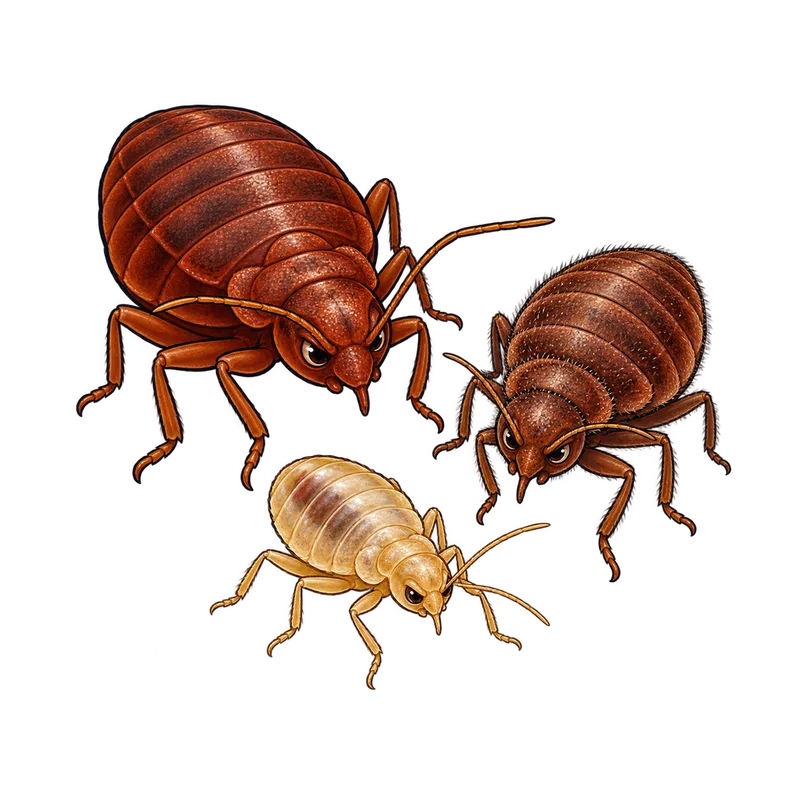
The physical pests look entirely different under close inspection. A bed bug is flat from top to bottom like a credit card, measuring up to 7 millimeters long and carrying a mahogany brown color that looks remarkably like an apple seed. Its ultra-flat profile allows it to slide behind baseboards, mattress tags, and frame joints. A flea is compressed from side to side like a coin standing on its edge. Measuring less than 4 millimeters, its narrow reddish-brown body allows it to glide effortlessly through animal fur or thick carpet fibers.
You can also run two simple diagnostic water tests using the mess these pests leave behind. Bed bugs digest blood and excrete tarry dark spots around their hiding places. Take a damp white cotton swab and gently dab suspect dark dots on your mattress piping or bed frame. If the spot dissolves and smears red like wet ink, it is rehydrated blood excrement from a bed bug. Fleas excrete partially digested host blood known as flea dirt, which drops off pet fur into rugs. Scrape dark specks off a sleeping pad onto a wetted white paper towel. Within a few seconds, true flea dirt will dissolve into distinct red liquid rings as the blood rehydrates.
Be aware that look-alikes do exist. Bat bugs look virtually identical to common bed bugs to the naked eye. Differentiating a bed bug from a bat bug requires magnification to examine the fringe hairs on the edge of the thoracic shield right behind the insect head. If you have bats roosting in your attic or chimney, bat bugs can easily wander down into living areas.
What usually comes next
When you finally spot signs of an infestation, your first move should be a thorough check and physical containment instead of rushing out to buy random chemicals. It helps to clear up a few common myths right away. Total release foggers, also known as bug bombs, do not work against bed bugs because the mist fails to reach deep into the cracks where the bugs hide. To make matters worse, those harsh chemical sprays often cause bed bugs to scatter even deeper into wall voids and spread across the rest of the house. Spreading boric acid dust around your bed frame will not help either, because bed bugs only drink blood through piercing mouthparts and will never eat the powder.
Instead of guessing, put together a basic inspection kit with a bright flashlight, a small magnifying glass, and an old plastic card to slide into tight seams. Start your search right around the bed, since that is where most bugs prefer to set up camp. Pull off the sheets and check every inch of the mattress piping, tufts, and label tags. Unscrew your headboard from the wall and look inside the screw holes. From there, expand your search outward to nightstands, armchairs, baseboards, and electrical outlets sitting within 8 feet of the bed.
Once you find concrete evidence of bed bugs or fleas, take immediate, practical steps to knock down the population. Strip all your bedding and clothes, seal them in plastic bags, and run them through a hot wash and a high-heat dryer cycle. High heat kills every stage of a bed bug life cycle, including their tough little eggs. Slip certified zippered covers over your mattress and box spring to lock any surviving bugs inside and cut off their favorite hiding spots. Pull your bed frame away from the walls and make sure no blankets drag on the floor. Slide plastic interceptor dishes under every leg of the bed frame to trap crawling bugs and keep track of your numbers.
When to get help
Most insect bites just itch for a few days and then go away on their own, but certain situations call for professional medical care right away. Get emergency help immediately if you notice signs of a severe allergic reaction or anaphylaxis, such as spreading hives, swollen facial features, trouble breathing, wheezing, dizziness, or a racing pulse. You should also check in with a doctor if scratching breaks your skin and leads to a secondary bacterial infection. Redness spreading outward from a bite, skin that feels very hot, oozing pus, or throbbing pain are all signs of an infection that needs prescription treatment. If you ever run into trouble or worry about chemical exposure from pest products, call Poison Help at 1-800-222-1222.
If your search points to fleas and you have pets at home, set up a visit with your veterinarian. Pets dealing with a heavy flea infestation can develop allergic skin reactions, lose their fur, or even pick up tapeworms. Your vet can provide safe, effective parasite treatments. Never put human bug spray containing DEET on dogs or cats, because DEET is poisonous to household pets.
Dealing with pests on a property often calls for a licensed pest control professional. Spraying chemicals in residential buildings is strictly regulated, and pros have the specialized gear needed to get the job right. Hiring a professional is basically required if you live in an apartment building or multi-family housing. Bed bugs easily slip through shared walls and hallways, so treating just one apartment usually fails because the bugs simply retreat to the neighbors, meaning you generally have to inspect all the units touching the infested space. Finally, if your mystery bug turns out to be bat bugs or bird mites, call in a licensed wildlife removal expert. Bats and many birds are protected by federal laws, so you need legal exclusion methods to safely remove the animals and treat the parasites they left behind.