
Can bed bug eggs be found on sheets?
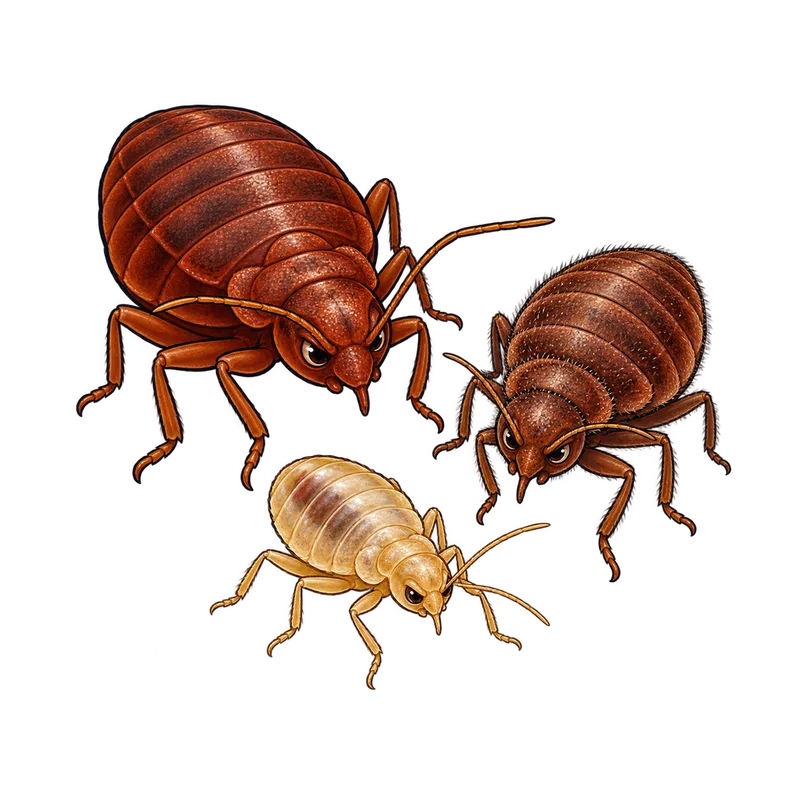
Yes, bed bug eggs can be found on sheets. Female bed bugs glue each pearl-white egg, which is about 1 millimeter long, directly to fabric folds like stitched hems and fitted corners. Finding them on bedding usually happens when an infestation has grown and preferred hiding spots on the mattress or frame are full.
What is actually going on
Picture yourself stripping the bed on a Sunday morning. You pull the fitted sheet off the corner, and there, tucked into the stitched edge, is a tiny white speck the size of a pinhead. It doesn't brush away. It looks glued on. And now you're standing in your bedroom wondering if you've just found the thing you most didn't want to find.
So, straight answer: yes, bed bug eggs can be found on sheets. Female bed bugs don't lay their eggs loose like scattered seeds. Each egg is cemented to whatever surface it's laid on with a sticky protein glue from the female's body, and that surface can absolutely be your bedsheet, your pillowcase or your blanket. That said, there's a catch worth knowing: sheets are not their first choice. Bed bugs are creatures that like to be squeezed. They prefer tight, dark cracks where their backs and bellies touch something at the same time, which is why the classic hiding spots are mattress piping, box spring joints, screw holes in wooden frames and the seams of headboards.
On a sheet, the eggs follow the same logic. You won't usually find them sitting in the middle of a flat, open surface that gets light, friction and a weekly wash. You find them where the fabric creates a little protected pocket: along the stitched hem, inside the elasticized corner of a fitted sheet, under a care tag, or where the sheet stays tucked tightly between the mattress and the frame. A fitted sheet with its deep folded corners is far more inviting to a bed bug than a flat top sheet, for exactly the same reason a crowded elevator suits them better than an empty parking lot.
One more thing changes the picture: how bad the infestation is. In a light, early infestation, eggs are almost always concentrated in those rigid hiding spots on the mattress and frame, and the sheets stay clean. When the population grows and the good hiding places fill up, females start spreading out and gluing eggs onto bedding, headboards and nearby furniture. Finding eggs on your sheets, in other words, usually means the problem has been going on longer than you'd like. Not the cheeriest news, but better to know it now.
How to tell for sure
A bed bug egg is about 1 mm long, roughly the size of a pinhead or a grain of coarse salt. It's pearl-white or cream, slightly elongated and oval, and here's the detail that matters most: it doesn't move when you touch it. That white speck of lint, the flake of dry skin, the bit of dandruff on the sheet? All of those brush away or roll around. An egg is glued to the fibers of the fabric, so it stays put when you run a finger over it. If it flicks away easily, it was never an egg.
There's also a timing clue that sounds like trivia but is genuinely useful. A viable egg kept at room temperature develops two small red eye-spots inside its translucent shell after roughly five days, as the embryo grows. So a white egg with two tiny red dots is very much alive and close to hatching. Eggs usually hatch in about 6 to 10 days at normal indoor temperatures, which is why any inspection or treatment has to be repeated rather than done once and forgotten.
To actually see these things, you need two cheap tools: a bright flashlight and a magnifying glass (a 10x hand lens is enough). Hold the flashlight at a low angle, almost parallel to the sheet, and sweep it slowly across the seams and folds. The grazing light makes a 1 mm egg cast a long side shadow, like a pebble at sunset, and suddenly the specks you'd never notice under the ceiling light pop into view. This is also the trick worth doing in a hotel room: don't stare at the middle of the bed, pull back the elasticized corner of the fitted sheet at the head end and look where the fabric wraps under the mattress.
Now, the objection you're probably forming: "I have bites, isn't that proof enough?" It isn't, and this is one of those cases where the common-sense belief is simply wrong. Nobody, including a doctor, can confirm bed bugs from bites alone. Somewhere around 20% to 30% of people show no skin reaction at all when bitten, reactions can be delayed by days, and flea or mite bites can look identical. Physical evidence is what counts: a live bug, a shed skin, dark fecal spotting or an actual egg. And if you do find a bug, keep in mind that bat bugs and swallow bugs look nearly identical to bed bugs to the naked eye. Telling them apart takes 20x to 50x magnification and someone who knows what to look for, which matters because the fix is different: bat bugs mean you have a bat problem to solve, not just a bed problem.
What usually comes next
Say you found eggs on a sheet, or you’re close enough to sure that waiting feels silly. The good news is real: sheets are the easiest part of this whole mess, because heat does what a lot of sprays can’t. Once that little shell has dried, it can shrug off plenty of chemicals, but it cannot protect the embryo from sustained heat. Held at about 120 degrees Fahrenheit for 30 minutes, the egg is done.
So here’s the move, without turning your bedroom into a crime scene. Strip the bedding calmly and don’t flap it around like you’re signaling a ship, because live bugs can drop off on the trip. Slide everything straight into a plastic bag or a dissolvable laundry bag, seal it, and carry it to the machine. Wash hot, then dry on high heat for at least 30 minutes. Put the emphasis on the dryer, because that is the actual executioner here. A cold or warm wash by itself is not a reliable egg killer. If the sheets are already clean and you just want them treated, skip the wash and run dry sheets through 30 minutes on high.
While the machine is doing its useful work, resist two very understandable urges. First, don’t drag the mattress to the curb like it personally betrayed you. Throwing out bedding is usually unnecessary, and it often backfires by sprinkling bugs and eggs through the hallway, the stairwell or, worse, shared corridors. Second, leave the bug bomb on the shelf. Total-release foggers are the product everyone reaches for and the product that keeps letting people down: the mist lands on open surfaces, never gets into folded seams where eggs sit, and can push surviving bugs into new rooms. Also, never spray a pesticide onto sheets or sleeping surfaces unless the label explicitly says you can, and don’t dust boric acid on the bed. Bed bugs drink blood through a piercing, straw-like mouthpart, so they can’t ingest a dry powder. The only lungs getting annoyed there are yours.
The smarter long-term play for the bed itself is a certified bed bug-proof encasement on both the mattress and the box spring. It locks whatever is already inside until it dies, and it takes away those deep seams bed bugs love. After that, any future egg lands on a smooth, pale surface where your low flashlight beam has a fighting chance.
When to get help
There is a point where laundry and encasements stop being the whole answer, and it’s better to say it plainly. If you’re finding eggs in several spots, seeing live bugs in daylight, or waking up to fresh dark fecal spotting week after week, the infestation is probably settled into the structure of the room, not just your bedding. That is licensed pest management territory. Done properly, chemical treatment usually takes two or three visits spaced about 10 to 14 days apart, and that schedule exists because of the egg timeline: the follow-up catches the nymphs that hatch after the first round. Whole-room heat treatment, where professionals raise the room itself to lethal temperatures, is another option, and it is strictly professional equipment.
If you live in an apartment or any multi-unit building, don’t try to handle it quietly and alone. Bed bugs move through wall voids and along pipes, so treating one unit while ignoring the neighbors above, below and beside you is like bailing out a boat with a hole still in it. Bring in the property manager and push for a professional inspection of the adjacent units.
On the health side, keep the panic in proportion. Bed bugs are miserable, but they are not known to transmit disease to humans. The real trouble is itching, skin infections from scratching, lost sleep and, for some people, serious anxiety or allergic reactions. If bites become severely inflamed, show infection signs like spreading redness or warmth, or go beyond mild itching, see a doctor. If anyone in the house has a strong systemic reaction to a bite, treat that as a medical matter, not a pest matter.
The pocket version is simple: yes, eggs can be on your sheets, glued into the folds, and the dryer on high heat for 30 minutes is your best friend. Confirm the speck with a magnifier before you panic, skip the bug bomb entirely, and if the evidence keeps multiplying after you’ve done the laundry right, that’s your cue to call a professional.