
What do bed bug eggs look like?
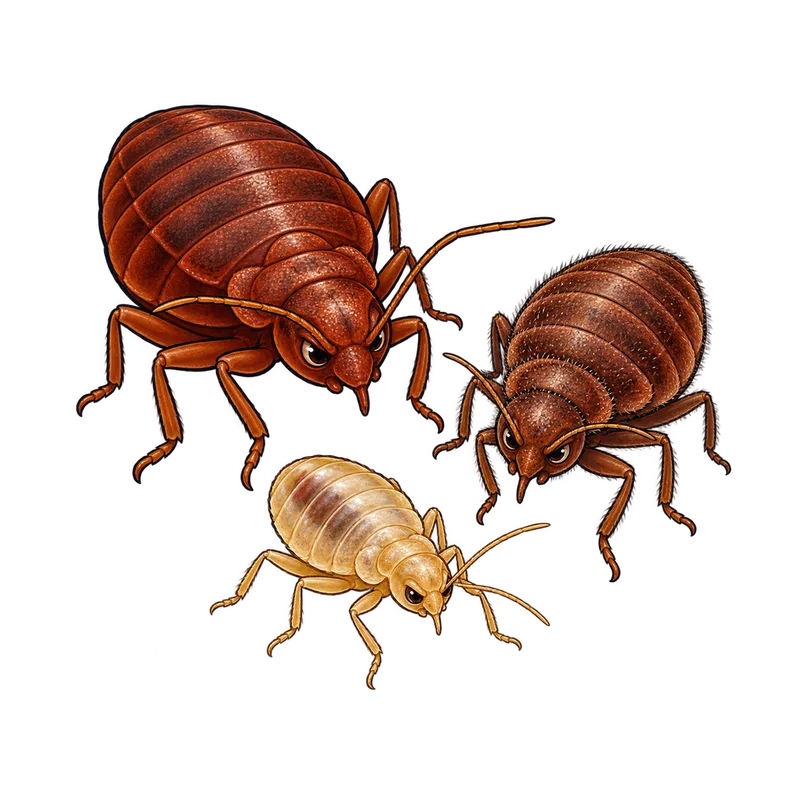
Bed bug eggs are tiny, pearl-white to translucent cream-colored cylinders measuring about one millimeter long, which is roughly the size of a standard pinhead. They are permanently glued down in tight clusters deep inside dark mattress seams and crevices by the female. Loose dust or lint will easily blow away, but a genuine egg stays firmly stuck.
What is actually going on
You are standing in the bedroom with a bright flashlight, turning over the corner of the mattress because you found a suspicious bite mark this morning, and now you are staring down at every little speck of dust or lint wondering if you are looking at something alive. Bed bug eggs are tiny, pearl-white to translucent cream-colored cylinders measuring about one millimeter long, which makes them roughly the size of a standard pinhead or a single crystal of coarse sea salt. They are not floating around loose in the open air, and they do not look like fuzzy little cocoons hanging from the ceiling.
Instead, female bed bugs deposit them singly or in tight little clusters deep inside dark seams, folds, and crevices, usually within an eight-foot radius of where people sleep or sit for long stretches. The female coats each egg with a special fast-drying, cement-like fluid as she lays it. This sticky secretion hardens instantly upon contact with the air, anchoring the egg firmly to woven mattress fabric, wood grain, cardboard, or the underside of a box spring.
Because of that natural glue, you cannot simply brush or shake the eggs away like casual dust. If you manage to catch an unhatched egg under a magnifying glass after about five days of room temperature development, you might even spot two tiny dark red eye-spots glowing through the semi-transparent shell. Once the little nymph finally hatches out, it pops open a tiny pre-formed cap at the end of the shell and crawls away, leaving behind a dull white, crumpled husk that stays glued to the surface indefinitely.
People often mistake tiny bits of lint, dandruff, drywall dust, or salt crystals for bed bug eggs. The easiest way to tell the difference is usually to look at how the object behaves when you touch it. Loose debris like household dust or lint will smear, blow away, or roll easily under your finger. A genuine bed bug egg stays put because it is glued down like a tiny drop of clear hot glue on the fabric fibers.
Size is your next best indicator. At roughly one millimeter long, an egg is small enough that you will usually need to turn off the overhead lights, hold a flashlight flat against the mattress edge at a shallow angle, and look for tiny raised bumps casting long shadows. If you happen to have a jeweler loupe or a smartphone macro lens handy, magnification will usually reveal the smooth, elongated oval shape, the pearl sheen, and sometimes the developing red eye-spots inside.
You should also look at the company the object keeps. Bed bug eggs are rarely found flying solo in the middle of an empty sheet. They are usually co-located alongside other evidence of an active infestation, such as dark digested-blood fecal speckling, tan shed skins left behind by growing bugs, or active insects scuttling away from the light. If you find a cluster of oblong, pearl-colored cylinders firmly attached inside the piping of a mattress or the staples of a box spring alongside dark spots, you have your answer.
How to tell for sure
When you suspect you are looking at bed bug eggs, your most practical immediate decision is to stop and choose between a targeted physical intervention or a call for professional reinforcement, rather than running out to buy random aerosol sprays. Standard over-the-counter liquid contact sprays usually fail to penetrate the tough protective shell of the egg, meaning a casual chemical mist will leave those eggs completely unharmed while killing only the insects walking around in the open.
If you decide to handle small, contained items yourself, your best move is thermal rather than chemical. Putting suspect bedding, soft items, or clothes directly into a clothes dryer on medium-to-high heat for at least thirty minutes will reliably generate enough heat to destroy egg proteins and kill every stage of the insect. For furniture, mattresses, and bed frames where eggs are firmly glued into deep structural crevices, trying to scrape them out one by one is often an exercise in frustration.
This is why many people facing a confirmed cluster of eggs choose to invest in professional remediation or specialized equipment like high-heat steamers rather than fighting a losing battle with household cleaning wipes. If you choose to treat an item yourself, remember that missing even a single clustered batch of eggs tucked away in a hidden corner means a fresh round of hatching nymphs will appear a week or so later, resetting the entire problem.
What usually comes next
There are moments when trying to manage bed bug eggs on your own becomes counterproductive and you need to bring in outside help. If you live in an apartment building, a multi-family complex, or a hotel, finding eggs means the situation requires a licensed pest management professional immediately. Treating a single unit or throwing away a mattress in a shared building often causes disturbed bugs to scatter into wall voids, electrical sockets, and adjacent apartments, turning a localized issue into an entire building headache.
You should also involve a professional structural pest controller if you spot eggs that actually belong to bat bugs or swallow bugs rather than standard indoor bed bugs. When wild bats or birds roost in an attic or chimney, their specialized parasites can wander into living spaces, and eliminating them requires legal wildlife exclusion methods rather than standard bedroom treatments.
When to get help
On the health side, never try to diagnose a bed bug presence or an insect bite from skin marks alone. Human skin reactions vary wildly, and many people show no visible reaction at all to bites, while others experience severe welts that mimic various other insect encounters or medical conditions. If someone in the household develops severe skin infections, spreading rashes, or systemic allergic reactions, direct them to a qualified clinician or an urgent care center right away for proper medical evaluation.