
Can you see bed bugs with the naked eye?
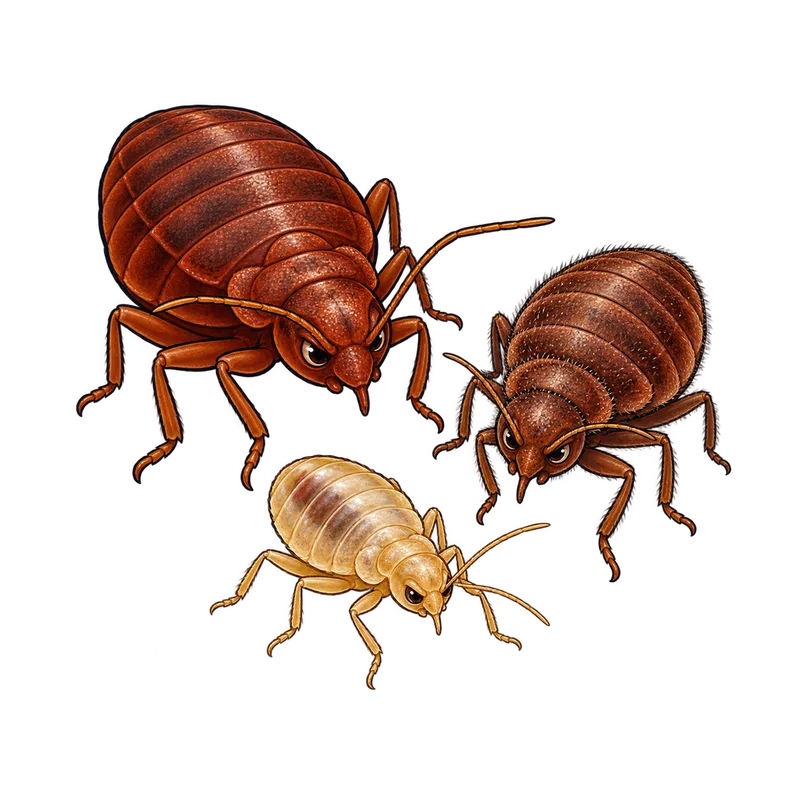
Yes, you can see common bed bugs with the naked eye because every active life stage is big enough for human vision. Unfed adults measure between five and seven millimeters in length, which is roughly the size of an apple seed. Even brand new baby bed bugs can be spotted, though they start out as translucent, pale yellow specks about one and a half millimeters long.
What is actually going on
You are sitting on the edge of a hotel bed at midnight, holding your phone light close to the mattress seam because something felt a little off when you lay down. You wonder if the tiny dark speck you are squinting at is just a bit of lint or something you actually need to worry about. Can you even see these pests without a magnifying glass, or are they hiding out in some microscopic realm that requires special lab equipment to spot?
Yes, you can see bed bugs with the naked eye. They are not microscopic organisms, and every single active life stage of the common bed bug is big enough for human vision to pick up. You do not need a microscope or a jeweler's loupe to spot a live insect crawling across a sheet, provided you have adequate lighting and know roughly what size to expect.
The main reason people doubt their own eyes is that bed bugs are exceptionally good at staying hidden and their smallest stages are nearly see-through. A brand new baby bed bug measures about one and a half millimeters long and looks like a tiny, translucent speck of pale yellow or straw. On a white mattress tag, it is easy to miss until it feeds. Once it drinks a blood meal, though, its abdomen fills with dark red fluid, turning it into a distinct moving dot that stands out sharply against light fabrics.
As they grow through their various molts, they become much harder to miss. Unfed adult bed bugs measure between five and seven millimeters in length, which is roughly the size and shape of an apple seed. They are flat, oval, and sport a reddish-brown color that catches the light if they happen to scurry across a headboard or slip behind a piece of wallpaper. Even their tiny pearl-white eggs, which measure about one millimeter across, can be spotted along mattress piping if you shine a bright flashlight directly across the surface.
Spotting a suspicious bug is only half the battle, because several other household insects share bedrooms and sitting areas. If you find a crawling pest, look closely at its shape and size. A true adult bed bug usually looks like an apple seed with legs, featuring a flat, broad, oval body and no wings. If it has just fed, its body usually elongates into a cigar-like shape and deepens to a dark mahogany or blackish shade.
People often try to confirm an infestation by examining bites on their skin, but that approach usually leads down the wrong path. Medical consensus shows that a significant portion of people develop zero visible skin reaction when bitten, while others break out in itchy welts days later. Because flea bites, spider activity, and simple fabric allergies can look identical on the skin, a bite mark can never confirm the presence of bed bugs. You usually need to find physical evidence in the environment, such as live specimens, cast skins, or eggs.
Another common point of confusion involves look-alikes like bat bugs or swallow bugs, which resemble bed bugs so closely that they look identical to the naked eye. If your bedroom happens to sit right below an attic or a chimney where bats or birds roost, those visiting bugs might wander indoors. Confusing them changes the entire management plan because standard treatments usually fail unless you exclude the wild animal hosts first. Verifying those insects usually requires professional help and high magnification to inspect the tiny fringe hairs along the insect's middle segment.
You can also run a simple field test if you notice dark speckling on a mattress or wooden bed frame. Bed bug droppings consist of digested blood, so if you touch a dark spot with a damp white paper towel or cloth, the mark will usually dissolve and smear into a reddish-brown or dark ink-like stain. Standard dust or cockroach frass does not run red in the same way, giving you a quick clue about what might be living in the cracks nearby.
How to tell for sure
When you suspect an issue, your most practical next move is to conduct a systematic physical inspection within an eight-foot radius of where people sleep or sit. Bed bugs rarely wander far from their human hosts because they rely on body heat and carbon dioxide to find a meal. Strip the bed down to the bare mattress, grab a bright flashlight and a thin plastic card, and systematically probe the mattress seams, tufts, and the hidden folds of the box spring.
Checking the box spring usually reveals the most activity because the dark interior fabric and wooden frame provide countless safe crevices. Flip the box spring over and inspect the staple lines and plastic corner guards. If you find live bugs, cast skins, or dark fecal spotting, you can make a clear decision about how to proceed without panicking or throwing away expensive furniture. Installing certified, bite-proof zippered encasements over the mattress and box spring traps existing bugs inside where they eventually starve, while cutting off their favorite hiding spots and making future visual checks much simpler.
What usually comes next
There are moments when do-it-yourself checks and basic physical controls are not enough, and you should bring in outside help. If you live in an apartment building, a condominium, or any multi-unit housing, bed bugs travel easily through shared wall voids, utility pipes, and hallways. In those shared environments, an isolated treatment in a single unit usually fails because the pests simply move next door. Whole-building coordination by a licensed pest management professional is usually mandatory to stop the spread.
You should also contact a professional if your initial physical checks reveal a widespread infestation spanning multiple rooms, or if your non-chemical efforts do not solve the problem. Trying to treat heavy infestations with over-the-counter foggers or unproven methods usually backfires, as the chemical mist often scatters the bugs deeper into wall voids and makes the situation harder to manage.
When to get help
Direct anyone suffering from severe skin reactions, intense inflammation, or suspected secondary infections from scratching to a qualified physician or dermatologist. In very rare cases, individuals with extreme sensitivity can experience systemic allergic reactions or breathing difficulties following bites, which requires immediate emergency medical care. If you happen to encounter a large, cone-nosed bug with striped edges that matches the description of a kissing bug, never crush it with bare hands, as those insects can carry dangerous parasites and should be reported to public health authorities instead.