
What do bed bugs look like?
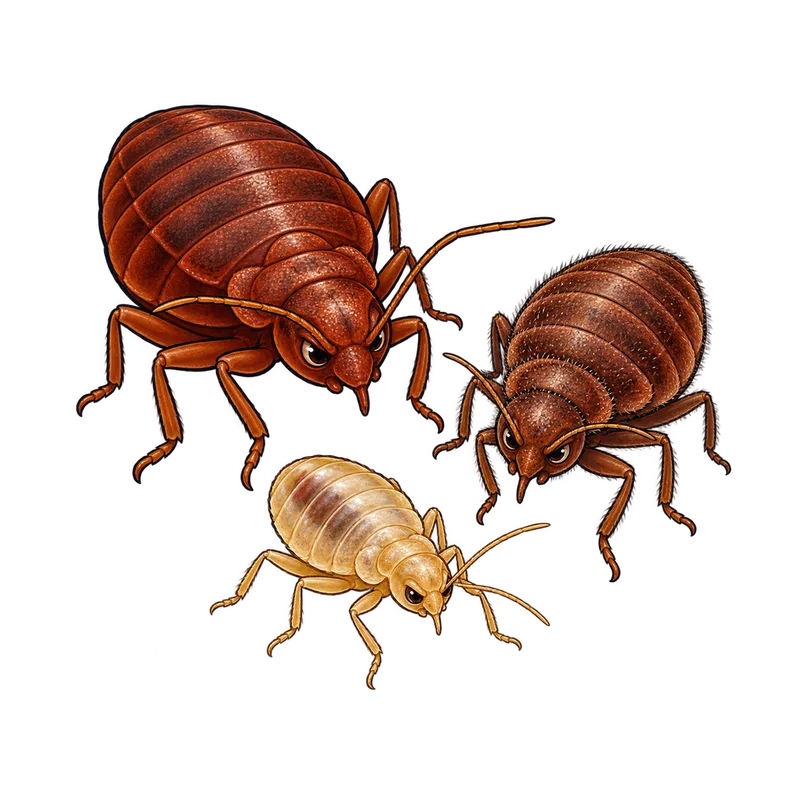
Adult bed bugs are small, wingless insects measuring about 5 to 7 mm when unfed, which is roughly the size of an apple seed. They feature a flat, oval body with a uniform rust-brown, mahogany, or chestnut color. After feeding on blood, adults stretch up to 9 mm in length, turning into a swollen, dark crimson shape.
What is actually going on
You are sitting on the edge of a hotel bed after a long flight, tossing your room key onto the nightstand, when you notice a tiny speck crawling slowly across the crisp white mattress piping. It is roughly the size of an apple seed, rust-brown, and remarkably flat. You lean closer, wondering if you brought home an unwelcome traveling companion or if it is just a harmless stray beetle.
Adult bed bugs are small, wingless insects that measure about 5 to 7 mm when unfed, which puts them squarely in the size range of an ordinary apple seed. They have a broadly oval body built top-to-bottom flat like a piece of cardstock. This extreme flatness lets them slip into structural cracks as narrow as the edge of a credit card. Unfed adults display a uniform rust-brown, mahogany, or chestnut color and possess short, fine, golden-colored hairs across their backs.
Once they finish feeding on blood, however, their appearance shifts dramatically. A fully engorged adult stretches up to 9 mm in length, distending into a swollen, cigar-shaped form that turns deep red or dark blackish-red. If you have only ever seen pictures of flat, brown adults, finding a plump, crimson bug can make you wonder if you are looking at an entirely different creature.
Beyond the adults, a developing population includes eggs and immature nymphs in several progressive sizes. Eggs measure about 1 mm, roughly the size of a pinhead, and are pearl-white and pear-shaped. Newly hatched nymphs start at 1.5 mm as translucent, straw-colored insects resembling tiny poppy seeds. As they grow through five successive stages, they scale up through sesame seed sizes until they reach the proportions of a split lentil, darkening to an amber-brown along the way. Because their outer shells are translucent before feeding, a recent meal shows right through the abdominal wall as a bright red, swollen gut.
Trying to identify a pest by looking at a skin reaction is a common trap, but dermatological marks can never confirm an infestation. About 20% to 30% of people show no visible skin reaction to bites at all, and first-time bite reactions can take over a week to appear, making skin marks completely unreliable for dating or locating an exposure. Furthermore, bed bug welts look almost identical to reactions caused by fleas, mites, or mosquitoes. True identification requires finding the physical insects, shed skins, or fecal evidence directly.
How to tell for sure
If you want a reliable look, use a step-by-step visual check that starts with just your own eyes and a bright flashlight. You can usually spot live adults, older nymphs, translucent tan cast-off skins, and tiny clusters of black droppings right along mattress seams, box spring corners, and headboard joints using ordinary room light. When you need to check tiny 1 mm egg clusters or microscopic 1.5 mm nymphs, a standard 10x magnifying glass or hand lens gives you the clarity you need.
When you spot a strange dark mark on a wooden bed frame, you can run a quick test. Dab the spot with a damp cloth or a wet paper towel. Because their droppings are made of digested blood loaded with iron, the mark will dissolve and smear out into a distinct reddish-brown ink smudge instead of staying dry and solid like cockroach waste.
A major source of mix-ups involves telling common bed bugs apart from bat bugs. While they look almost identical to the naked eye, bat bugs have noticeably longer fringe hairs along the edge of their middle body plate compared to their eye width. Spotting that difference usually calls for an expert using a 20x to 50x microscope, which is important because treating bat bugs means finding and keeping out roosting bats from your attic or roofline instead of just treating the bedroom.
What usually comes next
Before you buy any bug sprays or take drastic action, figure out if you are dealing with a single stray bug or a full breeding population. Finding a lone, unfed adult on a backpack after a train ride or a hotel stay is just a temporary visitor rather than an emergency. These hitchhikers do not have eggs, nymphs, or dropping clusters around them, and they rarely start a colony without a regular sleeping host nearby.
Once you confirm a real infestation with multiple life stages, shed skins, and black spots around a bed or upholstered chair, your best next step is to clear the sleeping area and do a careful physical check of the entire 8-foot zone around the bed. Strip all the sheets, check the mattress piping and buttons, look inside the box spring corners, and pull the bed frame away from the wall.
Do not pack up your bags and sleep in another room, or leave the house for weeks hoping to starve them out. Adult bed bugs can live for months without a meal, and running away from an infested bedroom usually makes the bugs scatter into other rooms or neighboring apartments. Instead, focus on careful containment, washing all bedding in hot water and high heat, and thoroughly vacuuming suspect seams while you figure out if you need professional help.
When to get help
There are moments when simple DIY checks and laundry days are not enough, and knowing when to call in outside help stops a small problem from getting out of hand. You should bring in a licensed pest control professional whenever an infestation gets inside deep wall cavities, electrical outlets, or shared apartment walls, or when your own treatments fail to stop the biting. If you suspect bat bugs coming from an attic, you will also need a wildlife expert to safely and legally get rid of the bats before any insect treatment can work.
On the health side, heavy scratching of itchy bite marks can break the skin and cause secondary bacterial infections like impetigo or dermatitis. If you have severe skin reactions, widespread hives, or signs of an infection, talk to a doctor, dermatologist, or urgent care clinician right away. For complicated apartment disputes or building-wide problems, contact your local public health department or housing agency for advice on building rules and landlord responsibilities.