Skip to content
The Pest Guide logo: an orange ant behind a magnifying glass The PestGuide

Booklice

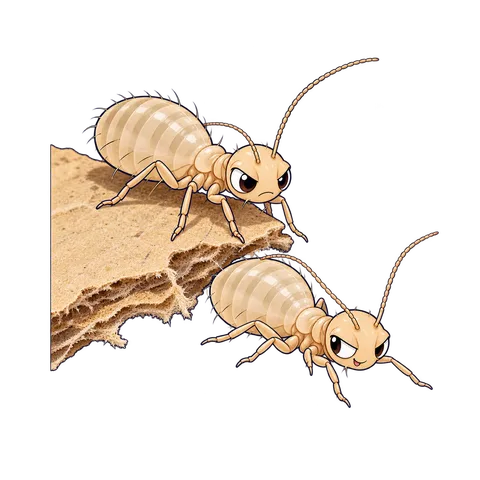
Stylized illustration of booklice

Updated · The Pest Guide · Editorial policy

Spotting tiny, pale specks scuttling across a stack of old textbooks in a damp basement usually makes people worry about a wood-boring infestation, but booklice belong entirely to a different world. What unites this group of wingless indoor insects is their soft, pear-shaped bodies and an absolute dependence on moisture and microscopic mold. They do not bite humans or pets, and they will never chew through your drywall or structural timber. Instead, every member of this scavenger family feeds exclusively on microscopic fungi, starch, and binding glues found in paper products or poorly ventilated corners, serving as living indicators that your indoor humidity has quietly crept past safe thresholds.

Telling these minute creatures apart from other household insects comes down to a few distinct physical and behavioral traits. Silverfish and firebrats are much larger and feature three prominent tail bristles, while springtails will immediately jump away when disturbed rather than running. Mites possess eight legs instead of six, and beetles carry hard, shell-like wing covers that booklice entirely lack. If you see tiny, wingless, pale insects moving in a rapid, jerky scuttle across a damp cardboard box or kitchen shelf without any ability to jump or fly, you are looking at booklice.
Explore booklice

Illustration of BookliceBookliceOrder Psocodea

Questions about booklice

BookliceWhat are booklice?Learn what booklice are, why they appear in damp indoor spaces, and how to control them through proper relative humidity management.BookliceWhy are booklice found in a bed?An informational guide explaining why booklice appear in beds, what causes them, and how to control them through humidity management and cleaning.BookliceHow do you get rid of booklice?Learn how to get rid of booklice permanently by controlling indoor humidity, eliminating cardboard storage, and using physical freezing methods without relying on ineffective sprayBookliceWhat do booklice nymphs look like?An informative guide detailing the physical appearance, identification cues, and practical management of booklice nymphs in the home.BookliceAre booklice harmful?An informational guide explaining whether booklice are harmful, their behavior, and how to control them through moisture management.BookliceDo booklice bite?An informative guide explaining whether booklice bite, how to identify them, and how to manage them through moisture control.BookliceWhat are tiny wingless bugs in a bathroom?An informational guide on identifying and managing tiny wingless bugs found in bathrooms.BookliceSilverfish in a bathroom vs booklice in a damp room: what differs?Learn the differences between silverfish and booklice in damp rooms, how to identify them, and what steps to take for control.BookliceWhy do booklice reappear after surface cleaning?Learn why booklice reappear after cleaning surfaces, how to identify them correctly, and what practical steps stop them permanently.BookliceWhat causes tiny jumping bugs in a damp bathroom?Discover what those tiny jumping bugs in your damp bathroom actually are, how to identify them, and what steps to take to get rid of them.