
What do booklice nymphs look like?
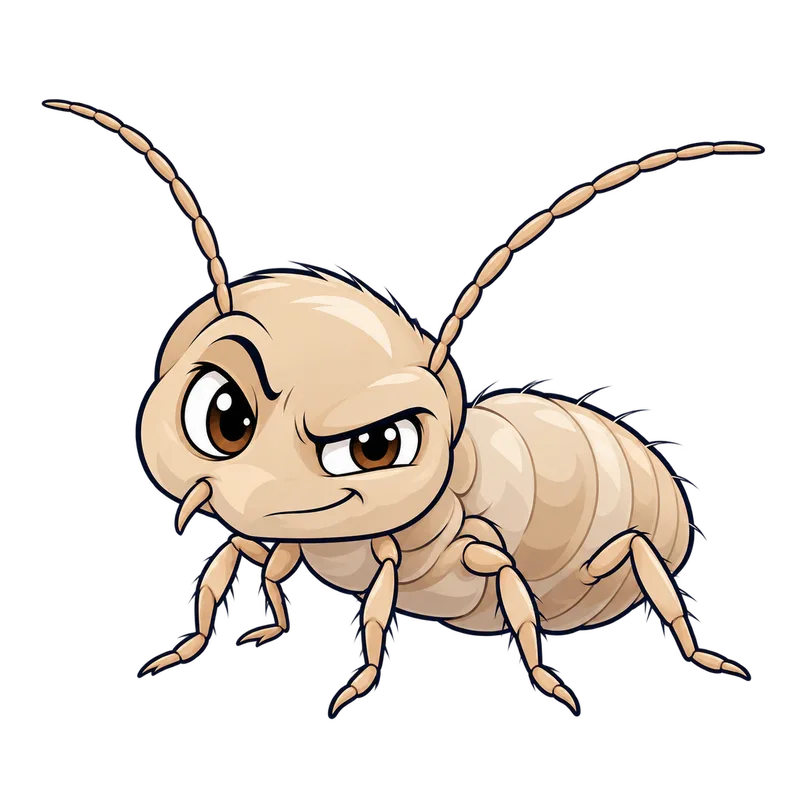
Booklouse nymphs look like tiny, pale, slow-moving dots measuring under one millimeter in length. Without magnification, they appear as a microscopic grain of coarse salt or pearl dust with legs. Under a lens, a booklouse nymph shows three distinct body regions, six slender legs, and a bulbous forehead.
What is actually going on
You are putting away a stack of board games in the basement or flipping through old paperwork on a humid afternoon, and you notice a tiny pale speck crawling lazily across the cardboard. It is moving, which rules out a grain of dust, but it is so absurdly small that you have to squint to keep track of it. If you have been wondering what booklice nymphs look like, you are essentially looking for a microscopic, moving grain of coarse salt or a translucent pearl dust mote with legs.
To the naked eye without any optical help, a booklouse nymph looks like a tiny, pale, slow-moving dot measuring under one millimeter in length. They are usually translucent white, pale tan, or pearl-colored, which makes them practically invisible against light-colored shelving, fresh drywall, or white paper. People often mistake them for dust mites, but those are genuinely microscopic and require a microscope to see at all. Booklouse nymphs are right on the ragged edge of human vision, appearing as minuscule specks that only betray themselves when they slowly march across a dark book cover, a picture frame backing, or a damp cardboard box.
These tiny creatures are the immature stages of common indoor psocids, which are non-parasitic scavengers that feed entirely on microscopic mold, fungi, and starch. Because they undergo a gradual life cycle rather than a radical metamorphosis like a beetle or a butterfly, a newly hatched nymph looks like a miniature, wingless adult right out of the egg. They do not suddenly sprout wings or radically change their shape as they grow through their multiple molting stages. They just get slightly bigger, slowly shifting from a translucent ghost-like white to a faint yellowish-gray or tan as their outer shell matures.
How to tell for sure
Telling whether that moving speck is actually a booklouse nymph usually requires grabbing a simple ten-power hand lens or a magnifying glass. Without magnification, you only know it is a tiny crawling bug, and plenty of other minute creatures share damp indoor spaces. Once you bring a lens close, the silhouette changes from an anonymous dot into a distinct, tiny insect with clear body parts.
Under magnification, a booklouse nymph shows three distinct body regions consisting of a head, a thorax, and a flattened or pear-shaped abdomen. You will usually spot six slender walking legs, a pair of long and thread-like antennae, and compound bulging eyes. The most striking giveaway on domestic booklice is the head, which features a noticeably swollen, bulbous front region known as a clypeus, giving it the comical look of wearing a rounded helmet right above its chewing mouthparts.
Indoor species are completely wingless throughout their nymph stages, unlike outdoor barklice that develop visible wing pads as they grow. You also need to rule out other tiny visitors. Grain mites and mold mites possess eight legs instead of six and look rounder or more sluggish, while springtails have a specialized springing appendage underneath their rear that makes them hop away when disturbed. Booklice nymphs just walk steadily, lacking any dramatic jumping ability. If it has six legs, long antennae, a bulbous forehead, and a slow, deliberate crawl across a damp surface, you are usually looking at a booklouse nymph.
What usually comes next
Finding a handful of booklice nymphs crawling around usually makes you want to reach for a can of bug spray, but that instinct misses the actual point of the infestation. Spraying chemical insecticides onto a damp bookshelf or a basement wall provides nothing more than a temporary fix because it ignores the biological engine driving the population in the first place. These nymphs cannot survive without moisture, as their thin bodies dry out rapidly in dry air.
Your most effective practical decision is to treat the nymphs as a living humidity gauge rather than an insect invasion. Instead of buying harsh chemicals, invest in a simple digital hygrometer to check the relative humidity in the room where you found them. If the humidity is sitting above sixty percent, you have found the exact reason why those nymphs hatched and multiplied.
Dropping that indoor relative humidity below fifty percent using a dedicated dehumidifier or air conditioning will systematically dry out the environment and cause the entire population of eggs, nymphs, and adults to collapse within a few weeks. Clean up the physical clutter like old damp cardboard, vacuum up the mold spores they graze on, and let the dry air do the heavy lifting. Insecticides without moisture control simply waste your time and money.
When to get help
There are moments when managing a few translucent specks requires stepping back and handing the job over to someone else. If you are dealing with structural moisture issues, such as a hidden plumbing leak behind a wall, chronic foundation seepage, or severe ventilation failures in a crawl space, you need a building professional or a moisture specialist. Drying the air with a dehumidifier helps, but it will not stop water pouring in from a broken pipe or a rotting subfloor.
You should also involve a professional conservator if these pests turn up inside valuable historical archives, rare book collections, or antique photo albums where mold has taken hold. Trying to freeze, brush, or clean delicate historical paper without expert training can ruin items permanently.
On the health front, if anyone in the household develops skin irritation, rashes, or persistent respiratory trouble, do not guess at the cause or try to diagnose a bug bite from a visual inspection. Booklice do not bite, feed on blood, or transmit diseases, but heavy accumulations of mold, cast insect skins, and organic dust in damp spaces can trigger allergic reactions and asthma symptoms. When health concerns arise, consult a clinician, an urgent care provider, or your local poison control center for proper medical evaluation.