
How do you get rid of rats in the attic?
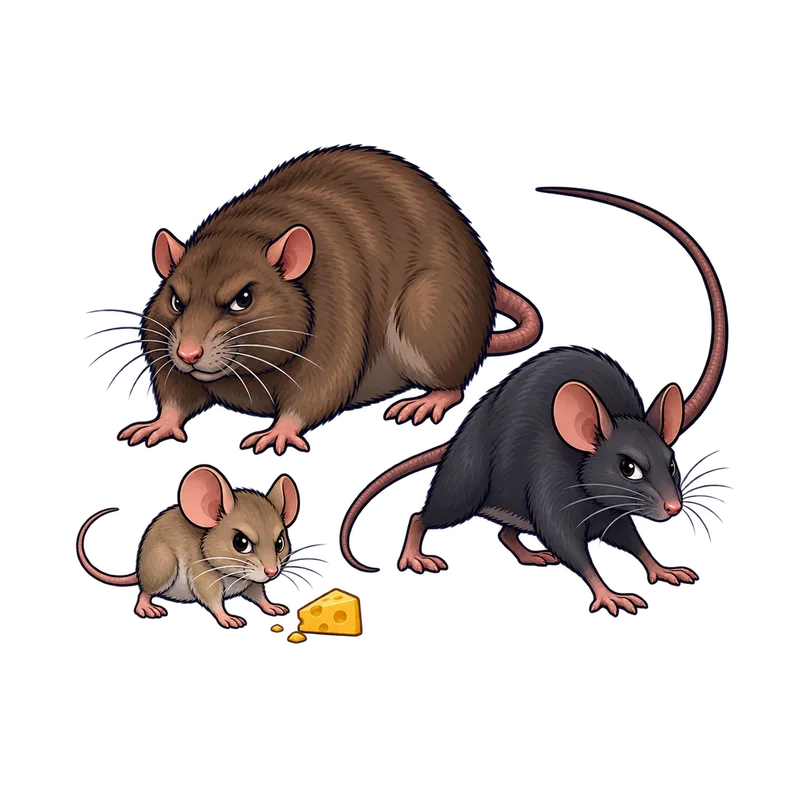
Getting rid of rats in the attic requires a systematic framework of prevention, avoidance, monitoring, and suppression. You must block exterior cracks bigger than a wooden pencil using sturdy hardware cloth, and set a dense grid of roughly twelve snap traps along active runways. Lethal removal alone fails if you do not also clear outdoor food sources.
What is actually going on
Picture this scenario. It is two o'clock on a Tuesday morning, and you are wide awake because you just heard a distinct scampering sound across your bedroom ceiling. It sounds like someone is dragging a tiny suitcase across the drywall. You pull the covers tighter, hoping it will go away, but deep down you know it is not a stray gust of wind. You likely have rats in the attic, and your house has just become an uninvited bed and breakfast.
Getting rid of rats in an attic is not a matter of setting a single snap trap and hoping for the best. Long-term rodent control requires a systematic approach known as the PAMS framework, which stands for Prevention, Avoidance, Monitoring, and Suppression. If you skip any of these steps, you are essentially bailing water out of a leaky boat with a teacup. Lethal removal alone always fails because vacant shelter and food sources will quickly attract new rodents from neighboring areas, while surviving animals reproduce faster.
Prevention relies entirely on structural exclusion. Rats can compress their skeletons to squeeze through surprisingly tiny gaps, and if a standard wooden pencil can slide through an opening, a young rodent can fit right through it as well. Avoidance means changing your immediate environment so it loses its appeal, which involves clearing away outdoor food sources and trimming back overhanging tree branches that act as aerial highways to your roof. Monitoring keeps you informed of activity through physical signs like droppings and chew marks, while suppression brings down the active population.
How to tell for sure
Before you start sealing holes or buying traps, you usually need to confirm what is actually living above your head. Correct species identification changes your entire strategy. Roof rats are exceptional climbers that prefer high spaces like attics and soffits, whereas larger Norway rats usually stick to ground levels and basements unless severe population pressure forces them upward. You might also be dealing with mice, squirrels, raccoons, or bats.
Visual cues at home usually rely on physical evidence rather than fleeting glimpses of the animals themselves. Rodent droppings are small and tubular, whereas raccoon scat is much larger, resembling a nickel or dime in diameter, and usually sits in communal piles. If you check tracks in fine dust, rodent prints typically reveal four toes on the front feet and five toes on the rear feet, unlike raccoons, which leave five hand-like toes all around. You will also notice paired, chisel-like gnaw marks on wooden framing, cardboard boxes, and plastic bins.
Common beliefs often lead people astray regarding scat color or ultrasonic gadgets. Scat color changes constantly based on recent diet, meaning it is rarely useful for telling species apart. Furthermore, ultrasonic repellers and attic mothballs usually fail because rodents simply adapt to the noise and smell when a warm shelter and free food are on the line.
What usually comes next
Once you have pinned down your guest and confirmed they are overhead, you need a realistic plan for sealing the house and setting enough traps. Setting just one or two traps for an active group is like offering a single appetizer at a crowded party, meaning the clever animals will simply ignore them. True suppression generally means putting out a dense grid of roughly twelve snap traps along the runways they frequent, even if you only suspect two or three animals are up there.
At the same time, you have to block every exterior crack, vent opening, and roof gap bigger than a pencil using sturdy hardware cloth made of heavy metal. Stainless steel chimney caps provide decades of solid protection against animals finding their way back inside. You also need to trim back branches touching your roof and keep your household trash in secure, animal-proof cans. Putting out traps without closing these structural gaps means any vacant space will fill right back up in no time.
When to get help
Working in an attic space carries real biological and physical dangers that you should never brush aside. Dry droppings and nesting material are loaded with infectious dust particles capable of carrying hantavirus, and stirring them up unprotected can make you very sick. Whenever you inspect or clean the loft, always put on an N95 respirator mask, disposable gloves, and protective clothing, and lightly mist any waste with a spray bottle to keep dust down before you clean it up.
You also need to watch for specific hazards like raccoon latrines, which often hold roundworm eggs that shrug off ordinary household bleach. Bleach only softens the sticky coating holding those eggs in place, meaning you need actual physical removal or high heat to make the space safe. If your attic happens to host protected species like breeding bat colonies, local wildlife laws might forbid you from sealing exits during sensitive times of year. When an infestation involves tricky multi-story exclusion work, severely chewed electrical wires, or massive waste piles that make safe cleanup impossible, you should reach out to a licensed pest control professional or wildlife operator.