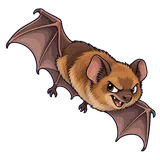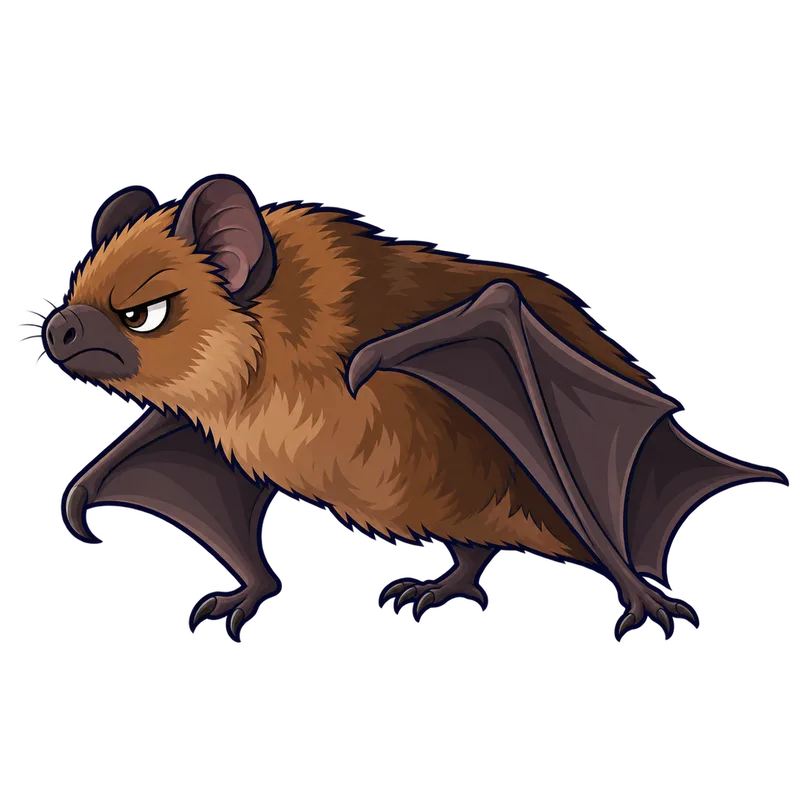
Big brown bat
Eptesicus fuscus
- Size
- Small mammal, capable of squeezing through thumb-sized gaps
- Color
- Not established
- Habitat
- Rock crevices, hollow trees, attics, wall voids, soffits
- Diet
- Strictly insectivorous
- Life cycle
- 1 pup per year, flightless spring pups to independent autumn flyers
Spotting a small, dark shape cutting through the dusk sky tells you a bat is around, but it will not tell you the exact species. In structural settings, bats often share tight crevices with other small vespertilionid bats, making casual field identification from the ground practically impossible.
Identity
From a distance, you see compact body proportions and rapid, erratic flight patterns designed to snap up flying insects. Up close, identifying features require physical specimen handling and magnification to inspect wing membrane attachments, alongside precise measurements of the forearm and tragus by a trained professional.
Habitat & behaviour
These mammals naturally prefer rock crevices, caves, and hollow trees, but human structures offer an irresistible substitute. Attics, wall voids, tile roofs, soffits, and chimney spaces mimic the dark, safe warmth of natural roosts.
They are strictly nocturnal. As daylight fades, adults emerge from their hiding spots in coordinated flights to hunt night-flying insects across gardens and fields. This evening emergence gives wildlife technicians a chance to conduct bat watches, tracking the animals back to the structural gaps and entry points they use to sneak inside.
Visual variations
Females gather in late spring to form maternity colonies, leaving males to roost elsewhere during this period. These colonies serve as safe nurseries for the season.
Newborn pups arrive in spring as flightless infants entirely dependent on maternal milk. They stay tucked inside the roost while the mothers forage at night. By mid-to-late summer, these juveniles develop full flight capabilities and look much like the adults that raised them, boasting the same compact bodies and flexible wing membranes supported by elongated digits.
Why it matters
These animals do not chew wood, shred insulation, or gnaw on electrical wires the way mice or squirrels do. The trouble they bring is indirect, usually showing up as cumulative piles of dry, brittle guano and urine staining tucked away in ceiling voids and soffits.
Their droppings are small and tubular, and they crumble easily under pressure into shiny fragments of undigested insect wings. While these mammals provide stellar biological pest control by consuming thousands of night-flying insects, sharing your roof space with them creates persistent odor issues and potential wildlife conflicts.
Exclusion work requires careful timing because sealing a roost during the spring and summer maternity blackout window traps flightless pups inside to die. Permanent exclusion using one-way exit devices must wait until late summer or early fall after the young can fly and leave on their own.
When a bat finds its way into a living area or a pet makes physical contact with a grounded animal, rabies transmission becomes a genuine risk. Any direct contact requires washing the area immediately with soap and water and seeking guidance from a clinician or public health authority.
Distinguishing bat presence from mouse activity usually comes down to the droppings and structural clues. Mouse droppings are hard and pointed, whereas bat guano crushes into glittering insect parts under a gentle touch. Bats rely on pre-existing gaps and leave oily rub marks rather than chewing new entrance holes to get inside.