
What do bat bug bites look like?
Bat bug bites look identical to bed bug bites, usually appearing as red raised welts, small bumps, or itchy clusters on skin left uncovered while you sleep. The skin marks themselves cannot tell you which insect caused the trouble, because your body simply reacts to the salivary proteins injected while the bug feeds.
What is actually going on
You are changing the sheets on a Sunday morning and spot a small, oval insect crawling across the mattress. A few days later, you wake up with itchy, red bumps on your arms that look identical to bed bug bites. Naturally, your mind races to the worst-case scenario. But before you tear apart the bedroom or throw out expensive furniture, you need to know what bat bug bites actually look like, because the skin marks themselves will not give you the answer.
To put it plainly, bat bug bites look exactly like bed bug bites. They usually show up as red, raised welts, small bumps, or itchy clusters on the skin left uncovered while you sleep, such as your neck, face, arms, and legs. Some people even notice a tiny dark red dot right in the center of the puncture site. If you are comparing photographs online, you will find zero visible differences between a bite from a bat bug, a common bed bug, a flea, or a mosquito.
Why do they look so generic? The physical mark on your skin is not a stamp left by the insect, but rather your own body throwing an allergic tantrum against the salivary proteins injected while the bug feeds. Because human immune systems react similarly to these proteins across different biting pests, your skin cannot tell you which insect caused the trouble.
To complicate matters further, people react entirely differently to the same bug. One person in a household might develop angry, swollen welts that itch for days, while another person sleeping in the exact same bed shows no marks at all. Roughly twenty to thirty percent of people never mount a visible immune response to these bites, meaning you can have an active pest issue in the house without a single red bump to warn you.
Since your skin cannot identify the culprit, you have to look at the insect itself. Bat bugs are close relatives of common bed bugs, measuring about the size of an apple seed, with a flat, oval, mahogany-colored body that turns darker and elongates after a blood meal. Without magnification, they look virtually identical.
So how do you tell them apart? An entomologist has to place the bug under a microscope and look at the fringe hairs on the lateral margin of the pronotum, which is the shield-like plate directly behind the insect head. Imagine looking at a microscopic fur collar. In bat bugs, those fringe hairs are noticeably long, usually equal to or longer than the width of the insect eye. In common bed bugs, those hairs are distinctly shorter than the eye width.
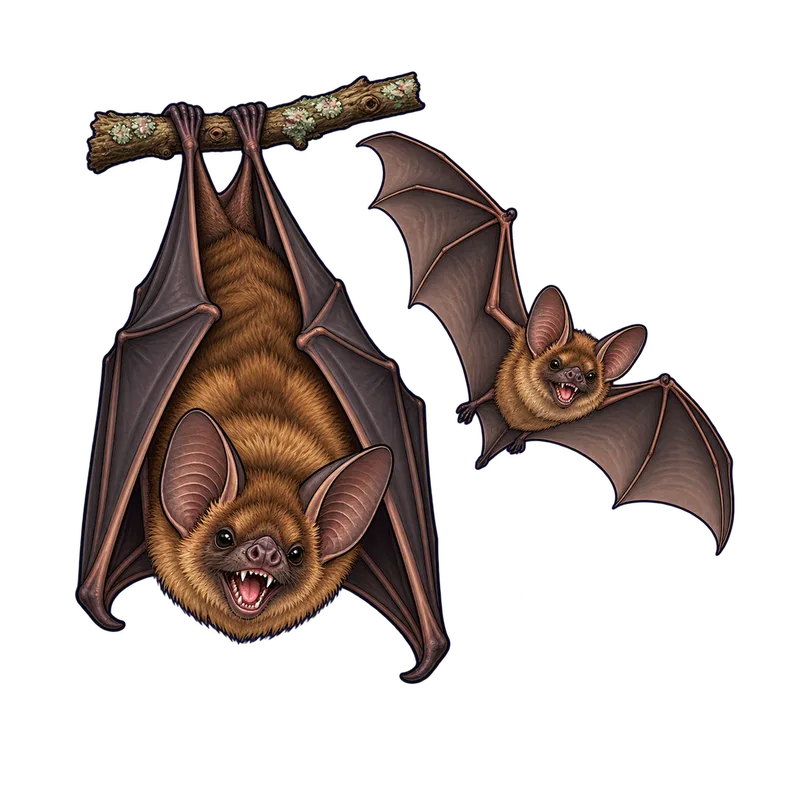
You usually find bat bugs in living areas because their primary hosts, such as big brown bats, have recently left, died, or been excluded from an attic or a chimney. When the bats vanish, the hungry bugs crawl downward through wall voids, electrical outlets, and ceiling fixtures, searching for a new blood source. They will readily bite humans, but they cannot reproduce on human blood alone, meaning they need a mammalian bat host to complete their life cycle.
This behavior points to a crucial distinction. If you find these bugs appearing in an upstairs bedroom a few weeks after you had bats cleared out of the attic, you are usually dealing with bat bugs rather than a traditional bed bug infestation brought home in luggage.
How to tell for sure
Your most important practical decision right now is to stop treating the wrong pest. If you mistake bat bugs for bed bugs, you might spend your weekend washing every blanket in hot water, spraying your mattress with retail insecticides, and upending your bedroom furniture. That approach usually fails because the core of the problem is not in your bed at all, but hidden away in the attic or roof void above you.
Instead of buying products off the shelf, your first move should be capturing an intact specimen for proper identification. Grab a piece of clear sticky tape, gently press it over the crawling bug, and stick it to a white index card or place the insect inside a small sealed vial using gloves. Avoid crushing the bug with your bare hands.
Take that specimen to a local university extension office or a licensed pest management professional so they can check those fringe hairs under magnification. Confirming the exact species tells you where to direct your energy, shifting your focus away from the bedroom mattress and toward the upper structural spaces where bats roost.
What usually comes next
There are moments when a do-it-yourself approach stops being wise and you need outside help. From a medical standpoint, watch your skin closely. Seek immediate emergency care if a bite victim develops signs of a severe allergic reaction, such as trouble breathing, wheezing, throat swelling, widespread hives, dizziness, or a racing heart. If the bite sites become increasingly warm, swollen, pus-filled, or develop red streaks, consult a clinician because you may be dealing with a secondary bacterial infection from scratching.
On the pest and wildlife side, you need professional intervention as soon as bats are involved. Bats are protected by state and federal wildlife laws in many regions, meaning you cannot legally or safely remove them on your own. Furthermore, improper bat exclusion can force starving bat bugs to migrate into your living spaces in even greater numbers.
When to get help
Bring in a licensed wildlife control operator to handle the bats properly and seasonally, and coordinate with a licensed pest management professional to treat the attic and wall voids with appropriate residual products. Let the experts handle the structural voids and the protected wildlife, saving you from legal trouble, ineffective treatments, and continued bites.