
How big is a little brown bat?
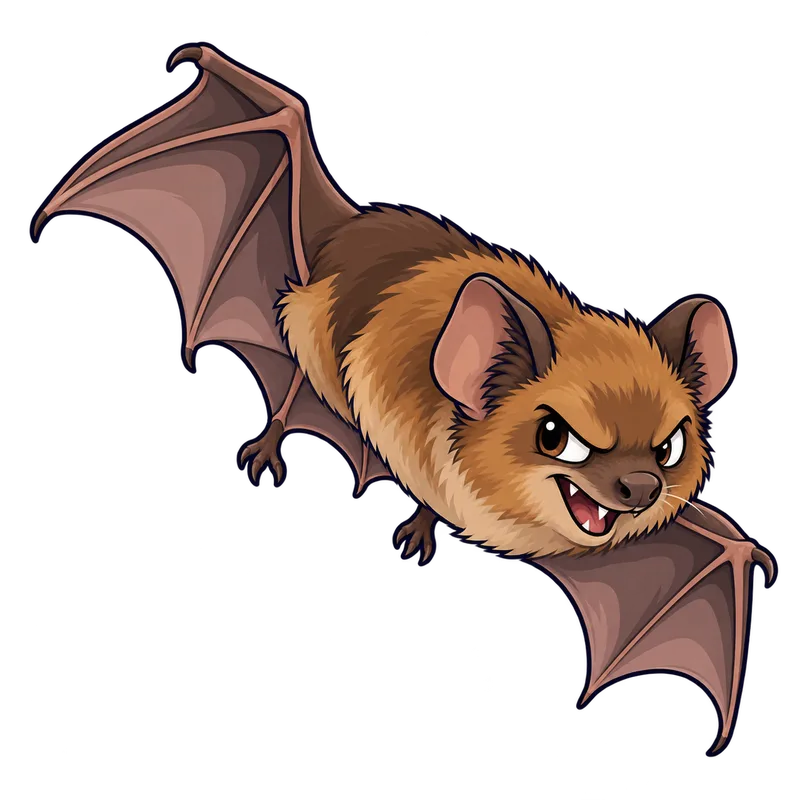
The body of an adult little brown bat is compact and roughly the size of an adult human thumb, able to rest easily in the palm of your hand. Because these microbats possess a remarkably flexible skeletal structure, they can compress their rib cages to slip through linear gaps as narrow as one-quarter of an inch.
What is actually going on
Picture standing on your back patio with a cup of coffee just as the sun dips below the tree line, watching a dark, fluttering shape dart silently past the roofline to catch mosquitoes. If you are wondering whether that acrobatic visitor could squeeze through a tiny flaw in your siding, you are probably picturing a creature far larger than it actually is.
So, how big is a little brown bat really? When you strip away the fuzzy fur and the sweeping wingspan, the body of an adult little brown bat is surprisingly compact, roughly the size of an adult human thumb. If you were to gently fold its wings against its sides, the entire creature could easily rest in the palm of your hand without overlapping your fingers.
Despite their diminutive scale, these tiny mammals punch well above their weight in terms of structural mischief. Because they are microbats, meaning they belong to the group of insect-eating bats common across North America, they possess a remarkably flexible skeletal structure. Unlike mice or squirrels, bats do not have gnawing incisors, so they cannot chew their way into a home. Instead, they exploit pre-existing architectural flaws.
An adult little brown bat can compress its rib cage to slip through linear gaps as narrow as one-quarter of an inch. If you can slide a wooden pencil or wedge your thumb into a gap near your roofline, a bat can easily get inside. That flexibility is precisely why a maternal colony of dozens or even hundreds of individuals can pack tightly into a narrow attic space or wall void without making a sound or giving away their presence until dusk.
How to tell for sure
Pinpointing whether you are hosting a colony usually comes down to detective work rather than catching a direct glimpse of the animals. Since precise measurements vary and are rarely helpful when you are staring up at your eaves, field identification usually relies on observable signs and behavior.
Your best tool for tracking them down is a warm evening dusk watch. Sit outside your house for about twenty minutes right as the sun goes down, and watch the corners of your roof, your soffits, and your chimney. If you see small, erratic shapes dropping out of a specific seam in the architecture and heading for the sky, you have likely found an entry point.
If you cannot catch them in flight, look down. Attic floors or exterior walls often accumulate droppings, and bat scat is distinct once you know what to look for. It usually resembles mouse droppings at a glance, being small and dark, but because these bats feed entirely on insects, their waste is made up of pulverized chitin. If you take a stick or a gloved finger and press down on a dropping, it typically crumbles instantly into a dry, powdery dust that glitters with tiny, metallic insect wing fragments.
You should also keep the calendar in mind. Mother bats form maternity colonies in tight structural spaces during spring to raise their young, and you will usually see a sharp uptick in evening activity as those pups learn to fly around mid-summer.
What usually comes next
Once you figure out you have bats living in your attic, the immediate urge is often to run to the hardware store for expanding foam or caulk and seal every opening in sight. Doing that at the wrong time of year, however, creates a genuine structural and ethical mess.
If you seal up an attic during the late spring or mid-summer months, you run the risk of trapping flightless baby bats inside the roosting voids. Adult bats cannot rescue them, and the resulting mortality creates severe odor issues, secondary pest infestations, and direct violations of local wildlife protection laws. Most regions enforce strict statutory protection windows during the warmer months when maternity colonies are active, meaning permanent structural exclusions must wait until the late summer, fall, or early winter after the young have fledged.
When the legal window opens for your area, the standard remedy is non-lethal exclusion. This involves installing specialized one-way exit devices, such as mesh tubes or check-valves, over the primary entry points you spotted during your dusk watch. These contraptions let the bats fly out to hunt for insects at night, but physically block them from sliding back in when they return at dawn. Once you are certain every last bat has cleared out, you can finally seal up those gaps and cracks permanently using durable materials like hardware cloth, heavy silicone, or metal flashing.
When to get help
There are moments when a do-it-yourself approach needs to take a back seat to professional intervention or public health protocols. If a bat makes its way inside your actual living quarters, such as a bedroom or a den, you cannot simply assume it found an open window and wave it out with a broom without thinking through the risks.
Any direct physical contact with a bat, or finding a bat in a room with a sleeping person, an unattended child, or someone who cannot clearly communicate whether a bite occurred, demands immediate caution. Microbats have microscopic teeth, and a light nip during sleep can leave no visible mark or lingering pain. Because bats can carry rabies, public health guidelines treat these scenarios as potential exposures requiring immediate consultation with medical professionals and local health departments to determine if post-exposure treatment is necessary. Never release or destroy a bat involved in a potential human contact incident until local authorities advise you whether they need it for diagnostic testing.
For the physical labor of cleaning up after them, call in a professional wildlife control operator if the job involves scaling multi-story roofs or dealing with heavy accumulations of guano in a confined attic. Disturbing dry bat droppings can release fungal spores that cause respiratory illness, meaning deep remediation requires proper personal protective equipment, containment barriers, and specialized negative air pressure tools rather than an ordinary household vacuum and a dustpan.