
What signs suggest bats are using an attic rather than briefly flying past?
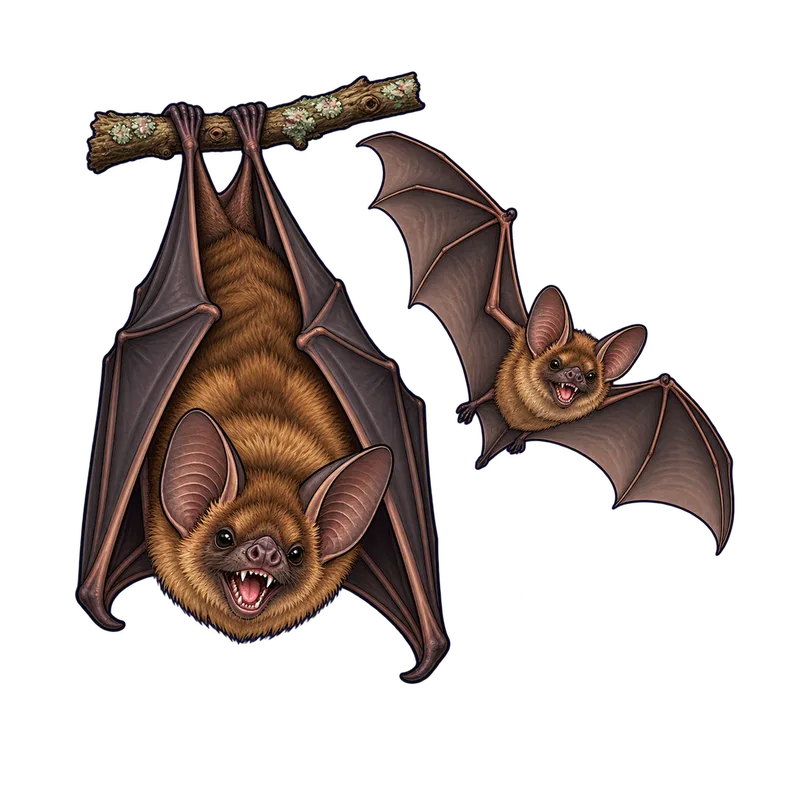
Bats are using an attic, not just flying past, when you find droppings that crumble into shiny flakes when pressed, dark greasy smudges around gaps in the roofline, and bats emerging one after another from the same opening around dusk. Crumpled newspaper wedged into a gap and pushed out within three days also points to an active roost.
What is actually going on
Imagine walking out to take the trash bins to the curb on a mild Tuesday evening, and you spot a dark shape darting through the twilight overhead. It swoops low to catch a moth, banks hard against the neighbor's roofline, and vanishes. It is easy to assume that quick visitor just came from your attic, but random fly-pasts happen every single night without involving your house at all. Foraging bats patrol neighborhoods by the dozens, cruising past rooftops simply because insects gather near streetlights and eaves.
An active roost is entirely different. When bats decide to move in and set up housekeeping, they treat your roof void like an apartment building rather than a bus stop. They do not drop in for ten seconds and fly away. Instead, they squeeze inside before dawn to sleep through the heat of the day, congregating in tight, warm clusters near the highest points of the framing. This means the structural evidence builds up quickly. A stray visitor leaves nothing behind, but a permanent colony leaves behind a distinct trail of physical clues, persistent odors, and predictable evening habits that set them apart from casual commuters.
How to tell for sure
Pinpointing whether you have a colony usually comes down to looking for three specific signs: droppings, oily smudges, and evening behavior. If you notice small, tubular pellets scattered on a porch or sidewalk below an overhang, grab a pair of disposable gloves and a paper towel. Gently press down on a single pellet. If it crumbles easily under light pressure into dry, shiny flakes that look like tiny metallic insect wings or sparkly bits of shell, you are looking at bat guano. Rodent droppings stay hard or fibrous when crushed because mice and rats eat seeds and plant matter, whereas bats eat insects exclusively.
Next, walk the perimeter of your house on a bright afternoon and look closely at your roofline, gable vents, and soffits. Bats can squeeze through structural openings as small as a human thumb, which is roughly half an inch wide. As they push through these tiny gaps day after day, the natural oils and dirt on their fur leave dark, greasy smudges on the wood or vinyl.
You can also test suspected entry points without disturbing the animals. Lightly wedge a piece of crumpled newspaper into the gap and leave it there for three consecutive days of clear weather. If an animal is using that opening, it will push the paper right out. Finally, stand outside about thirty minutes before sunset on a warm evening and watch the suspected gaps. Active roosts usually give themselves away through high-pitched vocal chatter just before dusk, followed by bats emerging sequentially into the fading light to hunt.
What usually comes next
Once you confirm that you are dealing with resident tenants rather than a casual visitor, the smartest move requires patience and careful timing instead of an immediate sealing spree. It is tempting to grab a caulking gun and patch every gap you see on a Saturday morning, but sealing up a house at the wrong time of year tends to backfire badly. Female bats gather in warm roof spaces during the spring and summer to form maternity colonies and raise their young. If you block the exit holes while flightless pups are stuck inside, the adults will perish or try to claw their way into your living areas, and the resulting decay brings terrible smells and secondary infestations of flies.
Instead of trapping or poisoning them, which is illegal for native wildlife in many areas, the standard fix relies on non-lethal exclusion. Professionals install one-way doors or mesh funnels over the primary entry points. These ingenious devices let bats fly out for their nightly hunt, but mechanical flaps or angled screens stop them from sliding back in at dawn. Because conservation laws protect nursery roosts during the spring and summer months, this work almost always has to wait for a specific window in late summer, autumn, or winter, after the young have learned to fly.
When to get help
Certain situations mean it is time to step back and let a professional take over. If your inspection uncovers an active nursery colony during the protected spring and summer window, you will need to wait out the legal restriction and partner with a licensed wildlife control technician who knows the local conservation rules inside and out. Complicated exclusions on steep roofs or high multi-story ladders also demand trained specialists equipped with proper fall protection and safety gear.
Health concerns require a cautious approach as well. If a bat makes it past your attic door and ends up inside your living space, or if one is found in a room where someone was sleeping or a child was playing, never try to catch it with bare hands. Call local animal control or public health officials without delay. If there is any possibility that a person suffered a bite or a scratch while asleep, the animal must be secured for public health testing, and you should talk to a clinician or health department right away to see if rabies treatment is needed. For routine attic cleanups involving large piles of dry guano, always wear a fitted respirator, eye protection, and gloves, and mist the droppings lightly with water first to keep harmful dust and fungal spores out of the air.