
Why are bat bugs in the house?
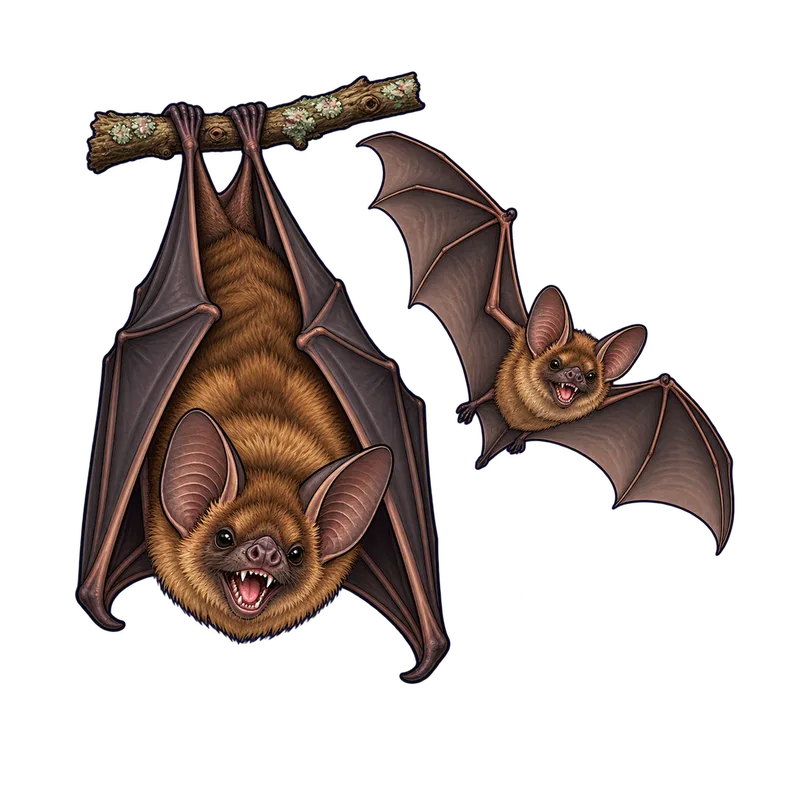
Bat bugs enter human living areas because their primary hosts, which are roosting bats in attics or chimneys, have migrated, died, or been excluded from the structure. Deprived of their food source, the starving bugs crawl downward through tiny gaps into your living quarters. Because adult bat bugs can survive for many months without feeding, their presence can persist long after the bats depart.
What is actually going on
You are walking down the upstairs hallway on a Tuesday evening, and you spot a tiny, oval-shaped bug crawling along the baseboard or near a ceiling light fixture. It looks strikingly like a bed bug, which naturally sends a jolt of anxiety straight through you. But you haven't traveled recently, and you haven't bought any secondhand furniture. When you trace the mystery back, you usually find out that the issue actually starts not in your bedroom mattress, but up in the dark, quiet spaces right above your head.
Bat bugs enter human living areas because their primary hosts, which are roosting bats living in attics, chimneys, or wall voids, have migrated, died, or been recently excluded from the structure. These insects are obligate blood-feeders that rely entirely on bats for survival. When the bats leave a roost, the resident bugs lose their food source completely. Deprived of their preferred hosts, the starving bugs exhibit a strong downward dispersal behavior. Within a few weeks following host departure, the hungry bugs migrate out of the upper voids and crawl through tiny gaps in plaster, openings around ceiling light fixtures, electrical outlets, chimney flues, and baseboard channels straight into your living quarters.
You might wonder why they are wandering into rooms where people sleep if they prefer bats. When bat bugs encounter humans or domestic pets in living spaces, they will readily bite to obtain a blood meal. However, a fundamental biological barrier prevents them from establishing a permanent infestation on their own. Bat bugs cannot complete their development or reproduce on human blood alone. Without access to roosting bats, a bat bug population cannot sustain itself long-term.
Even so, because adult bat bugs can survive for many months without feeding, their presence in living areas can persist long after the bats have departed. If interior entry points are left unsealed and structural voids are ignored, those wandering bugs will keep showing up as they search in vain for their original hosts. Treating your bedroom baseboards or washing your sheets will not stop them, because the root cause of the invasion is hiding directly above your ceiling.
It is easy to mistake a bat bug for a common bed bug because they belong to the same insect family and share that familiar, apple-seed shape. Both insects are flat, brownish, and wingless. But looking at them closely with the naked eye or snapping a quick smartphone photo usually is not enough to tell them apart. You need a much closer look to confirm what you are dealing with, because treating an attic bat bug problem as if it were a standard bed bug case leads to a lot of wasted time and money.
When a bat colony abandons an attic or a chimney, the insects left behind find themselves without their natural food source. Think of them as unwanted subletters who lived quietly upstairs as long as the primary tenants were providing meals. Once the bats move out, these starving bugs wander downward through utility channels and ceiling penetrations looking for something to feed on. Because they can survive for months without a meal, they keep showing up in upper-floor rooms long after the bats are gone.
Bat bugs will readily bite humans when they cannot find a bat, but they cannot reproduce or complete their life cycle on human blood. Your home will not turn into a permanent breeding ground for them. Even so, finding them on your walls or ceilings means an attic investigation is overdue.
How to tell for sure
Common bed bugs cluster within a short distance of human sleeping areas like mattresses and box springs. Bat bugs do not live in beds, appearing instead as isolated, wandering individuals on upper walls, ceilings, and near light fixtures or chimney chases. Finding a bug high up on a wall points upward to the roof rather than downward to luggage.
To separate a bat bug from a common bed bug, you cannot rely on a smartphone snapshot. The definitive diagnostic feature is microscopic. Entomologists look at the fringe hairs on the lateral margins of the pronotum, which is the shield right behind the head. In bat bugs, those hairs are as long as or longer than the width of the insect eye. In common bed bugs, those hairs are shorter than the eye width. You need a university extension agent or a professional with proper magnification to verify the specimen.
What usually comes next
When you find yourself staring at a suspected bat bug, your most practical next decision is to stop trying to solve the problem with retail bedding sprays and instead secure a professional identification of the specimen. Collect a few intact specimens using clear adhesive tape or place them gently into a sealed vial without crushing them.
Once identification is confirmed, the work shifts from bedroom furniture to the roofline. Remediation requires a two-step process. First, a licensed wildlife control professional must inspect the structure and install one-way exclusion devices so remaining bats can exit safely outside of the restricted maternity season. Second, a licensed pest management professional must treat the structural voids and seal interior entry points like ceiling light fixtures and chimney chases to stop the downward migration.
When to get help
Bats are legally protected wildlife, and trying to handle them on your own during the summer breeding season can violate regulations and trap flightless pups inside your walls. Furthermore, bats are primary rabies vector species. Never handle live or dead bats with bare hands. If a bat makes direct contact with a person or pet, or is found inside a living area, contact local public health authorities or animal control immediately.
If you have been bitten, keep in mind that bite reactions vary wildly. While some people show no reaction, others develop red, itchy papules. These bites do not transmit human disease pathogens, but scratching them can lead to secondary bacterial infections. Consult a physician, urgent care clinic, or poison control center if a bite shows signs of a severe allergic reaction or infection. Let the wildlife experts handle the roof, let the pest professionals handle the voids, and let a clinician handle any stubborn skin reactions.