
How big is a big brown bat?
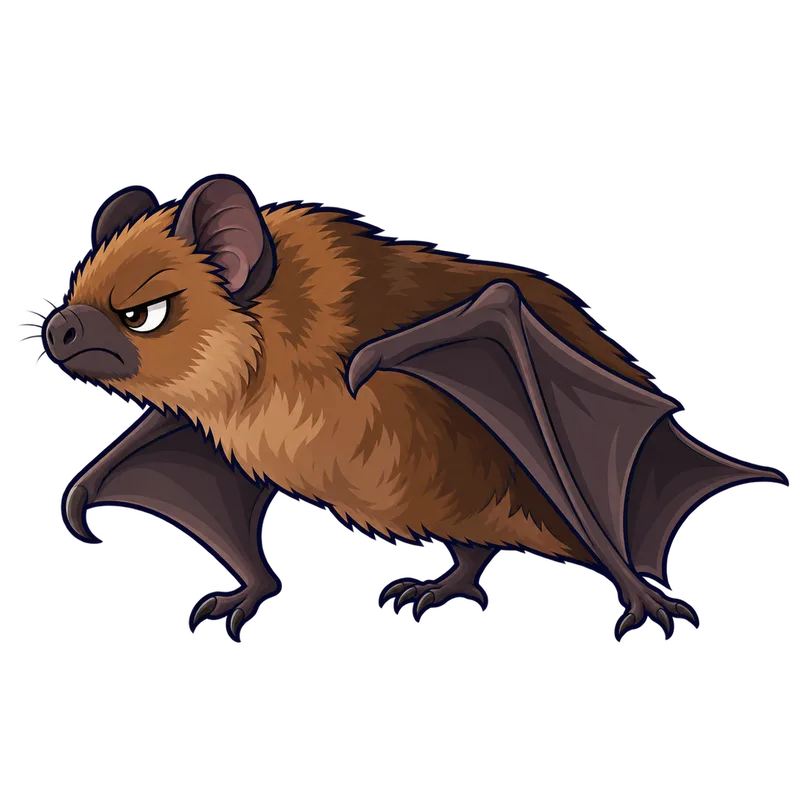
Despite the misleading name, a big brown bat is a remarkably small mammal that fits comfortably in the palm of your hand. They feature a flexible skeletal structure and thin wing membranes that let them squeeze through gaps no wider than a human thumb.
What is actually going on
Picture standing in your backyard on a warm June evening with a cup of coffee, watching the fading sky, when you notice a small, erratic shadow darting out from under your roofline. You might wonder just what kind of creature is living up in your attic and, more to the point, just how large it actually is.
If you are dealing with a big brown bat, you are looking at a remarkably small mammal, despite the somewhat misleading name. While precise scientific measurements like exact forearm lengths or gram weights for this particular species are often missing from general field notes, we do know how they behave in residential settings. They fit comfortably in the palm of your hand, though you should never try to hold one.
The most surprising thing people learn about these animals is how little space they need to move in. A big brown bat does not need a gaping hole or an open attic vent to take up residence. Their flexible skeletal structure and thin wing membranes allow them to flatten out and squeeze through gaps no wider than a human thumb, typically measuring around one-quarter to one-half of an inch.
Once they find a gap behind a soffit, loose flashing, or a loose tile, they slip inside to form a roost. In the spring and summer, females gather to form maternity colonies, meaning a small entry point can quickly lead to a growing family tucked away safely inside your wall voids or insulation.
How to tell for sure
Figuring out what is living in your structure usually relies on observation rather than trying to catch or measure the animal up close. Trying to identify a bat species while it swoops around catching insects at dusk is nearly impossible, even for experienced wildlife biologists. You are usually left squinting at a dark speck against a darkening sky.
Instead of climbing into a dark attic or trying to grab a specimen, look for the physical clues they leave behind. One of the clearest indicators is their droppings, which are often found scattered in attics or piled beneath an entry point. Unlike hard, fibrous mouse droppings, bat guano is made up of digested insect parts. If you press a pellet gently with a stick, it usually crumbles easily into tiny, shiny fragments of insect wings.
You can also conduct a dusk bat watch. Stand outside your home about thirty minutes before sunset and watch the roofline, chimney, and gales. You will usually see them emerge to forage, which tells you precisely where they are exiting the structure.
Do not rely on common myths to drive them away, as ultrasonic gadgets and mothballs typically fail to solve an infestation. If you are worried about legal restrictions, remember that local wildlife agencies usually protect these animals strictly, especially during the spring and summer months when females are raising flightless pups.
What usually comes next
Once you know bats are using your roof as a hotel, your next step depends entirely on the calendar. You cannot just run around sealing every hole you spot on a sunny May afternoon simply because you are losing patience with the scratching noises overhead.
If you block an exit in the middle of spring or summer, you trap flightless babies inside the walls. The mothers get locked outside while the pups starve right above your ceiling, creating a terrible smell and drawing in flies and other scavengers. No one wants to deal with that kind of mess in the peak of July.
The only accepted, humane, and lasting way to clear bats out of a house is through exclusion. This involves putting up one-way doors over their favorite holes during the legal window, which usually means late summer, autumn, or early winter depending on local laws. The bats can slip out at night to hunt, but they cannot squeeze back in when morning arrives.
After watching the house for a few days to make sure every last animal has cleared out, you can take down the valves and seal the gaps permanently with heavy mesh or caulk. For steep roofs, tricky angles, or massive colonies, bringing in a licensed nuisance wildlife pro is generally the smartest way to keep everything legal and safe.
When to get help
Certain scenarios mean you should step back right away and hand things over to the pros or health officials. If a bat somehow makes it into your living room or bedroom, and there is any possibility it touched a sleeping person, a child, or a dog or cat, you need to treat the situation very seriously.
Never pick up a bat with your bare hands, whether it is moving or still, because these animals can carry rabies. If contact happens, or if a bat turns up in a room with someone who was asleep, you need to trap the animal safely under a container without touching it and call the local health department right away to see if testing or medical care is needed. When you feel unsure, let public health officials make the call.
Cleaning up old droppings in a cramped attic also demands proper gear, like gloves and an N95 respirator mask, so you do not breathe in dust and fungal spores. Whenever high ladders, steep angles, or strict wildlife laws make the project too much to handle, bringing in an expert keeps your family safe and keeps you on the right side of the law.