
Little brown bat vs big brown bat: how can you tell?
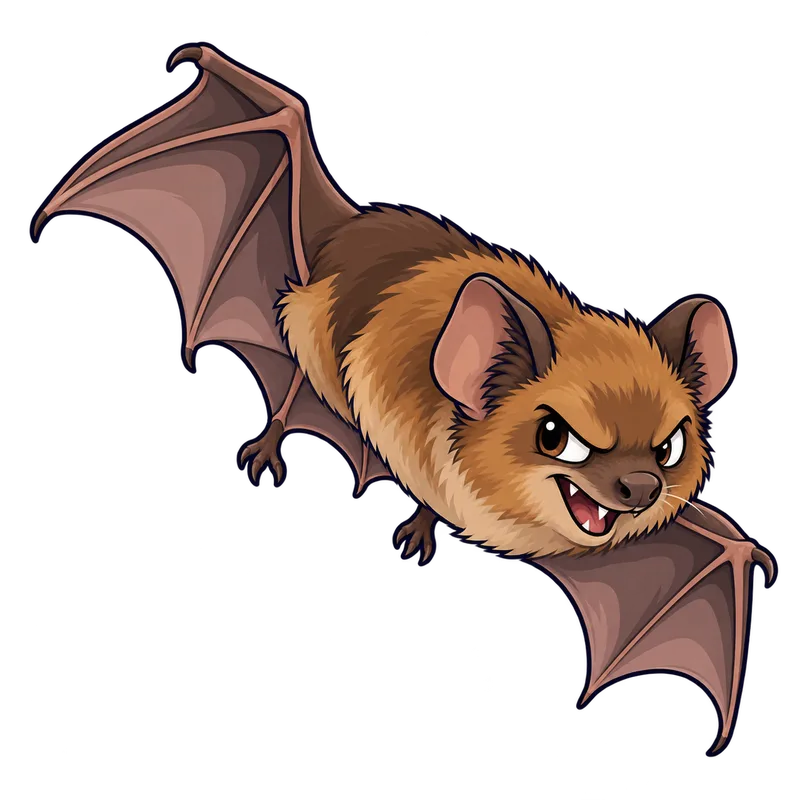
Telling a little brown bat from a big brown bat in the wild comes down to overall body size, forearm length, and minute anatomical traits like the shape of the cartilage flap inside the ear. Unless you have the animal in your hand under a magnifying glass, you usually cannot tell them apart at all.
What is actually going on
Picture standing on your back patio on a warm July evening, holding a cold glass of iced tea as the sun dips below the roofline. A dark, erratic shape zips past your head, hunting mosquitoes with terrifying agility. You look up and realize it just dropped right out from behind your fascia boards. Now you are staring at your house wondering who the tenant is, whether it is a little brown bat or a big brown bat, and how on earth you are supposed to tell them apart without a degree in mammalogy.
To give you the short answer right away, telling a little brown bat from a big brown bat in the wild comes down to overall body size, forearm length, and minute anatomical traits like the shape of the cartilage flap inside the ear or the spur on the tail membrane. But unless you have the animal in your hand under a magnifying glass, you usually cannot tell them apart at all. Both species love human structures just as much as we do, frequently setting up large maternity colonies in warm attics, dark chimney chases, and tight wall voids.
People often assume you can just look at a flying silhouette and judge the dimensions, but that is a quick way to guess wrong. Bats move fast in dim light, and their size can easily deceive the eye, especially when you are comparing a large female little brown bat to a small or juvenile big brown bat. Instead of agonizing over species identification from the lawn, most homeowners find it far more practical to focus on recognizing bat activity, locating their exit points, and understanding how these animals use the structure.
How to tell for sure
If you do happen to find a bat in hand, or if a wildlife specialist examines a captured specimen, the differences become much clearer. The big brown bat lives up to its name by being a substantially heavier animal with a broad snout, dark leathery wings, and a noticeably larger frame. The little brown bat is much smaller, featuring glossy bronze-to-dark-brown fur with a distinct metallic sheen and longer toe hairs that stretch past the claws.
Looking closer at the micro-anatomy reveals the definitive traits that researchers use. The little brown bat has a medium-length, straight, blunt cartilage flap inside the ear canal, known as the tragus, and its tail membrane spur lacks a visible keel. The big brown bat displays a broad, rounded, curved tragus and a distinctly keeled spur. If you are standing on a ladder trying to peer into a dark gable vent, you are not going to see any of those features. Field identification usually stops right at the genus level once the animal is aloft or tucked safely inside a structural void.
Instead of chasing down an impossible ID from a distance, look at the evidence they leave behind. Bat guano, which is the polite word for droppings, piles up directly beneath entry holes or attic roosts. If you poke a dry dropping with a stick and it easily crumbles into a fine, glittering powder made of digested insect parts, you have bats. Rodent droppings are hard, waxy, and smooth, whereas bat guano falls apart under the lightest pressure. Standing outside at dusk to watch where they emerge, or setting up a game camera near a suspected gap, gives you all the practical information you need without ever having to touch the wildlife.
What usually comes next
Once you know you have bats in the building, the next practical step is figuring out when and how you can legally do anything about it. You cannot just climb up with a tube of caulk tomorrow morning and seal every hole you find. Blocking structural gaps while bats are actively living inside leads to trapped animals, foul odors, and severe wildlife violations. More importantly, nearly all native bat species are protected by state and federal laws that prohibit harming, killing, or harassing them at any time.
There is a strict calendar you have to follow, usually governed by local wildlife agencies. During the spring and summer maternity season, adult females gather in buildings to give birth and raise flightless pups. Blocking exits during this window traps the young inside to starve, which is why structural exclusions are legally restricted to late summer, fall, and early winter after the young are fully flying and on their own.
When the correct season arrives, the proper method involves installing temporary one-way exclusion devices, such as mesh netting or plastic check-valves, over the entry points. These contraptions let the animals leave at night to hunt bugs, but make it impossible for them to squeeze back inside. To make sure everyone has checked out, you can run a simple readiness test by lightly wedging crumpled newspaper or placing criss-crossed tape across the gaps. If the paper stays completely undisturbed for at least three consecutive days of good weather, the building is empty. Only then can you permanently seal every opening with heavy metal mesh, flashing, or structural sealant.
When to get help
There are a few specific scenarios where a DIY approach is completely off the table and you need to call in outside assistance immediately. If a single bat finds its way into your living quarters, such as a bedroom or a hallway, treat it as a public health issue rather than a pest problem. Never release a bat indoors if there is any chance of direct contact, or if you find the animal in a room with a sleeping person, an intoxicated individual, or an unattended child, because bites can occur without waking someone up. Local public health authorities and animal control need to capture the animal safely for rabies testing, and you should consult a clinician right away if exposure is suspected.
Cleaning up after a long-term infestation also requires a careful touch. Accumulated bat guano in enclosed attics harbors fungal spores and bacteria that can cause serious respiratory illness when disturbed. Never dry-sweep or vacuum old guano piles, as this sends hazardous dust straight into the air. Anyone tackling cleanup needs to wear protective gear, including disposable gloves, boots, and a respirator, while lightly misting the waste with water beforehand to keep the dust down.
Finally, bring in a licensed wildlife control operator or a specialized pest management firm whenever the job involves high-altitude work on steep roofs, commercial buildings with deep expansion joints, or active maternity colonies that require professional monitoring until the legal exclusion window opens. Trying to balance on a three-story roof while managing legal exclusion calendars is a recipe for disaster, and letting a professional handle the heavy lifting keeps both you and the local wildlife out of trouble.