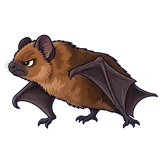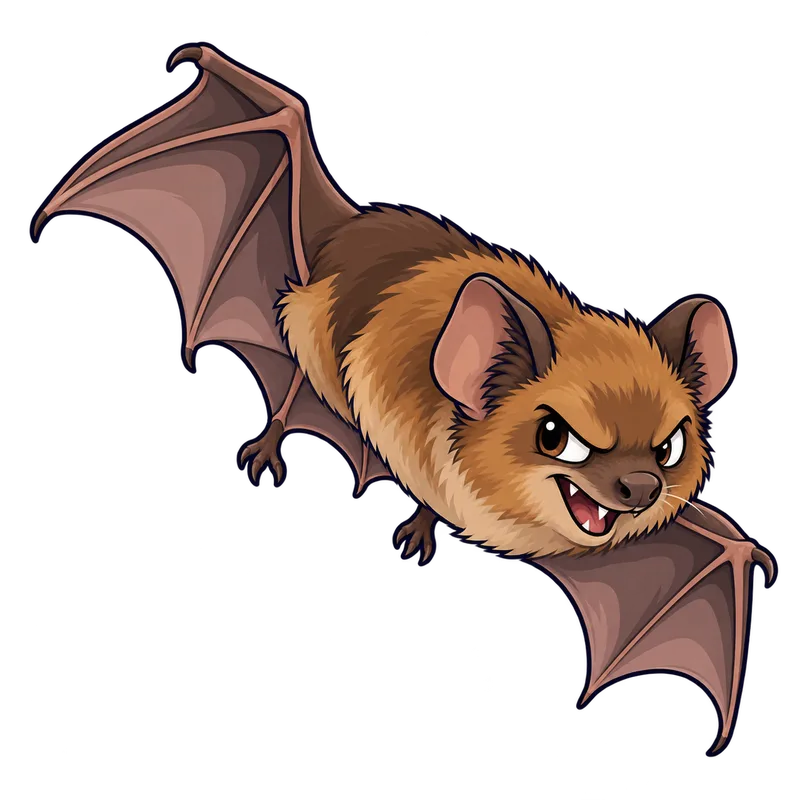
Little brown bat
Myotis lucifugus
- Size
- Fits through thumb-sized gaps
- Color
- Dark brown to cinnamon-brown dorsal pelage
- Habitat
- Attics, wall voids, hollow trees, and caves
- Diet
- Strictly nocturnal insectivores
- Life cycle
- One pup per annual breeding cycle
The little brown bat is a compact, furred mammal found throughout North America, frequently encountered when it roosts in residential attics, chimneys, and wall voids. It features dark brown to cinnamon-brown fur on its back, lighter brownish-grey underparts, and dark, leathery wing membranes supported by elongated finger bones and a small, clawed thumb on the leading edge.
Identity
People often confuse little brown bats with mice or rats because both groups slip into buildings and leave droppings behind. A quick look at the droppings settles the question. Rodent droppings are smooth and hard, filled with fibrous plant material or hair that stays intact when pressed. Bat droppings are dark and cylindrical with a bristle-like surface that crumbles effortlessly under light pressure into a dry, shiny powder made entirely of crushed insect wing fragments. Telling the little brown bat apart from other members of its family is a greater challenge. North America hosts dozens of similar species, and visual identification from the ground or a photograph is not reliable. Distinguishing these animals requires examining forearm length, the shape of the tragus inside the ear, or recording acoustic echolocation calls, which is a task for a wildlife biologist rather than a homeowner.
Habitat & behaviour
These bats spend their daylight hours hidden away in sheltered microclimates. In the wild, they choose hollow trees, loose tree bark, rock crevices, and caves. Human-built structures offer an irresistible substitute, including residential attics, tile roofs, wall voids, chimneys, soffits, and artificial bat houses that provide the warm, dark, undisturbed spaces they need.
They are strictly nocturnal insectivores, waiting until dusk to emerge and hunt night-flying insects across residential yards, agricultural fields, and natural landscapes. If you want to figure out where they are getting into a building, the best approach is a perimeter bat watch. Standing outside at dusk lets you spot them pouring out of structural gaps and gives you a clear sense of where the colony lives. One detail that often surprises people is that little brown bats do not chew, gnaw, or destroy wood, wiring, insulation, or building materials the way mice and rats do. They are not structural vandals. Their presence becomes noticeable through the steady accumulation of guano and urine beneath their roosting spots, which eventually brings a pungent ammonia odor and stains on drywall.
Visual variations
Because these mammals live lives quite different from social insects, you will not find complex colonies divided into castes like workers or queens. Every adult is built for a straightforward routine of hunting insects and raising young, whether it lives alone or shares a space with dozens of others. External differences between adult males and females are minimal, though females tend to average slightly larger overall dimensions than males.
The life stages change dramatically from spring to late summer. A newborn pup starts out entirely dependent on its mother. It is born hairless or thinly furred, completely blind, and lacks the muscle development and wing proportions needed for flight. These flightless pups stay crammed inside the maternity roost while the adults head out to forage each night. By July or August, the pups undergo a complete transformation. They grow a full coat of dense body fur, develop adult-sized wing dimensions, and master flight. Once these juveniles become capable of sustained flight, they look almost identical to the adults sharing the roost with them.
Why it matters
The presence of a bat colony in a building is less about physical damage to the structure and more about hygiene, odors, and health precautions. Long-term roosting creates heavy accumulations of guano and urine. In enclosed, poorly ventilated attics, breathing in dust from large deposits of this material poses respiratory and fungal risks, which is why anyone cleaning those spaces needs proper personal protective equipment, such as an N95 particulate respirator and disposable gear.
On the health side, the main concern centers on rabies transmission. Grounded, injured, or sick bats present a real risk to domestic pets like cats and dogs that investigate them, meaning pets need to be kept away and maintained on current rabies vaccinations. If a bat is found in a room with a sleeping person or a young child, the situation requires immediate consultation with a clinician or local public health authority because unrecognized bites can happen without waking someone up. Excluding bats from a building requires careful timing because of how their breeding cycle works. Female bats gather in spring to form maternity colonies, and they give birth to just a single pup per year. Structural exclusions are banned during the sensitive summer maternity period to protect flightless pups from being trapped inside and starving. Permissible non-lethal exclusion using one-way valves is allowed only after the young can fly.