
What are bat bugs?
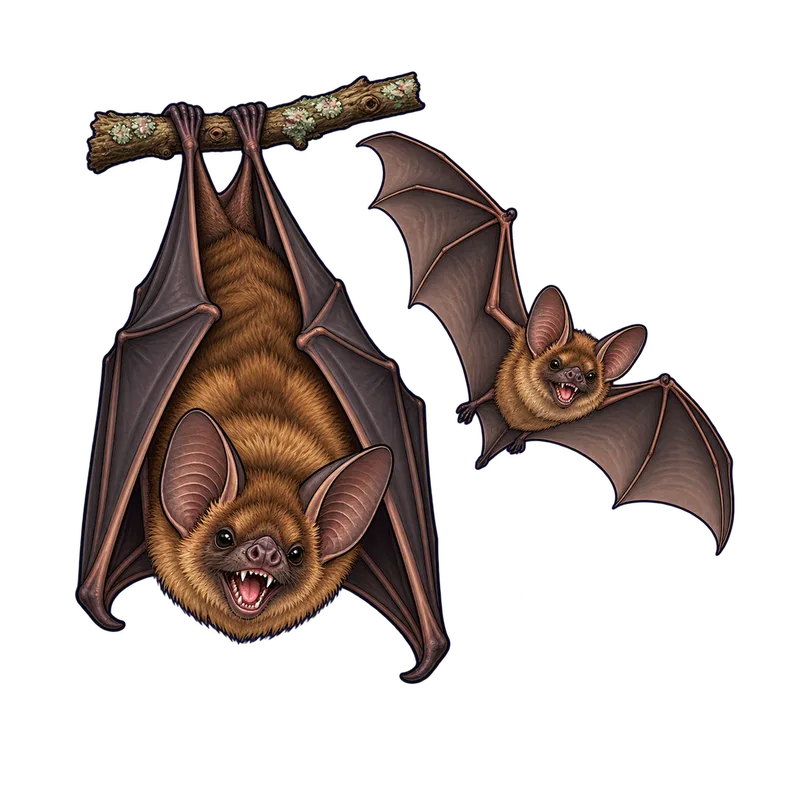
Bat bugs are small, wingless, flat-bodied parasites measuring about 5 to 7 mm long that belong to the same insect family as bed bugs. They live in attics, chimneys, and wall voids to feed on bats, but they wander downward into living spaces when their hosts leave or die out.
What is actually going on
You are walking down the hallway on the top floor of your house, glance up at the ceiling molding, and spot a flat, reddish-brown bug crawling slowly across the paint. Your first thought is that you brought home bed bugs from your last hotel stay. You check the mattress edges, the box springs, and the sheets, but everything looks completely clean. There are no clustered nests, no dark spotting, and no bites where you sleep. So how did a bug that looks remarkably like a bed bug wind up walking across a second-story ceiling far away from any bed?
What you are looking at is very likely a bat bug. These are small, wingless, flat-bodied parasites that belong to the exact same insect family as bed bugs, which explains why they look nearly identical at a glance. But their lifestyle is entirely different. Bat bugs are obligate parasites of bats, meaning they live out their lives inside bat roosts tucked away in attics, chimneys, and wall voids. They feed primarily on bats to reproduce and maintain their colonies. They do not naturally live in human bedding, and they do not build harborage areas around furniture.
You might wonder why a bug meant to live on a bat is wandering around your living space. The explanation usually comes down to what happened overhead. If bats were recently excluded from your attic, if they migrated away for the season, or if a roost died out, the remaining bat bugs find themselves suddenly deprived of their primary food source. Bat bugs can survive for many months without a meal, but hunger eventually drives them to migrate. They wander downward through wall voids, around electrical outlets, along light fixtures, and through ceiling cracks, ending up right on your upper walls and ceilings.
How to tell for sure
Telling a bat bug apart from a common bed bug with the naked eye is usually impossible. Both insects measure around 5 to 7 mm long when unfed, share an oval shape, and feature that same reddish-brown coloring. If you try to snap a photo with your phone camera, the resulting image will usually blur out the tiny anatomical details you need to make a firm ID.
Positive identification requires high magnification, usually a stereoscope or a digital microscope providing 20x to 50x magnification, to examine a specific physical feature. You have to look at the front thoracic plate just behind the head, known as the pronotum, and measure the tiny fringe hairs along its outer edges. On a bat bug, those fringe hairs are usually equal to or longer than the width of the insect's eye. On a standard bed bug, those hairs are noticeably shorter than the width of the eye.
Where you find the bug usually offers a strong behavioral clue before you even reach for a microscope. Finding single bugs crawling high up on upper walls, near attic hatches, or around recessed ceiling lights usually points toward bat bugs. Bed bugs, by contrast, cluster tightly in aggregations down low near mattresses, bed frames, and living room furniture where people rest for hours at a time. If you suspect bat bugs, collect a few intact specimens using clear tape or a small plastic vial so an expert can examine them properly.
What usually comes next
The smartest move you can make right now is to stop yourself from treating your bedrooms for bed bugs. Spraying mattress seams and box springs with store-bought pesticides completely misses the actual source of the problem, which is almost certainly tucked away in the attic or inside the wall voids where the bats were living.
Instead, your plan of attack needs to follow a strict two-step sequence. First, you have to address the bats. Because bats are protected wildlife species governed by federal and state regulations, you cannot simply seal an attic whenever you feel like it, especially during sensitive maternal seasons when flightless young might be trapped inside. You need to bring in a licensed wildlife control operator to handle legal exclusion, which means installing one-way doors and sealing entry points at the correct time of year.
Once the bats are safely gone, you still have to deal with the leftover bugs. Since starving bat bugs naturally migrate downward into your living areas over the following weeks, treating the attic spaces and structural entry pathways with residual insecticides is essential. This structural work needs to be handled by a licensed pest management professional who can apply approved products safely and strictly according to the label directions.
When to get help
You should bring in professional help the exact moment you suspect that bats are living in your home. Handling live or dead bats yourself carries serious public health risks, most notably rabies, so you should never touch a bat with bare hands. A licensed wildlife control operator needs to handle the exclusion process safely and legally.
If you or anyone in your household is dealing with persistent bite symptoms, keep in mind that bat bug bites can cause red welts, intense itching, anxiety, and sleeplessness, and excessive scratching can sometimes lead to secondary bacterial skin infections. Neither writers nor pest controllers can diagnose medical symptoms. If anyone experiences severe reactions, widespread rashes, or signs of infection, consult a clinician, urgent care center, or your local poison control service right away.
Finally, before you pay for any specialized treatments, bring in a professional entomologist or a university extension diagnostic clinic to verify the identity of the insect specimen under a microscope. Knowing for certain whether you are dealing with bat bugs, bed bugs, or swallow bugs ensures that the money you spend actually fixes the source of the trouble rather than treating the wrong problem entirely.