
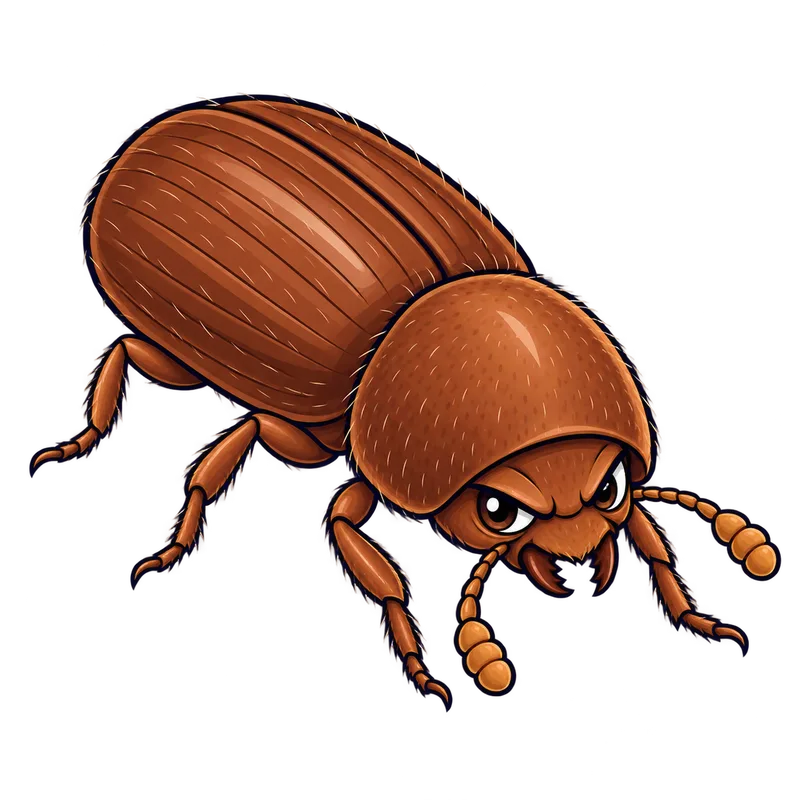
Drugstore beetle
Stegobium paniceum
- Size
- 2.25 to 3.5 mm
- Color
- Uniform reddish-brown to brown
- Habitat
- Pantries and heated buildings worldwide
- Diet
- Dry foods, spices, drugs, books, and leather
- Life cycle
- Less than 2 months under favorable conditions
The drugstore beetle is a small insect that you usually notice only when it decides to leave its dinner table and fly toward your reading lamp. Scientifically known as Stegobium paniceum, it also goes by the biscuit beetle in the United Kingdom and across Commonwealth markets, a nod to its historic habit of tunneling through tins of army rations and dry baked goods.
Identity
When you peer at an adult beetle with a simple ten-power magnifying glass, you can spot the features that give away its identity. The body is cylindrical, measuring between 2.25 and 3.5 mm, and wears a coat of uniform reddish-brown. If you look at it from the side, the head is tucked down at a right angle beneath a humped back, giving it the posture of a tiny, disgruntled monk. The wing covers feature distinct longitudinal rows of fine pits, creating neat parallel lines accompanied by short, bristling hairs.
Turn your attention to the antennae, and you will find eleven segments ending in a loose, three-segmented club. That club is your main clue when distinguishing it from the cigarette beetle, its closest look-alike. While the cigarette beetle shares the same size, color, and humpbacked profile, its antennae are saw-toothed from base to tip without any terminal club, and its wing covers are completely smooth instead of pitted.
Flour beetles can also cause confusion with their reddish-brown bodies, but they are flatter, lack the downward-bent head, and run rather than fly. Wood-boring beetles share an affinity for chewing through dense material, but they stay in structural timbers and furniture rather than raiding your pantry shelves or your medicine cabinet.
Habitat & behaviour
This species is cosmopolitan, meaning it tags along wherever humans transport dry goods. In unheated outdoor spaces or wild bird nests, activity concentrates during the warm months of spring and summer. Inside climate-controlled homes, bakeries, and heated warehouses, however, the calendar disappears. Feeding and breeding continue year-round across three to six overlapping generations, provided the indoor temperature stays between 60 and 93 degrees Fahrenheit.
Adults are nocturnal and display strong positive phototaxis, which is a fancy way of saying they love a bright bulb after dark. If you see tiny beetles buzzing around your kitchen ceiling lights or television screens late at night, you are likely looking at flyers that have emerged from an established indoor breeding site.
The female beetle relies on a chemical scent called stegobinone to attract males for mating. Once fertilized, she deposits up to 75 eggs directly on or inside a suitable food source. Those eggs hatch into tiny, white, C-shaped grubs that do the heavy lifting of the infestation by chewing through your belongings.
The species manages this broad menu thanks to an obligate mutualistic symbiosis with internal yeasts. As the mother beetle lays her eggs, she coats them in yeast cells. The newly hatched larvae consume these microscopic companions while eating their way out of the eggshell, equipping their digestive tracts with the tools needed to break down foods that lack basic nutritional value.
Visual variations
You will not find distinct social classes in this population, and the male and female look remarkably similar unless you inspect them very closely. The life cycle transitions through four separate phases: egg, larva, pupa, and adult.
The eggs are tiny, white, and rounded, dropped individually or in modest batches. The grubs that hatch out are curved and can reach about 4 mm when fully grown. They feature fine hairs and a distinct brown head. Looking at the front of that head under strong magnification reveals a clean horizontal line right above the mouth, accompanied by three pairs of short legs.
Once the grub stops eating, it spins a compact, oval case out of silk, waste, and bits of whatever material it has been consuming. Inside that protective shell, it rests and shifts into a pale, soft pupa.
The adult that eventually chews its way out has working wings hidden under its pitted shell. While the young grubs do all the damaging tunnel work, the adults concentrate on finding new territory and mating. An adult typically survives for two to four weeks, though sometimes up to sixty-five days, spending that time flying toward lights or searching for fresh food.
Why it matters
This beetle earned its traditional title inside old pharmacies, where it happily devoured jars of dried roots, medicinal herbs, and even poisonous powders. The old saying that it eats everything except iron is only a slight stretch. Its modern grocery list features flour, breakfast cereals, hot spices like paprika, chocolate, and coffee beans.
Outside the kitchen pantry, it damages animal feed, leather products, wool clothing, stuffed museum displays, and antique books, leaving behind powdery waste and small silk cocoons. Both the grubs and the mature beetles easily drill right through cardboard boxes, paper bags, plastic packaging, and thin foil wrappers to get at food or break out of a finished container.
Despite that impressive list of chewed materials, the insect poses no direct threat to human health. It does not bite, sting, spread disease, or damage house framing. Finding them is simply an irritating nuisance that ruins dry food supplies and damages valuable personal collections.
Accurate identification matters greatly when you need to track down the root of an infestation or rule out other troublemakers. If flying beetles keep showing up indoors even after you scrub the food cabinets, the hidden breeding spot might be lurking inside an old bag of pet food, a decorative dried wreath, or a forgotten box of books. For heavy infestations in commercial storage spaces, museums, or rare archives, specialized heat treatments or professional pest control help protect sensitive items without risking chemical contamination on sensitive surfaces.
Similar species
 Cigarette beetleLasioderma serricorne
 Varied carpet beetleAnthrenus verbasci
 Black carpet beetleAttagenus unicolor
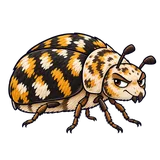 Furniture carpet beetleAnthrenus flavipes
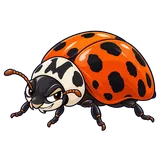 Multicolored Asian lady beetleHarmonia axyridis
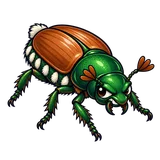 Japanese beetlePopillia japonica