
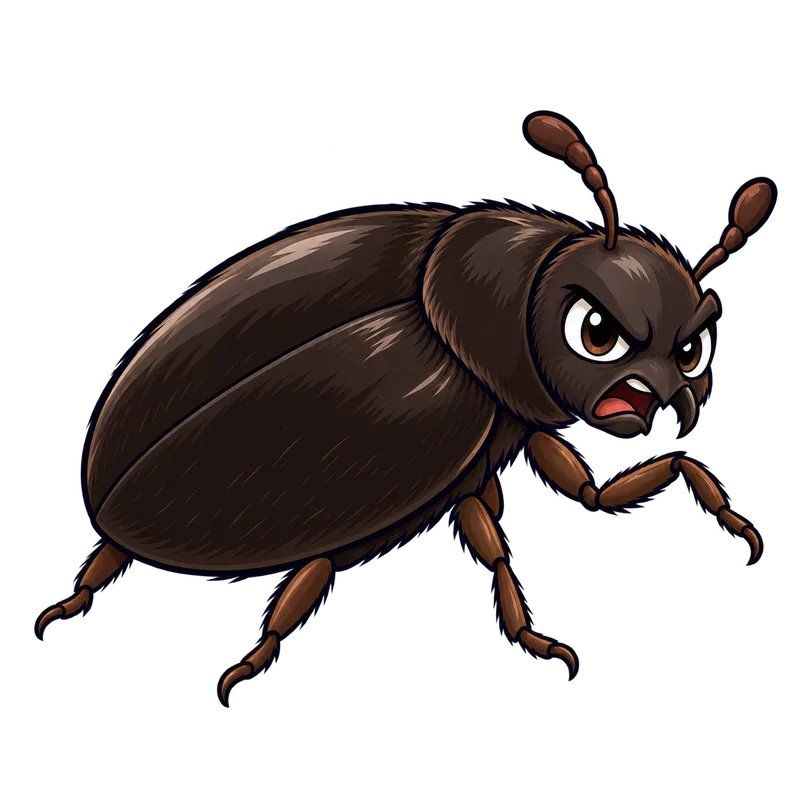
Black carpet beetle
Attagenus unicolor
- Size
- 1/8 to 1/4 inch
- Color
- Solid shiny black
- Habitat
- Quiet, dark indoor spaces
- Diet
- Animal fibers and stored foods
- Life cycle
- 180 to 650 days
The black carpet beetle is a domestic insect whose adult stage is a small, compact, oval beetle measuring 1/8 to 1/4 inch in length. Its body is a solid, shiny black, paired with contrasting dark brown legs. You can easily spot the adults with the naked eye when they wander out into the open, but their larvae require a closer look. Mature larvae reach up to 1/2 inch long and feature a narrow, carrot-shaped body that tapers significantly toward the rear. Under slight magnification, you will notice their golden-brown to dark brown coloring, short stiff hairs along the segments, and a distinctive, long, brushy tail of brown terminal bristles.
Identity
You can tell this species apart from the varied carpet beetle by looking closely at its back. While the varied carpet beetle wears a busy coat of white, yellow, and brown scales, the adult black carpet beetle keeps things plain and solid. Its smooth wing covers lack any colored patterns or scales entirely. The larvae are equally distinct. Unlike the shorter, banded woolly bear larvae of other species, the carrot shape and prominent tail tuft of the black carpet beetle larva mark it out immediately as it creeps through dark crevices.
Habitat & behaviour
Indoors, these beetles seek out quiet, dark, low-traffic areas where organic debris collects out of sight. You will find their larvae tucked away along baseboard cracks, under heavy and seldom-moved furniture, inside heating ducts, and on closet shelves where woolens and furs hang undisturbed. They also thrive in structural reservoirs like attics and wall voids, feeding on accumulations of dead insects or forgotten bird and rodent nests.
Adults behave quite differently from the creeping immature stages. While larvae avoid light and stay hidden in the dark, adults are drawn directly to sunlight and indoor lighting. In late spring and early summer, you will often find adult beetles crawling or flying near windows as they try to head outdoors. Outdoors, they spend their short lives feeding on flower pollen before returning to buildings or animal nests to lay eggs.
Visual variations
This insect goes through complete metamorphosis, which means it shifts through four distinct stages with zero social complexity. It starts as a tiny, fragile white egg hidden directly inside lint or right upon a food source.
When that egg finally gives way, it releases the active, destructive larva. This is the stage doing all the walking and chewing, wearing that carrot-shaped brown body covered in short bristles and tipped with its signature tail tuft. As the larva grows, it sheds its skin multiple times, leaving behind hollow, hairy brown husks that mix right in with the dust and lint of dark corners.
Before it finally becomes an adult, the insect pauses as a whitish to yellowish pupa tucked away inside its final larval skin or some quiet crevice. The emerging adult is that small, shiny black beetle with brown legs and fully developed flying wings. Males and females look remarkably alike, and neither sex actually damages your clothes or carpets, leaving all the structural trouble entirely to the wandering larvae.
Why it matters
Finding these beetles indoors usually means you are looking at material damage or pantry contamination. The larvae feed on anything packing animal keratin, which covers wool carpets, fur coats, feathers, leather, and silk, and they leave behind large grazed patches or clean-edged holes. They also raid the pantry for cereal grains, flour, and dried milk, and will chew right through synthetic fabrics if those clothes happen to be stained with sweat or food oils.
Neither the adults nor the larvae bite or transmit human diseases, but they can still cause physical misery. Contact with the barbed hairs on shed larval skins can trigger mechanical skin irritation, localized dermatitis, or allergic reactions in sensitive people, while airborne hairs in heavy infestations can aggravate asthma. If you are dealing with a massive infestation spread across multiple rooms, historic woolens, or hidden wall voids, bringing in a professional pest management specialist ensures the use of targeted dusts, thermal treatments, or proper inspections without risking incorrect chemical applications.
Similar species
 Furniture carpet beetleAnthrenus flavipes
 Multicolored Asian lady beetleHarmonia axyridis
 Japanese beetlePopillia japonica
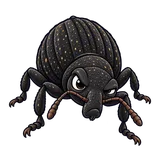 Black vine weevilOtiorhynchus sulcatus
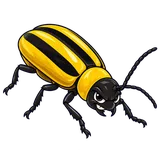 Striped cucumber beetleAcalymma vittatum
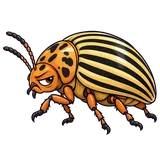 Colorado potato beetleLeptinotarsa decemlineata