
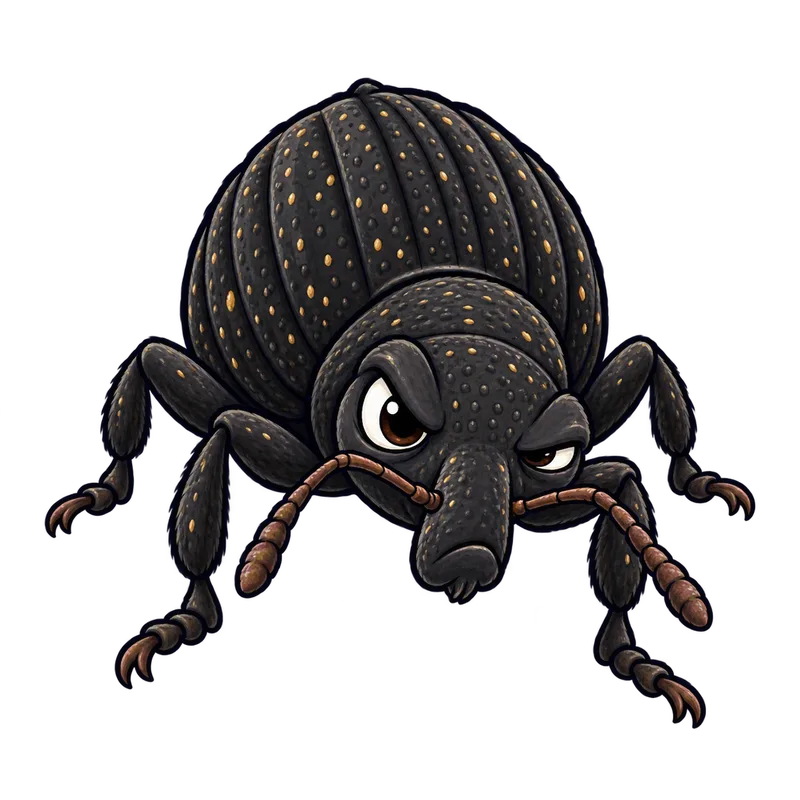
Black vine weevil
Otiorhynchus sulcatus
- Size
- Adults 9 to 25.4 mm; larvae up to 12.7 mm
- Color
- Dull black to grayish-black with dirty yellow flecks
- Habitat
- Soil, leaf litter and potting media around host plants
- Diet
- Adults eat foliage of 100+ ornamentals; larvae eat roots
- Life cycle
- One generation per year; egg, legless grub, pupa, adult
The black vine weevil, Otiorhynchus sulcatus, is a flightless snout beetle you are most likely to meet in a garden bed, a greenhouse, or a nursery pot rather than out in open country. The first useful fact is almost rude in its simplicity: every adult you will ever see is female. There are no males of this species, and each female can reproduce by parthenogenesis, meaning she makes copies of herself without mating, so one unnoticed hitchhiker in a pot can become a local dynasty.
Identity
At normal looking distance she reads as a slow, deliberate black beetle with a pear shaped outline and a broad snout that bends downward, like a little trunk that lost its confidence. The wing covers are fused shut, so she does not fly; she walks, hides, and rides along in plants people move. A hand lens helps with the finer dirty yellow flecking on the wing covers, but the snout, the matte dark body, and the fused wing covers are the marks that matter.
If you ever see two of these weevils mating, do not congratulate yourself on finding a rare moment. You are probably looking at a different Otiorhynchus, such as Otiorhynchus armadillo, which still does things the old way.
Habitat & behaviour
This weevil runs two shifts. By day the adults tuck into leaf litter, soil cracks, the undersides of greenhouse benches, and the dark corners of sheds and shipping trucks. After dark they climb into the plant and cut crescent shaped bites from leaf edges, the kind of neat notching that shows up on rhododendron, azalea, euonymus, yew, hydrangea, and a long list of other ornamentals, fruit plants, and woody plants. They are not fussy, which is exactly the problem.
The larvae stay underground and out of the conversation. Eggs hatch in about 10 days, and the grubs feed in soil or potting mix from summer into the following spring. Small larvae take fine feeder roots first. Bigger ones strip bark near the stem base, girdle the plant, and tunnel into fleshy tubers such as cyclamen and begonia. Their heaviest feeding runs from September through March, when most of us are looking at the garden least.
Adults emerge mainly from late May through early July, then feed on foliage for 2 weeks to a month before laying eggs. That delay is your early warning: fresh notches in early summer mean females are building strength, not that the root damage has already peaked.
Visual variations
The egg is a smooth brown sphere under 1 mm across, dropped loose into soil or litter and almost never noticed. A classic false alarm is the yellowish brown ball in commercial potting mix. Those are usually slow release fertilizer prills, and they are noticeably larger than real eggs.
The larva is the stage worth learning. It is plump, C shaped, creamy white, and light brown at the head, with no legs at all. That last detail saves arguments, because scarab white grubs such as Japanese beetle larvae can look similar in a trowel of soil but carry three obvious pairs of legs behind the head.
The pupa is soft and off white, resting in a small soil cell near the roots in late spring. Since all adults are female, there are no male ornaments to memorize, no winged form to watch for, and no castes. One adult body plan, copied again and again.
Why it matters
The leaf notches look dramatic and are mostly cosmetic. The serious injury happens below the surface, where grubs remove roots and girdle stems until a plant wilts even though the soil is moist. Container grown stock is especially exposed because a pot holds only so many roots to lose, and a plant can look merely thirsty right up until it is finished.
For people and pets, the weevil itself is harmless: no biting, no stinging, no disease. The practical trap is chemical confidence. Adults are widely resistant to organophosphate, carbamate, and pyrethroid sprays, so repeated spraying can fail while removing ground beetles that naturally hunt weevils. Beneficial nematodes are the proven option against grubs, but only inside soil temperature and moisture windows, roughly 40°F to 86°F for Steinernema kraussei and above 70°F for Heterorhabditis bacteriophora. Precise identification comes before any treatment, because lookalikes such as the privet weevil can notch leaves without the same destructive root feeding, and any soil drench or commercial disinfestation belongs to a licensed applicator following the product label.
Similar species
 Striped cucumber beetleAcalymma vittatum
 Colorado potato beetleLeptinotarsa decemlineata
 Plum curculioConotrachelus nenuphar
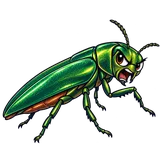 Emerald ash borerAgrilus planipennis
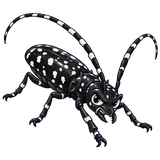 Asian longhorned beetleAnoplophora glabripennis
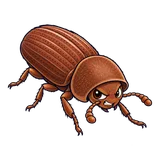 Common furniture beetleAnobium punctatum