
Why is a black vine weevil in the house?
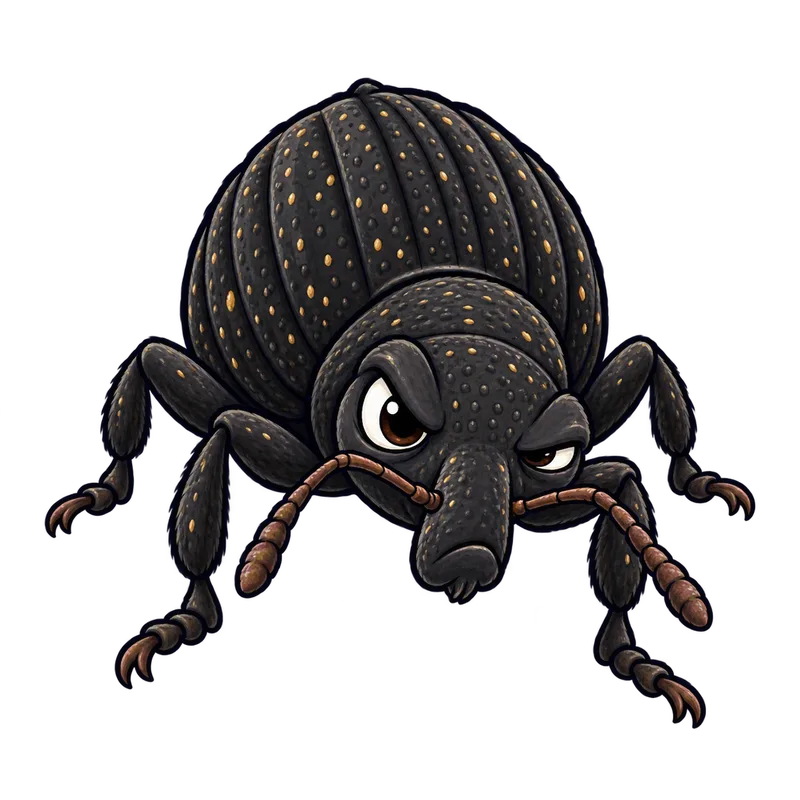
A black vine weevil is inside your house because it is a lost outdoor hiker that entered accidentally through foundation cracks or gaps around door thresholds. Because its hard wing covers are fused, the flightless insect cannot fly and crawls indoors to hide from the sun.
What is actually going on
You are standing in the middle of your living room, coffee mug in hand, when you spot a dull black beetle with a prominent snout crawling slowly across the baseboard. Naturally, you wonder how it got there and whether your house is about to face an infestation.
The short answer is that the black vine weevil is just a lost outdoor hiker that took a wrong turn. These insects enter houses accidentally by crawling through foundation cracks, gaps around door thresholds, or window openings from adjacent landscaping. They can also hitch a ride indoors when you bring potted container plants inside for the season.
Picture this beetle as a nocturnal, armored vehicle with a welded hatch. Because its hard wing covers are permanently fused together, it cannot fly. It cannot reach your living room by buzzing through an open second-story window. Instead, it travels exclusively on foot. When dawn approaches, the beetle instinctively searches for a dark, humid place to hide from the sun. A tiny gap beneath a sliding glass door looks like a cozy cave, so it wanders inside.
Once it is on your dry indoor carpet or hardwood floor, its journey hits a dead end. These insects cannot feed on structural timber, carpets, fabrics, or pantry goods. More importantly, they cannot reproduce in a dry residential room because their eggs and larvae require moist soil containing living plant roots. The wanderer in your living room will eventually die of desiccation without starting a family.
How to tell for sure
Finding an odd bug usually leads to a quick round of guessing, but this one has a very distinct look. An adult black vine weevil usually measures about three-eighths to one-half of an inch long. Its body is pear-shaped and dull black or grayish-black, often sprinkled with tiny, irregular flecks of dirty yellow or gold scales.
If you grab a magnifying glass and take a closer look, you will usually notice a broad, downward-pointing snout with chewing mandibles at the tip. You will also see elbowed antennae and deep punctures running in rows along those fused wing covers.
You might wonder if these bugs bite or damage your home while they are inside. Rest easy on that score. They do not bite humans or pets, and they do not sting or carry diseases. If you notice a rash or skin welts after doing yard work, do not blame a weevil. Those symptoms usually come from entirely different outdoor sources, such as contact with stinging caterpillars.
Outside in the garden, you can usually spot their handiwork long before you see the beetles themselves. Adults leave distinct, crescent-shaped or U-shaped notches along the edges of plant leaves, particularly on rhododendrons, yews, and euonymus. That leaf notching is mostly cosmetic. The real trouble happens underground, where the plump, white, legless grubs feed on plant roots and girdle the stems, which can cause a seemingly healthy garden shrub to suddenly wilt and die.
What usually comes next
When you spot one of these beetles indoors, the immediate decision is simple: do not reach for a chemical aerosol spray. Spraying living rooms for accidental wanderers is messy, unnecessary, and largely ineffective.
Instead, handle the situation mechanically. Grab a broom and dustpan or use your vacuum cleaner to pick up the individual beetle, then empty the vacuum contents or bag into an outdoor trash bin.
To stop future wanderers from making the same trip, focus on exclusion. Caulk and seal exterior cracks in your foundation, check the weather stripping around your doors, and make sure your window screens are snug. It also helps to pull heavy mulch, leaf litter, and yard debris at least six inches away from your exterior foundation walls. That simple adjustment removes the dark, damp daytime hiding spots that attract them to your house in the first place.
If you find them on your outdoor plants, you can manage the population without drenching your garden in harsh synthetic chemicals. In fact, field populations of these pests have developed widespread resistance to many common insecticides. Furthermore, broad-spectrum sprays often kill the beneficial ground beetles that naturally hunt weevils, which can actually cause the pest population to bounce back even higher. Late-night flashlight patrols let you handpick the slow-moving adults off your foliage before they lay eggs, or you can apply beneficial microscopic roundworms to the soil in late summer to target the root-feeding grubs below.
When to get help
Most encounters with a stray beetle on a living room floor call for nothing more than a quick sweep and a sealed trash bag. However, certain situations warrant calling in outside expertise.
If you manage a commercial nursery or are dealing with strict agricultural shipments that require certified quarantine treatments, you will need a professional applicator familiar with regulatory compliance.
You should also reach out to a professional pest control operator or your local university extension office if you suspect you are dealing with wood-boring insects rather than incidental garden wanderers. Finding a beetle with a broad snout on your rug is harmless, but discovering structural pests like termites or powderpost beetles chewing on your framing timbers requires a completely different level of intervention.