
What do varied carpet beetle larvae look like?
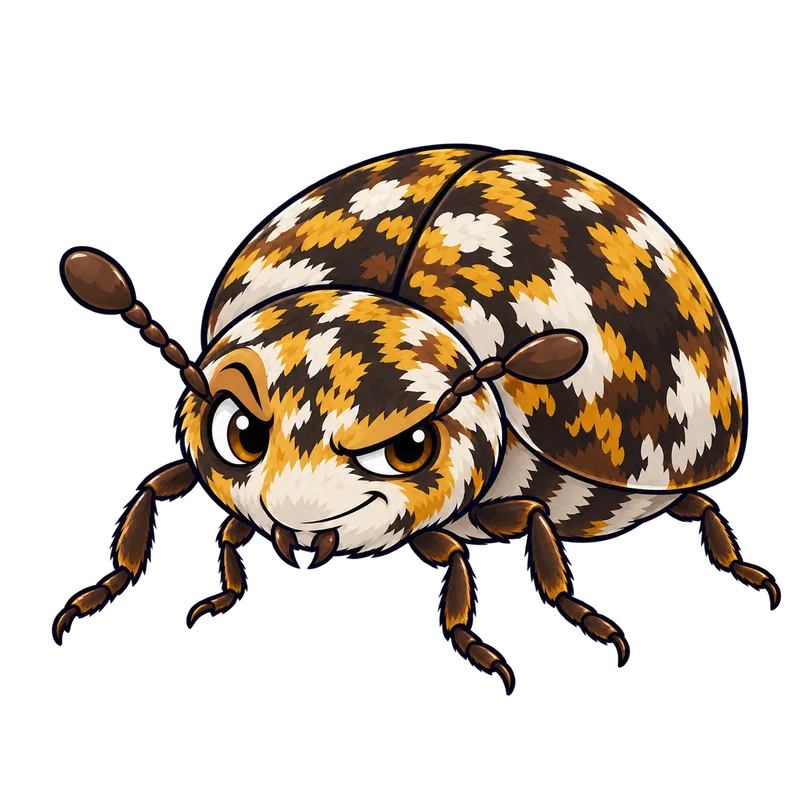
Varied carpet beetle larvae are tiny, fuzzy caterpillars shaped like a carrot or a teardrop, measuring about three-sixteenths of an inch long when mature. They feature alternating light and dark brown stripes across their body and three pairs of dense hair tufts near their wider rear end.
What is actually going on
You are putting away winter woolens in the back of the closet, and right there in the fold of a heavy sweater, you spot a tiny, moving smudge. You lean in closer to inspect it. It looks like a microscopic, fuzzy little caterpillar crawling at a remarkably unhurried pace across your favorite cashmere. It is about the size of a grain of wild rice, featuring distinct brown stripes and a coat of bristly hair.
What you are looking at is the larval stage of the varied carpet beetle. While adult beetles spend their days outside sipping nectar from daisies and blooming shrubs, their offspring prefer the dim, quiet interiors of our homes. These larvae are the sole culprits behind the mysterious holes in your wool sweaters, felt hats, and upholstered furniture. They do not eat plants or synthetic fabrics unless those items happen to be flavored with a nice coating of spilled food, body oils, or sweat.
The larvae hatch from microscopic eggs tucked away in dark corners, baseboard cracks, or old wool storage chests. From that moment on, they spend months or even a couple of years crawling through the dark, eating natural proteins like keratin. They do not spin silky webs or build cocoons like clothes moth caterpillars. Instead, they just wander around munching on fabrics and shedding their skins as they grow larger.
How to tell for sure
If you want to know for certain whether you have varied carpet beetle larvae on your hands, you need to look at their shape and texture. Mature larvae usually measure around three-sixteenths of an inch long, which makes them quite small, though newly hatched ones can be under a millimeter and nearly invisible. They have a distinct carrot-like or teardrop shape. Unlike some other pests that taper toward the tail, these bugs are narrower at the head and distinctly broader and blunter at the rear end.
Take a closer look with a basic magnifying glass or a phone camera zoom if you need to. You will usually see alternating light and dark brown transverse stripes running across their body segments. The entire grub looks fuzzy because of short, stiff hairs. Most importantly, look near the wider rear end for three pairs of dense, dark brown tufts of bristly hair that stick out sideways.
You will also usually spot their physical calling cards before you ever see a live bug crawling around. They leave behind hollow, golden-brown cast skins that look remarkably like ghost versions of the live insects. Right alongside these shed skins, you will usually find tiny, hard fecal pellets about the size of grains of salt scattered over the damaged fabric. If you see fine silk webbing or tubes, you are looking at clothes moths instead, because carpet beetles never spin silk.
What usually comes next
Instead of panicking over a single bug, your smartest move right now is tracking down where the infestation started. Start by thoroughly vacuuming the area where you found the larva, paying special attention to carpet edges, floor cracks, and the dark spaces beneath heavy furniture where pet hair and lint tend to pile up. If you find a sweater or blanket showing damage or cast skins, seal it in a plastic bag and take care of it immediately.
For washable items, a normal hot water wash usually does the trick. If you have delicate woolens or items you cannot wash easily, sealing them in a bag and putting them in a deep freezer for several days will take care of any hidden eggs or larvae. Just remember to let the items warm up inside the sealed bag afterward so condensation does not ruin the fabric. Beyond your closets and drawers, check your attic or eaves for old bird nests, dead wasps, or rodent burrows, as these outdoor debris piles often serve as the main nursery feeding the bugs inside your house.
When to get help
Sometimes a few fuzzy bugs in a dresser drawer turn into an overwhelming structural problem that DIY cleaning cannot solve. You should bring in a professional pest control operator if you notice carpet beetles spreading across multiple rooms, hiding inside wall voids, or taking over central heating and cooling ducts where your vacuum cannot reach. Professionals are also necessary when high-value museum collections, antique rugs, or heirloom taxidermy mounts are at risk and require specialized treatments like controlled freezing chambers or structural fumigation.
On the health side of things, remember that carpet beetle larvae do not bite or sting humans. However, those bristly hairs covering their bodies can break off and trigger allergic reactions when you touch them or breathe them in. If you develop a persistent, itchy skin rash or experience respiratory irritation that you suspect is linked to an infestation, stop what you are doing and consult a qualified physician or visit an urgent care clinic for guidance.