
What are sawtoothed grain beetles?
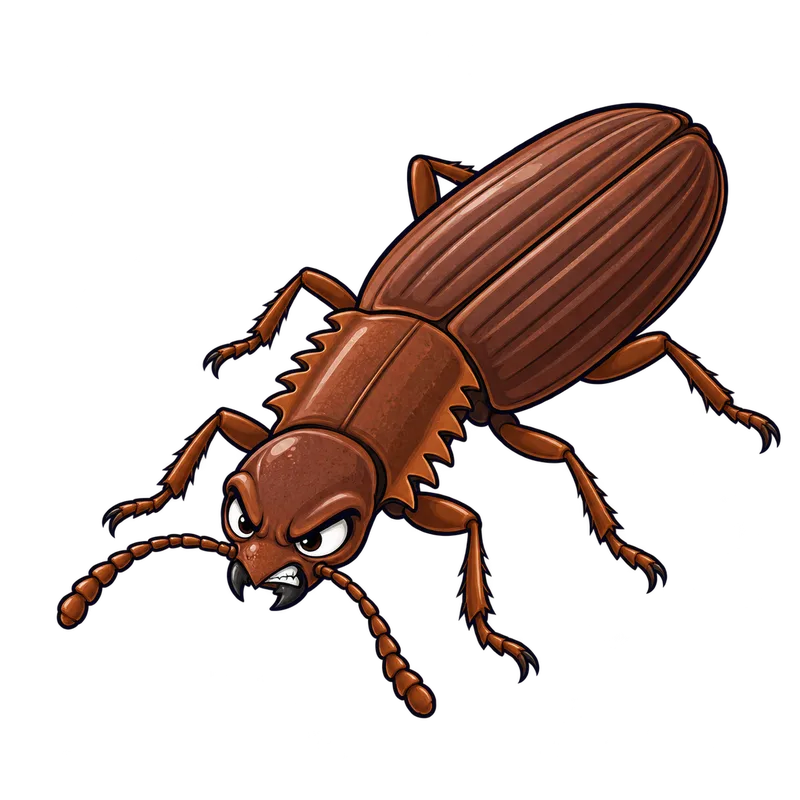
Sawtoothed grain beetles are small, slender, and flat brown insects measuring about one-tenth of an inch long, featuring six tooth-like projections on each side behind the head. They are one of the most common pantry pests, depending on damaged or opened dry goods like flour, cereal, and pet food to infest.
What is actually going on
You reach into the back of the pantry for that half-used bag of flour you bought for holiday baking, and you notice tiny, dark specks moving purposefully across the shelf liner. Before you panic and throw out every can of soup you own, it helps to know what you are looking at. Those tiny movers are almost certainly sawtoothed grain beetles, which are small, slender insects that have made themselves at home in your dry goods, and they are one of the most common pantry pests on the planet.
The sawtoothed grain beetle is classified as a secondary pest, which is just a polite way of saying it is a follower rather than a breaker. Think of it like a bank robber and a pickpocket. Primary stored-product pests have the heavy mouthparts required to crack open sound, undamaged whole grain kernels. Sawtoothed grain beetles cannot do that. They depend on grains that are already cracked, milled into flour, or previously damaged by another insect. If your whole grain kernels are completely intact and stored correctly, these beetles usually struggle to get a foothold. But once a package of oatmeal, cereal, pasta, pet food, or bird seed is opened or breached, the door is wide open.
Once they find a suitable food source, they do not just eat. They multiply, and they leave behind cast larval skins, waste particles, and body fragments that quickly ruin the appeal of your groceries. They do not bite humans, and they do not carry diseases, but finding them crawling through your breakfast cereal is enough to ruin anyone's morning. They show up in pantries everywhere from temperate suburbs to tropical coastal towns, hitching a ride inside store-bought packaging that looked perfectly fine on the grocery shelf.
How to tell for sure
Adult sawtoothed grain beetles are quite small, usually measuring only about one-tenth of an inch long. They have flat, narrow bodies and a distinct brown coloration. The feature that gives them their common name is found on the middle section of their body, right behind the head, where you will usually spot six tooth-like projections on each side. Because these features are tiny, you will usually need a hand lens with magnification to see the saw-toothed edges clearly.
People often confuse them with other pantry insects like cigarette beetles or drugstore beetles. A common mistake is assuming any small brown bug in the grain bin is the same creature, or mixing up beetles with saw-toothed side margins with those that have different antennae. If you are trying to tell them apart on your own kitchen counter without proper optics, it is easy to guess wrong. When an insect is too small to identify with the naked eye, and it could potentially be a regulated quarantine pest rather than a common pantry resident, a professional evaluation is usually the safest route to a correct ID.
What usually comes next
Your absolute best move right now is figuring out where they are coming from and physically removing the problem. Spraying random bug sprays all over your pantry shelves before you even find the tainted box is just a waste of afternoon, and it puts unnecessary chemicals right where you store your food. Instead, take a close look at every single box, bag, and container of dry goods, pet food, and bird feed in the entire cupboard. Check the sneaky spots like box creases and package folds. When you spot a bag that has turned into a beetle playground, wrap it up tight in a heavy plastic bag, seal it closed, and walk it straight out to your outdoor trash can.
For items that do not look totally overrun, or for expensive bulk bags of pet food you really hate to toss, you can use a simple trick that does not involve chemicals. Seal those dry goods inside heavy plastic bags to keep out moisture, and pop them into a freezer that stays cold enough for a few days. That deep freeze kills off whatever stage the insects are currently in. Once you have handled the source, grab your vacuum and clean out every crack, crevice, and corner of your pantry shelves where flour dust or stray seeds like to gather. Wipe everything down, and move all your future dry groceries into rigid, airtight containers made of glass, metal, or heavy plastic to keep those uninvited guests out for good.
When to get help
Most household pantry beetle problems can be sorted out with a good deep clean, tossing out the ruined food, and upgrading to hard storage containers. Still, there are moments when you need to hand the reins over to someone else. Call a licensed pest control operator if your bugs keep showing up week after week even though you have cleaned like mad and sealed everything up. That stubborn persistence usually means there is a hidden stash of food somewhere out of sight, like spilled grain trapped behind built-in cabinets or tucked underneath heavy kitchen appliances. You should also bring in a specialist if you cannot quite tell your bugs apart from regulated quarantine pests that require official reporting. If anyone in your house deals with ongoing allergic reactions, skin irritation, or trouble breathing from inhaling pantry dust full of insect parts, talk to a clinician right away to get the right medical advice.