
Why are carpet beetle larvae in a bed?
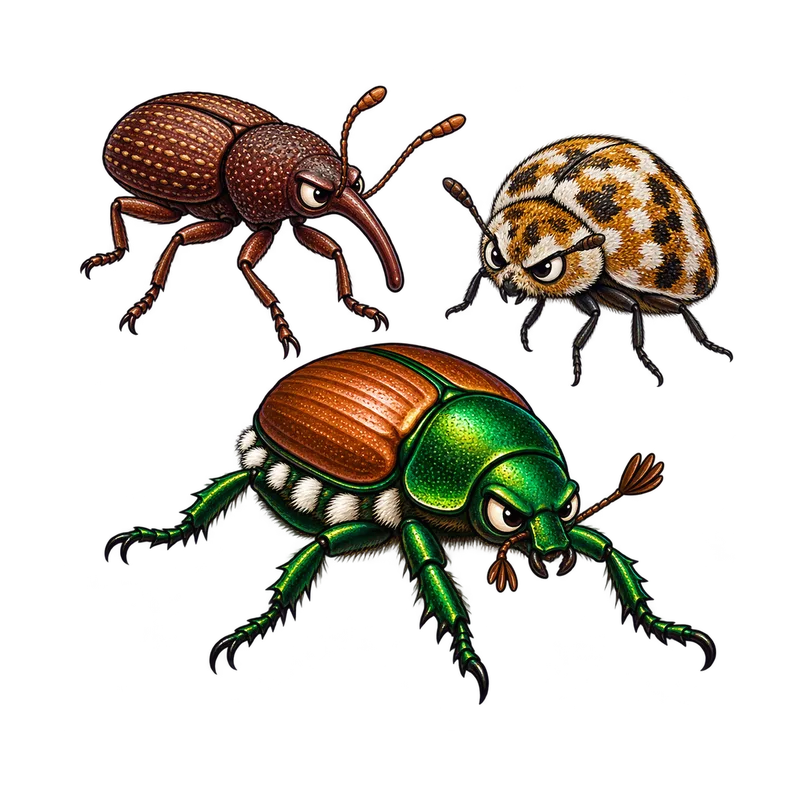
Carpet beetle larvae are in a bed because they are seeking animal-derived keratin and organic debris like human skin flakes and body oils. Your bed provides a quiet hideout and an all-night buffet with dark micro-refuges. Their presence depends on whether you have natural materials like wool blankets, feather pillows, or down duvets.
What is actually going on
You strip the sheets off the bed on laundry day and notice a few tiny, fuzzy bugs tucked right into the mattress seam. They are not fast like fleas, and they certainly are not jumping like grasshoppers, but they are definitely moving. Naturally, your mind jumps to bed bugs, but a closer look reveals something different: slow-moving, bristly little caterpillars nestled in the fabric folds. Why on earth are carpet beetle larvae hanging out in a bed?
The short answer is that your bed is an all-night buffet and a quiet hideout rolled into one. While human eyes see a clean place to sleep, a carpet beetle larva sees a rich landscape of food and shelter. Every night, human skin flakes, loose hairs, and body oils shed onto the sheets and filter down into mattress tufts and box spring crevices. If you use wool blankets, feather pillows, or down duvets, you are adding animal-derived keratin to the menu. That is the tough fibrous protein that forms hair, fur, and feathers, and it happens to be the absolute favorite food of carpet beetle larvae.
These pests do not bite you, and they do not want your blood. They just want to chew on organic debris in peace. Because they possess a strong instinct to avoid light, they crawl deep into dark micro-refuges like mattress folds, bed frame joints, and the carpet edges underneath the bed. Adult carpet beetles actually live outdoors and feed on flower pollen, but gravid females occasionally wander inside through open windows or hitch a ride on cut flowers, seeking out dark, undisturbed cracks near a food source to lay their tiny eggs.
How to tell for sure
Spotting a few bugs in the bedroom usually prompts an urgent need for identification, mostly because nobody wants to misjudge a pest situation. Carpet beetle larvae usually look like small, fuzzy, carrot-shaped creatures. Depending on the exact species, they can range from golden brown to dark brown, and they often feature distinct transverse stripes or a bristly brush of hair at the tail end. As they grow through multiple stages, they shed their skins repeatedly. Finding these hollow, hairy, translucent cast skins is usually the first real clue that an infestation is underway.
People frequently confuse them with clothes moth caterpillars or bed bugs, but the differences are clear once you know what to look for. Bed bugs are flat, reddish-brown, and leave behind dark fecal spots while actively feeding on blood. Clothes moth larvae often spin silken tubes or cases as they travel. Carpet beetle larvae build no webbing, produce tiny salt-grain-sized fecal pellets, and leave behind those distinct hairy molts.
If you are dealing with skin irritation, remember that carpet beetle larvae do not have biting mouthparts. Instead, many people develop an allergic contact reaction called carpet beetle dermatitis. Tiny, barbed hairs on the larvae, known as hastisetae, shed into bedding and trigger itchy red bumps that look remarkably like insect bites. If you have pure synthetic bedding, do not assume you are safe from them either. While larvae cannot digest pure polyester or nylon, they will happily chew through synthetic fibers if those fabrics are soiled with sweat, food spills, or body oils.
What usually comes next
Once you confirm the bugs are actually larvae, you have to decide how to clean up without reaching for harsh chemicals right away. Stripping the bed entirely and washing all the sheets, blankets, mattress covers, and washable pillows in hot water is usually the smartest first move. If you have delicate woolens that cannot take hot water, take them straight to a dry cleaner instead. High heat kills every single life stage from eggs to adults while washing away the body oils that brought them there in the first place.
For things that cannot go in a washing machine, like certain pillows, stuffed animals, or delicate wool sweaters, standard freezing is a solid backup plan. Just seal those items tightly inside heavy-duty plastic bags and stick them in the freezer for anywhere from 3 to 7 days. Leave the items sealed inside the bag until they warm back up to room temperature so condensation does not ruin the fabric. Pair this with a thorough vacuuming session using a crevice tool along the mattress seams, box springs, bed frames, and baseboards, then immediately toss the vacuum bag or canister contents into an outdoor trash bin.
Never spray insecticides directly onto mattresses, sheets, pillows, or clothing. Direct chemical application on sleeping surfaces violates basic safety guidelines and exposes you to unnecessary health risks. If you decide to use surface sprays or dusts along baseboards or dark floor cracks, stick strictly to the instructions on the registered product label, and keep pets and kids away until everything is completely dry.
When to get help
Most household carpet beetle problems clear up with consistent vacuuming, hot laundering, and targeted cleaning. Still, certain situations call for outside help. If you or someone in your home gets stuck with persistent, severe skin rashes, intense itching, or respiratory irritation that refuses to go away after you remove the source, you should consult a qualified clinician or dermatologist for proper medical evaluation and symptom relief.
You should also reach out to a licensed pest control professional if the infestation is widespread, spans multiple rooms, or keeps popping up no matter how much you clean. Often, a relentless bedroom invasion comes from somewhere outside the living space entirely. Pests regularly migrate downward from hidden outdoor reservoirs like abandoned bird nests in attics, rodent nests in wall voids, or wasp nests tucked under the eaves. A professional can track down these structural entry points and handle complex treatments safely, ensuring the problem gets fixed at the root instead of just on the surface.