
How do you get rid of carpet beetles in a car?
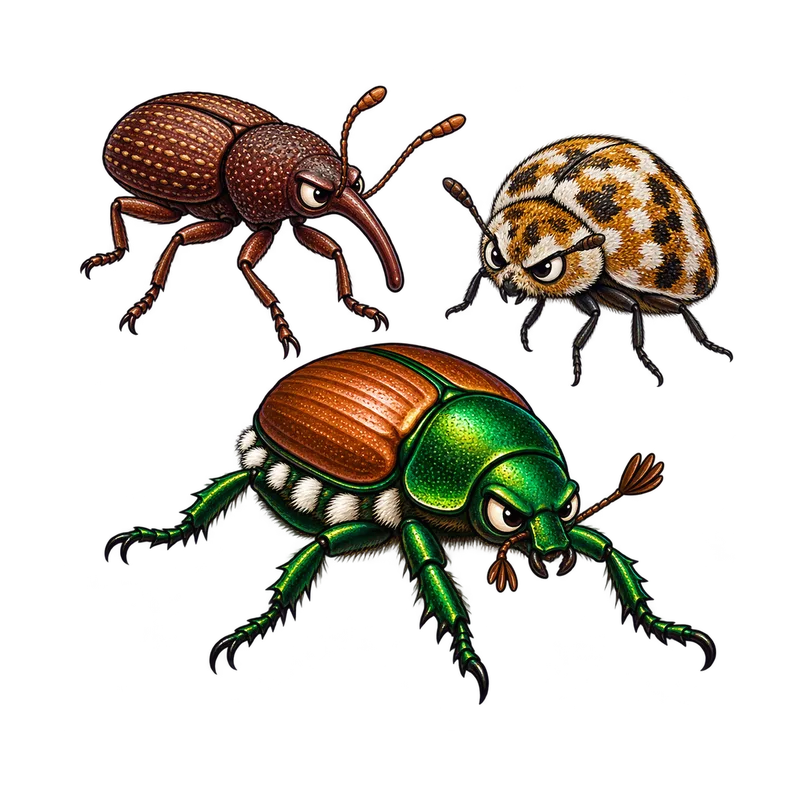
Getting rid of carpet beetles in a car requires a mechanical cleanup that breaks their life cycle by removing what they are eating. You must pull everything out of the cabin, vacuum every hidden surface with a narrow crevice tool, and immediately empty the vacuum bag into an outdoor trash bin.
What is actually going on
You slide behind the wheel on a Tuesday morning commute, reach down to adjust your seat, and notice a tiny, carrot-shaped creature crawling across the fabric. A closer look reveals a few more hiding near the seat tracks, alongside what look like microscopic, bristly empty coats. If you have been waking up with mysterious itchy bumps on your legs, you might assume you picked up fleas or bed bugs from somewhere. But if your car has become a breeding ground for carpet beetles, you are dealing with an entirely different kind of nuisance that requires a mechanical cleanup rather than a standard bug spray routine.
Getting rid of carpet beetles in a car comes down to breaking their life cycle by removing what they are eating. Adult carpet beetles actually cause zero damage to your upholstery or vehicle interior because they prefer to hang out outdoors feeding on flower pollen. The real trouble starts when a stray adult flies in through an open window or hitches a ride on a wool coat, laying eggs in the dark, undisturbed crevices of your cabin. Those eggs hatch into larvae, and those larvae are the ones chewing through your car's natural fibers, accumulated pet hair, stray food crumbs, and the organic debris tucked deep beneath your floor mats.
The main obstacle in a vehicle is that these larvae actively avoid light, meaning they squeeze themselves into tight, hidden voids where you rarely look. They nest deep inside seat adjustment tracks, under heavy rubber or carpeted floor mats, along trunk seams, and inside the folds of upholstery. Because cars constantly collect human skin flakes, dog hair, and dropped snacks, they offer an endless buffet for a hungry carpet beetle larva. Spraying a random aerosol can into the middle of the cabin will not solve the problem because the mist simply settles on the dashboard while the insects remain tucked safely away in dark seams.
How to tell for sure
Carpet beetle larvae usually look like tiny, bristly, brownish worms that grow up to a quarter of an inch long, and people often refer to them as woolly bears because of the fuzzy hair bundles near their tails. As they grow, they shed their skins repeatedly, leaving behind tiny, empty husks that look like hollow, translucent versions of the living insect. You will also usually spot salt-grain-sized fecal pellets clustered right alongside these shed skins.
One common point of confusion is telling the difference between carpet beetles and clothes moths. If you see fine, silky webbing or tubes spun across the fabric, you are looking at moths instead. Carpet beetles produce zero silken webbing.
Another detail that catches people off guard is the skin reaction. If you notice red, itchy bumps on your skin after driving, it is usually not a bite. Carpet beetle larvae are covered in microscopic, barbed hairs that trigger an allergic skin reaction called dermatitis when they rub against your skin or get kicked up from the seat cushions into the air.
What usually comes next
Your first practical decision is choosing between a full clean of the interior yourself or paying a professional detailer, and for most people, rolling up your sleeves for a deep clean is the most effective starting point. You need to pull everything out of the car, including child car seats, sports gear, trash, and floor mats, before you even touch a vacuum cleaner. Seal those soft items in heavy plastic bags right away so you do not accidentally scatter larvae into your house on the walk from the driveway to the front door.
Once the cabin is empty, bring out a high-suction vacuum with a narrow crevice tool and go to work on every hidden surface. Force that nozzle deep into the seat seams, along the edges of the seatbelts, underneath the front seats, and into every corner of the trunk. Do not skip this step or try to rush it with a quick sweep. The most critical part of the process is emptying your vacuum canister or throwing away the vacuum bag into an outdoor trash bin immediately. If you leave that bag sitting in your garage or trunk, the surviving larvae will simply crawl back out and find their way right back into your upholstery.
When to get help
You should consult a clinician if you or your passengers develop severe, persistent skin rashes, eye irritation, or respiratory distress like coughing and sneezing that does not clear up after you clean the car. Medical diagnoses and treatments belong strictly to healthcare professionals, especially when an allergic reaction turns severe.
There are also vehicle situations where you should hand the job over to a professional pest control operator or a specialized auto detailer. If the infestation has pushed deep into inaccessible vehicle voids, such as inside your dashboard electronics, the headliner, or the internal heating and air conditioning ducts, standard do-it-yourself cleaning will not reach them. The same goes for vintage or luxury vehicles featuring delicate antique wool upholstery, mohair headliners, or horsehair seat padding that a harsh household vacuum or incorrect cleaner could easily ruin. Finally, if you discover protected wildlife like nesting birds or bats roosting inside a long-stored vehicle, stop what you are doing and contact your local wildlife agency to stay compliant with state or federal protection laws.