
What do black carpet beetle larvae look like?
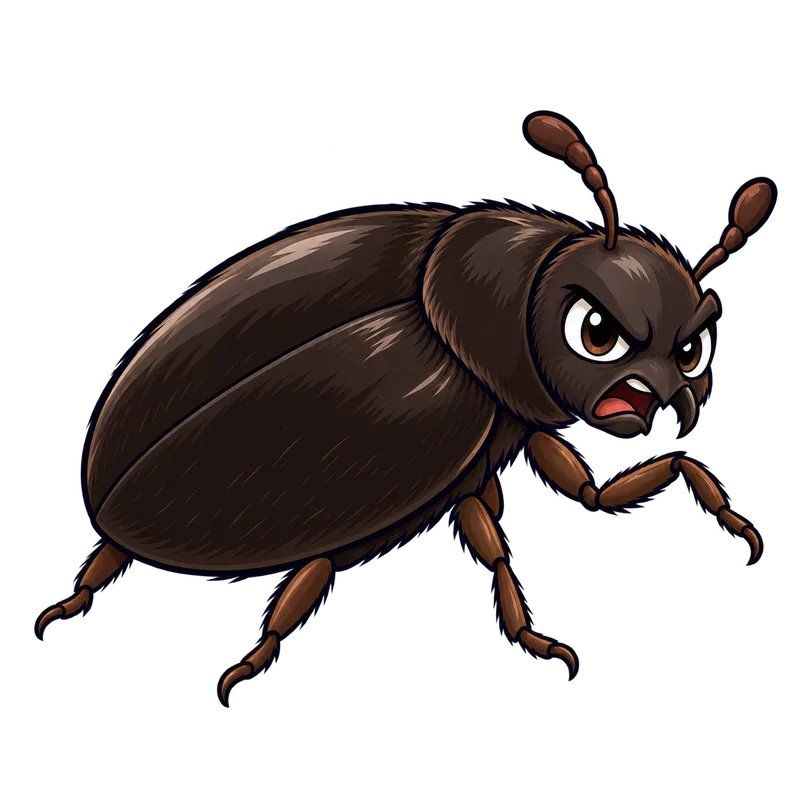
Black carpet beetle larvae are light brown to dark reddish brown, elongate, and carrot-shaped grubs covered in short body hairs. They grow up to one-half inch in length at maturity and are usually distinguished by a long, brushy tail of bristles extending from the rear end.
What is actually going on
You reach into the back of the linen closet for a spare wool blanket, pull it into the light, and notice several irregular holes chewed neatly through the fabric. Right near the damage, a tiny, slow-moving crawler is making its way along the shelf. If you have run into this scenario, you are likely looking at a black carpet beetle larva. Contrary to what many people think, the adult beetles you occasionally see buzzing around your windowsills in the summer are completely innocent. The adults only feed on outdoor flower pollen and never touch textiles. The real culprits are the immature larvae, which spend their entire lives hiding in dark, undisturbed places and chewing through animal-derived fibers.
Black carpet beetle larvae are light brown to dark reddish-brown, elongate, carrot-shaped grubs covered in short body hairs, reaching up to one-half inch in length at maturity. They are usually distinguished by a long, brushy tail of bristles extending from the rear end. When they hatch from microscopic eggs laid by the adult female, they are almost too small to notice. As they grow through successive molts, their bodies darken and take on a smooth, shiny hue.
Their distinct shape helps set them apart from other household pests. They taper noticeably from front to back, looking a bit like a microscopic, dark brown carrot or the tip of an artist's paintbrush. Because they are strongly light-avoiding, you will rarely see them out in the open. They prefer the deep folds of woolen garments, the dark undersides of heavy furniture, the edges of wall-to-wall carpets, and even the inside of neglected pantry boxes.
How to tell for sure
Spotting the insect itself is helpful, but you will usually find the evidence they leave behind long before you catch a live larva crawling around. One of the most common signs is the presence of cast skins. As these larvae grow, they repeatedly shed their rigid exoskeletons. These empty husks are hollow, translucent, and usually retain the exact shape and hairy appearance of the live insect. Finding these ghost shells mixed with dust bunnies under the bed or along baseboards is a telltale sign of an active or recent infestation.
You can also separate black carpet beetle larvae from other common textile pests by what they do not do. Unlike clothes moth caterpillars, black carpet beetle larvae do not spin silken webbing, feeding tubes, or protective cases. If you find clean, irregular holes in a woolen sweater with no silky threads or cocoons anywhere in sight, you are almost certainly dealing with carpet beetles rather than moths. Furthermore, their droppings look like tiny, hard, opaque grains of salt scattered around their feeding sites.
Another useful identification cue involves comparing them to other carpet beetle species. While black carpet beetle larvae are elongated and carrot-shaped with a single long tail brush, other species like the varied carpet beetle are usually shorter, stouter, teardrop-shaped, and feature distinct bundles of bristly hair along their sides. If your specimen features that long, sweeping tail of terminal bristles on a tapering body, you have found a black carpet beetle.
What usually comes next
Once you confirm you have black carpet beetle larvae, your immediate practical decision involves choosing how to treat the items they have attacked without damaging your belongings further. If the pests are chewing through wearable clothing, blankets, or washable rugs, the single most reliable step is thermal treatment through hot laundering or dry cleaning. Washing susceptible fabrics in hot water kills all life stages instantly while also removing the sweat and body oils that attract female beetles in the first place. For items that cannot be washed in hot water, sealing them in plastic bags and placing them in a freezer set below zero degrees Fahrenheit for a week will completely eliminate the infestation.
If you decide to use a household insecticide spray to treat the surrounding area, you must keep it strictly away from anything you wear or sleep on. Insecticide sprays should never be applied directly onto clothing, bedding, or personal garments. Instead, treatment must be restricted to structural cracks, baseboard crevices, and closet shelving framing. Always allow those treated surfaces to dry completely before returning any clean clothes to the space. If the thought of chemical application near your belongings makes you uneasy, stick exclusively to rigorous vacuuming along carpet edges and thermal laundering, which handles the problem effectively without any chemical exposure.
When to get help
While minor, localized infestations in a single closet or pantry can usually be managed with thorough cleaning, freezing, and targeted laundering, certain situations call for outside help. You should involve a licensed pest control operator when the infestation is widespread across multiple rooms, hidden deep within complex heating and cooling ductwork, or threatening valuable museum pieces, heirlooms, or extensive taxidermy displays. Professionals possess the equipment required for whole-home treatments or specialized container freezing that household gear cannot match.
On the health side, you need to pay attention to your physical symptoms. As carpet beetle larvae grow and molt, they shed thousands of microscopic, barbed hairs into the surrounding environment. Accumulations of these shed hairs in carpeting, furniture, or bedding can trigger an allergic skin reaction known as carpet beetle dermatitis in sensitive individuals, resulting in itchy rashes, red papules, or eye irritation. Inhaling airborne larval hairs can also provoke respiratory irritation or trigger asthma flare-ups. If you or someone in your household develops persistent skin rashes or unexplained respiratory distress, consult a clinician for a proper medical evaluation.