
What are the signs of woodworm?
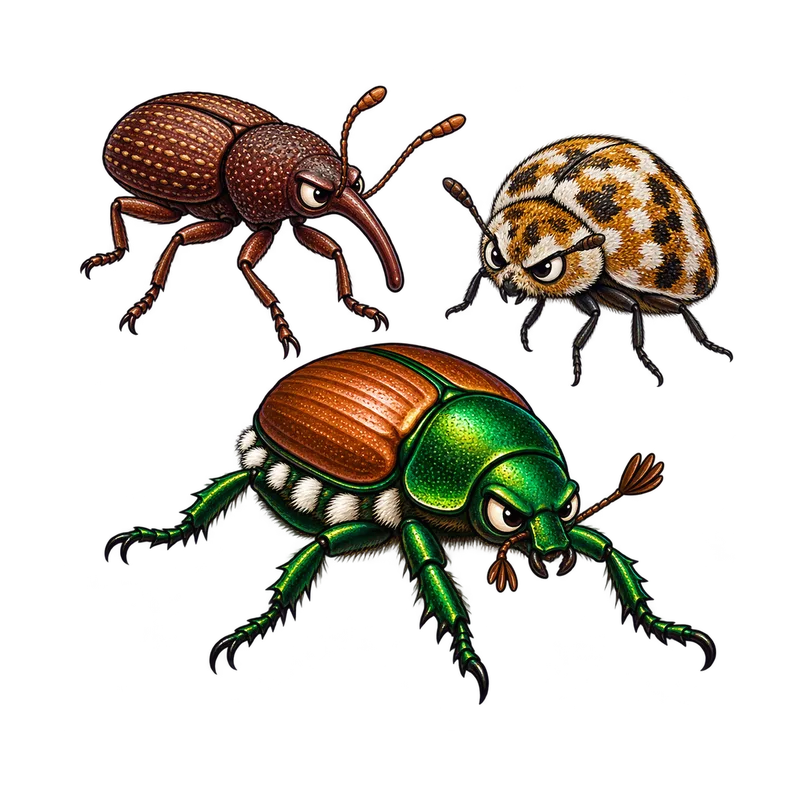
The signs of woodworm include tiny drill holes peppered across timber surfaces and a scatter of fine dust motes below. You will often find a fine dust called frass sifting out onto the floor, which feels silky like baking flour or gritty like table salt depending on the beetle species.
What is actually going on
You are wiping down the sideboard or pulling an old pine stool out of the basement, and you notice a scatter of tiny dust motes on the surface. Right above them, the timber is peppered with what look like tiny drill holes, as if someone went to work with a sewing needle. That is usually your introduction to woodworm. The term itself is a bit misleading, because you are not dealing with a single wriggling worm, but rather the larval stage of various wood-boring beetles quietly chewing through the cellulose on the inside.
What is actually happening takes place in slow motion over several years. An adult female beetle finds a crack or crevice in unsealed timber, lays her eggs, and slips away. Those eggs hatch into tiny grubs that immediately bore straight into the wood. Once inside, they spend anywhere from a few months to a decade carving out an elaborate maze of internal tunnels. They eat their way through the core while leaving a paper-thin outer shell completely untouched, which is why a beam can look solid on the outside while turning to powder on the inside.
When those larvae finally mature into adult beetles, they chew a clean-edged circular exit hole through that final layer of wood and emerge into the room. That means the holes you spot are actually arrival markers for the next generation, signaling that the feeding cycle has finished in that particular spot. Along with the holes, you will usually find a fine dust called frass sifting out onto the floor, which is a mix of wood fragments and waste pellets pushed out by the insects.
Spotting holes in wood does not automatically mean you are looking at an active crisis, and guessing based on a vague description of damage usually leads you down the wrong path. Identification comes down to looking closely at the exit holes and, most importantly, rubbing the sifting dust between your fingers. The texture of that frass tells you precisely which beetle family you are dealing with, because different species leave behind entirely different waste.
If the dust feels as silky and smooth as refined baking flour or talcum powder, you are usually looking at the work of true powderpost beetles. These pests target the sapwood of large-pored hardwoods like oak, ash, or walnut, often showing up in newly installed flooring or custom cabinetry. On the other hand, if the powder feels gritty like table salt or coarse sand, and contains tiny cigar-shaped pellets, you are usually seeing the signs of the common furniture beetle. That species loves seasoned softwoods like pine floorboards and roof joists, as well as antique furniture.
You can run a simple test by placing a dark sheet of paper beneath the suspect timber during spring and summer, which is the peak emergence season. If fresh, light-colored dust accumulates on the paper week after week, the infestation is active. If the holes are dark, filled with old paint, and no fresh powder ever appears, the infestation usually died out years ago, leaving behind nothing more than historical evidence.
How to tell for sure
Once you confirm you are dealing with an active infestation rather than old damage, your most practical first decision is to check the moisture level of the timber. Many common wood-boring beetles thrive only when wood moisture creeps above a certain threshold, typically around 12% to 15%. If you have anobiid furniture beetles chewing away in a damp crawl space or a poorly ventilated cellar, you can usually halt their progress by dropping that moisture level. Fixing plumbing leaks, improving cross-ventilation, and laying down heavy plastic vapor barriers over bare soil can dry out the wood enough to stop the larvae from completing their life cycle.
If the wood is already bone dry and the pests are continuing anyway, your decision shifts from environmental control to physical treatment or targeted removal. Avoid the temptation to buy a random surface spray off the shelf and soak a finished, varnished beam, because insecticides cannot penetrate sealants or paints to reach the larvae tunneling deep inside. Instead, you need to decide whether the affected piece is a small wooden stool you can safely isolate and treat, or a structural framing member that requires a completely different approach.
What usually comes next
There is a clear line where do-it-yourself checks run out and you need to hand the problem over to someone else. If the woodworm activity involves structural elements like roof framing, ceiling joists, or load-bearing floor timbers, you should involve a licensed pest control operator immediately. Commercial equipment and specialized borate treatments applied to bare, unsealed wood are necessary when dealing with extensive structural areas that you cannot safely reach or treat yourself.
When to get help
You also need outside help when the damage moves beyond simple cosmetic holes and starts threatening the strength of your home. If a floor feels spongy underfoot, or if you notice blistered, rippled wood surfaces hiding a hollow interior, call a licensed builder or a structural engineer to evaluate the load-bearing integrity of the timber. A standard pest inspector can tell you what kind of beetle is present, but structural repairs and safety assessments belong strictly in the hands of qualified building professionals. Finally, if you happen to live in a region where certain aggressive pests like the European house borer are legally regulated, you must report the discovery to the designated agricultural or housing authorities as required by local law.