
How do you get rid of carpet beetles?
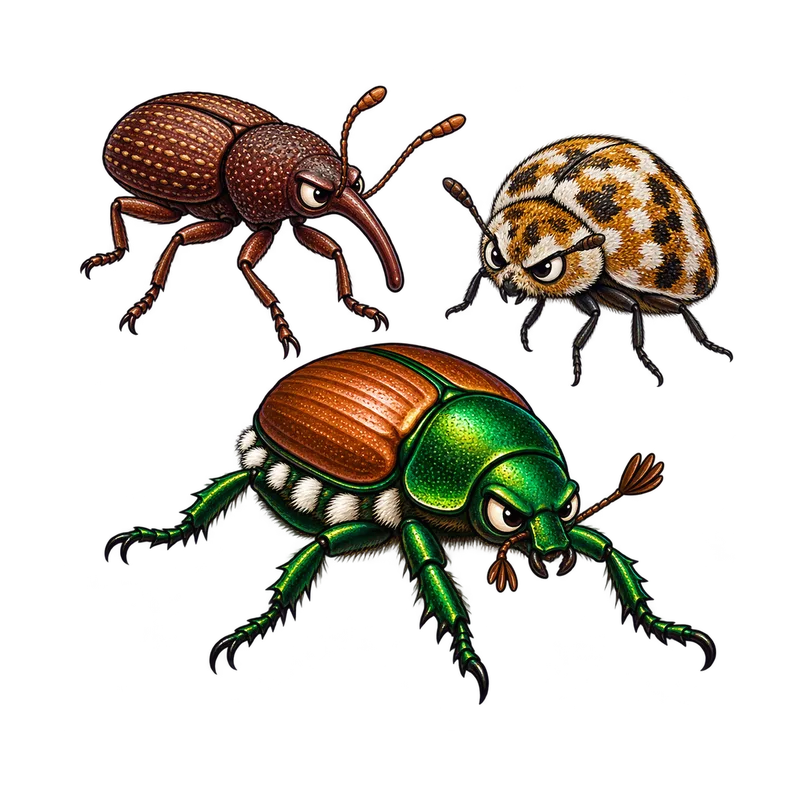
Getting rid of carpet beetles requires a room by room cleanout with a vacuum, targeting hidden larvae chewing on natural fibers and warm dark breeding areas. Wash washable textiles in hot water or freeze delicate items at zero degrees Fahrenheit for up to 72 hours, then store clean garments in airtight plastic bins.
What is actually going on
You pull a favorite wool sweater out of the back of the closet for the first chilly autumn weekend, and right on the sleeve you spot a ragged, uneven hole that looks like someone took a miniature pair of dull scissors to it. There is no sticky web or gray cocoon in sight, just a few tiny, hard pellets that look like spilled grains of salt rolling around the folds. You are not dealing with a ghost or a random fabric flaw. You are sharing your wardrobe with carpet beetles.
Getting rid of carpet beetles is not about spraying one magic aerosol and calling it a day, because the insects causing the damage are usually hiding in places you never look. Eradicating them requires a thorough, room-by-room cleanout that targets both the hidden larvae chewing through your natural fibers and the warm, dark reservoirs where the population breeds. If you only deal with the adult bugs you happen to see crawling across a sunny windowsill, the damage inside your closets and under your heavy furniture will just keep spreading.
The first thing to understand about these pests is a quirk in their life cycle that catches almost everyone off guard. Adult carpet beetles are entirely harmless to your home furnishings. Those tiny, oval bugs you find near the glass, which often look like miniature, speckled ladybugs, spend their outdoor lives visiting flowers to feed on pollen and nectar. They only come inside to find a dark place to lay eggs. Once those eggs hatch, the resulting larvae take over, and that is where your textiles meet their match.
How to tell for sure
Carpet beetle larvae possess specialized digestive enzymes that let them break down keratin, the tough protein found in animal-derived fibers. That means they usually target wool, silk, fur, feathers, leather, and animal hair, along with the glues used in book bindings and taxidermy. If you are looking at pure synthetic clothes made of polyester or acrylic, those items are usually safe from direct feeding unless they are heavily soiled with food spills, sweat, or body oils that tempt the larvae to chew right through the synthetic threads.
Spotting the physical evidence is usually easier than catching the insects themselves. You will not find any silken tubes or portable cases the way you would with clothes moths. Instead, carpet beetle larvae leave behind distinct markers. You might find large, continuous bare patches grazed across a wool rug, or irregular holes in stored blankets. Along with the damage, you will usually see brittle, hollow cast skins that look like tiny hairy husks, accompanied by those coarse, salt-grain-sized fecal pellets.
The adults come in a few common varieties depending on where you live and what they look like up close. The varied carpet beetle is small, around one-eighth of an inch long, with a rounded body decorated in wavy bands of white, brown, and yellow scales that often wear away as the beetle ages. Its larvae are short, plump, and covered in stiff hairs with a distinct tuft at the tail end. The black carpet beetle grows a bit larger, with a shiny, solid black body and a carrot-shaped, bristly brown larva that trails a long brush of tail bristles.
What usually comes next
Once you find the damage, your best practical move is to stop guessing and start with a massive, targeted round of mechanical sanitation. Forget about total-release foggers or bug bombs because those aerosol mists settle only on open surfaces and completely miss the dark, cramped crevices where the larvae actually live. Instead, grab your vacuum cleaner and pull out every nozzle attachment you own. Go after the baseboard perimeters, the edges of wall-to-wall carpets where they meet the tack strips, the dark corners of your closets, and the accumulated lint hiding inside floor vents and under heavy, seldom-moved furniture.
When you finish vacuuming, take the vacuum bag or canister contents immediately outside, seal them tightly inside a plastic trash bag, and drop them into an outdoor waste bin. Pair that deep extraction with a thorough laundry day. Wash all susceptible washable clothing, blankets, and linens in hot water, or take your dry-cleaner-only woolens and suits straight to a professional. If you have non-washable items, delicate crafts, or cherished woolens that cannot handle water, you can kill every life stage by wrapping them in a cotton sheet, sealing them inside a heavy polyethylene bag with all the air squeezed out, and placing them in a freezer set to negative four degrees Fahrenheit for 7 days, or zero degrees Fahrenheit for up to 72 hours.
When you pull those frozen items out, leave them sealed inside their plastic bags for 24 hours while they slowly warm up to room temperature. That crucial waiting period keeps moisture condensation from forming on your delicate fabrics or wooden items, leaving the water safely on the outside of the plastic where it belongs. Afterward, store your clean, decontaminated garments in airtight plastic bins or heavy storage bags so the adults cannot fly back in to lay more eggs. If you choose to use residual household sprays along baseboards or closet corners, remember never to apply chemical insecticides directly onto clothing, bedding, or mattresses.
When to get help
There are times when a do-it-yourself cleanup is simply not enough to turn the tide. If carpet beetle larvae have spread extensively through multiple rooms, inside wall voids, beneath subfloors, or deep within your heating and air conditioning ductwork, you should call a licensed pest control operator. Professionals have the specialized commercial equipment, structural dusters, and training to perform deep void treatments or building-level interventions that go far beyond standard household sprays.
You also need to look upward and outward for hidden outdoor reservoirs. Abandoned bird, wasp, or bee nests tucked under exterior eaves or resting inside dark attics act as permanent breeding grounds where carpet beetles thrive on feathers and dead insects before migrating into your living spaces. Keep in mind that active native bird nests containing eggs or live nestlings are protected by strict wildlife conservation laws, meaning you must legally wait until the nesting season ends and the fledglings have permanently flown away before you can safely remove the nest.
A few specific situations demand immediate outside intervention of a different kind. If you ever find small, dense, extremely hairy dermestid larvae inside imported shipping crates, bulk grains, or sea containers, stop what you are doing. You could be looking at the khapra beetle, a high-risk quarantined pest whose barbed larval hairs can cause severe contact dermatitis, respiratory distress, and serious allergic reactions upon inhalation. This discovery requires immediate mandatory reporting to your regional agricultural or biosecurity agency. Finally, if you or a family member develop persistent skin rashes, hives, or respiratory irritation from handling infested textiles or coming into contact with larval hairs, step away from the cleaning supplies and consult a licensed physician or local poison control center right away.