
Do Asian lady beetles bite?
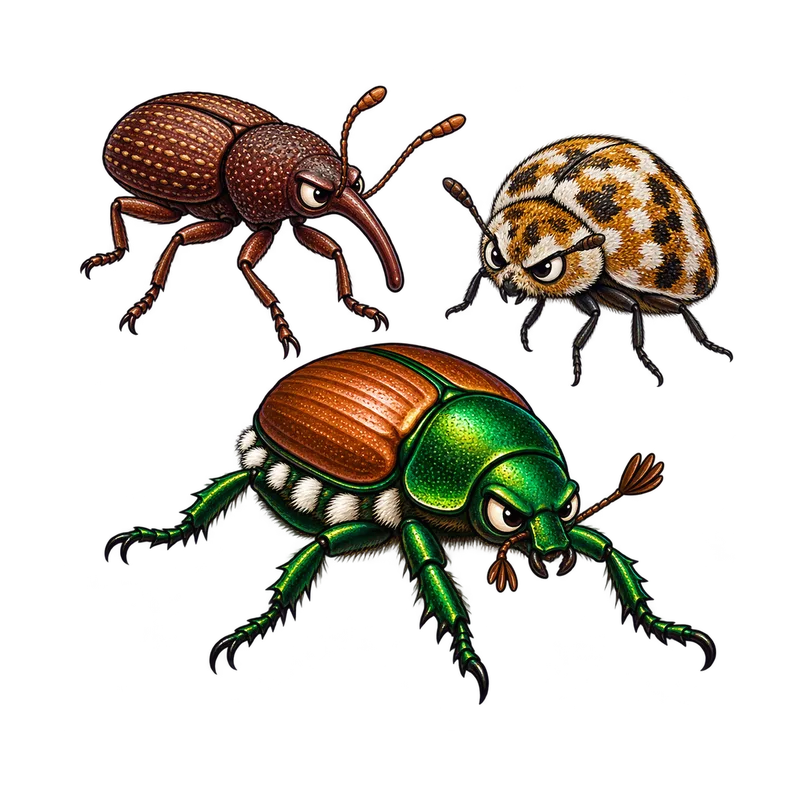
No, Asian lady beetles do not bite human skin in the traditional sense, and university extension sources contain no clinical records of these insects feeding on people. You might occasionally feel a tiny scraping sensation as one walks across your arm, but this is just their mechanical grip.
What is actually going on
You walk out to the back porch on a crisp October afternoon, lean against the sun-warmed siding, and notice dozens of amber-colored beetles treating your house like a holiday resort. A week later, you find a few of those same bugs crawling sluggishly across your living room window. Naturally, you wonder if you need to worry about being bitten while you try to nudge them outside. The short answer is no, Asian lady beetles do not bite human skin in the traditional sense, and university extension sources contain no clinical records of these insects feeding on people.
People often get confused because autumn brings a host of other uninvited biters indoors, from tiny fleas to migrating bat bugs. It is completely reasonable to assume that anything crawling on your skin in the cooler months is looking for a meal. But Asian lady beetles have an entirely different agenda. When ambient temperatures drop, these insects abandon their outdoor duties and seek out a safe place to ride out the winter. They are looking for thermal shelter, not human blood.
Think of them like hikers who stumble onto your porch because the temperature plunged, and they simply want to sleep under your eaves until spring. They do not chew through drywall, they do not feast on your pantry staples, and they certainly do not reproduce inside your living spaces. Once they slip through a microscopic gap in your window framing, they wedge themselves inside wall voids and go dormant. If a few happen to wander into your heated rooms prematurely, they are merely disoriented by the indoor warmth and artificial light.
How to tell for sure
If you are staring at a cluster of these bugs on your wall and trying to figure out what you are dealing with, look closely at their shell patterns. Asian lady beetles usually feature a distinctive black marking behind their head that looks remarkably like the letter M or W, depending on the angle. Their coloration ranges from a pale yellowish-orange to a deep, burnt red, and they often carry anywhere from zero to nineteen black spots. Native ladybugs tend to look slightly different, but the general shape is round and dome-like.
You might also wonder if they pinch or scratch when you pick them up with a piece of tissue. While they possess mouthparts designed for chewing soft-bodied garden pests like aphids and scale insects, they typically lack the jaw strength or the inclination to pierce human skin. You might occasionally feel a slight, fleeting tickle or a tiny scraping sensation if one walks across your bare arm, but this is usually just the mechanical grip of their tiny tarsi as they navigate your skin.
If you are dealing with actual skin lesions, welts, or painful nips, you usually need to look elsewhere for the culprit. A red mark on your skin cannot be reliably identified just by describing it or holding up a photograph next to an insect. Other household pests are far more likely to leave a mark than an overwintering beetle. If your skin is reacting with intense irritation or swelling, a medical professional is the only person who can figure out what actually caused it.
What usually comes next
Since these insects are not trying to bite you, your main task is figuring out how to handle them without making a mess or wasting your money. Many homeowners instinctively reach for an aerosol bug spray the moment they see a beetle on the rug, but that approach usually backfires. Spraying liquid insecticides inside your living spaces or inside wall voids after the beetles have already settled in does not stop new entries, and it simply leaves behind decaying carcasses that can draw secondary scavengers like larder beetles into your walls.
Instead, the most practical choice you can make is to rely on mechanical removal. Grab your vacuum cleaner, snap on a hose attachment, and gently sweep up the live or dormant beetles resting on your window sills. The secret step that saves you from a terrible smell is emptying the vacuum bag or canister immediately. Seal that bag inside a heavy plastic trash bag, tie it tight, and carry it straight out to your outdoor garbage bin so the rescued bugs cannot crawl back out through the hose.
If you are trying to stop them from getting inside in the first place, timing is everything. Physical exclusion by caulking gaps around window frames and installing sturdy door sweeps works wonders, but chemical barriers require precise scheduling. Professional exterior treatments using microencapsulated products must be applied precisely during the first week of October before the beetles slip past your siding. Once October ends, exterior sprays lose their purpose because the invaders are already hunkered down inside.
When to get help
There are moments when a simple seasonal pest annoyance crosses the line into a situation that requires outside help. If you or someone in your household experiences severe skin irritation, spreading inflammation, localized pain, or systemic allergic signs like hives or trouble breathing after pest contact, do not try to diagnose it at home. Take that person directly to a qualified physician, urgent care clinic, or emergency medical service right away. If you suspect any kind of pesticide misapplication or accidental chemical ingestion, call the national poison control hotline immediately at 1-800-222-1222.
You should also look for professional assistance when the physical architecture of your home makes pest management a safety hazard. If the structural gaps and upper soffits where these beetles congregate are located on a multi-story roofline or near steep peaks, climbing a ladder with a caulk gun or a high-pressure sprayer puts you at serious risk of a fall. Applying professional-grade exterior perimeter treatments requires specialized equipment, calibrated nozzles, and the right personal protective equipment, making it a job best left to a licensed pest control operator.