
What is an emerald ash borer treatment?
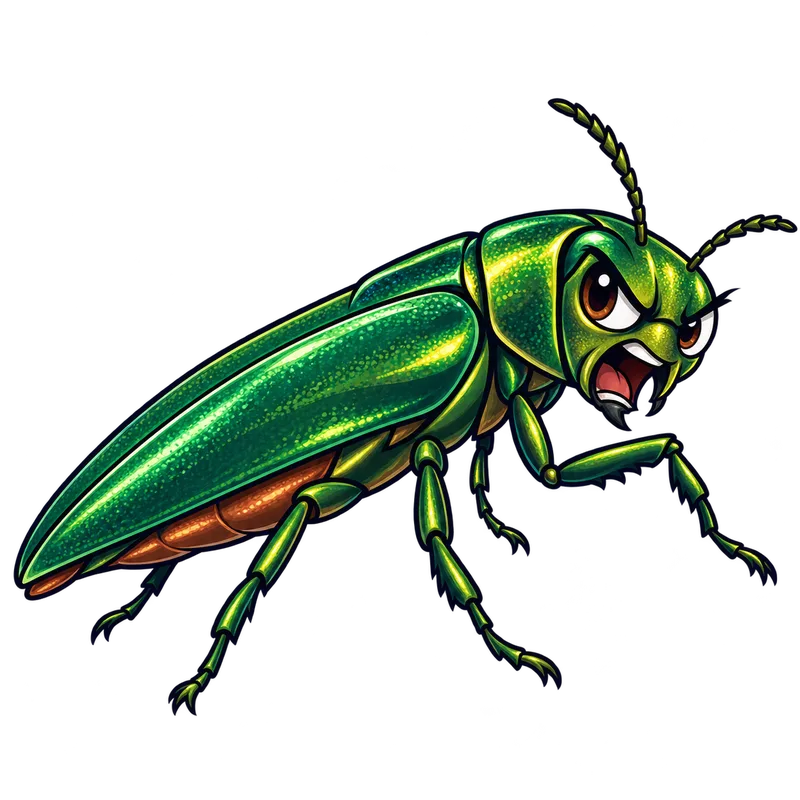
An emerald ash borer treatment is a targeted chemical or management intervention designed to stop invasive metallic green beetles from destroying an ash tree. The choice of treatment depends on whether the tree has less than thirty percent canopy dieback and can still absorb systemic insecticides.
What is actually going on
You are walking through the backyard on a warm Saturday in late spring, holding a mug of coffee, when you notice something off about the big ash tree near the property line. The top branches look a bit thin and sparse, almost like they forgot to wake up fully from winter. If you live in an area hit by the emerald ash borer, that thin canopy is usually the first quiet warning sign of a very aggressive underground war.
An emerald ash borer treatment is essentially a targeted chemical or management intervention designed to stop these metallic green beetles from turning a healthy shade tree into a pile of firewood. The pest itself is an invasive wood-boring beetle native to Asia that lays eggs on the bark. When those eggs hatch, the larvae tunnel underneath the bark and chew serpentine pathways through the inner tissue of the tree.
Think of that inner bark like a bundle of drinking straws carrying water and nutrients from the roots all the way up to the leaves. As the larvae tunnel around, they act like a pair of scissors snipping those straws all the way around the trunk. Once the vascular system is choked off, the upper branches starve, die back, and eventually the entire tree collapses.
Because the damage happens out of sight beneath the bark, treatments rely heavily on systemic insecticides. These are chemical active ingredients that get absorbed into the tree's internal plumbing. When the larvae try to feed on the inner tissue, they ingest the insecticide and die. But this only works if the tree's internal pipes are still intact enough to move the chemical upward, which makes timing and early action everything.
The life cycle of the beetle runs the show behind the scenes and dictates every practical choice you make. Adult beetles emerge in late spring or early summer, leaving those D-shaped exit holes behind before feeding on ash leaves for a few weeks. Females then tuck their eggs into bark crevices. Once those eggs hatch, the larvae bore inward and spend the summer and early autumn chewing up the cambium, which is the layer of tissue right under the bark. This is why systemic treatments must go in early, specifically in April or May when the tree experiences active sap flow and transpirational pull, meaning the natural upward draw of water. If you wait until summer, the vascular tissue may already be too damaged to carry the active ingredients.
Apart from systemics like imidacloprid and emamectin benzoate, some property owners use contact insecticides as external surface barriers on the bark in early May and early June. These contact sprays do not touch internal larvae, but they target adult beetles resting on the bark or newly hatched larvae before they manage to tunnel inside. However, these contact sprays demand careful timing and thorough coverage of the main trunk and major branches rather than just the lower foliage.
How to tell for sure
Before spending money on any treatment, you have to confirm you are actually dealing with an ash tree and an emerald ash borer infestation. First, look at the tree structure. Ash trees usually feature opposite branching, meaning the twigs and buds sit directly across from each other on the stem, and compound leaves made up of several leaflets. If you do not have an ash tree, you do not have an emerald ash borer problem, because these beetles are picky eaters that stick almost exclusively to this genus.
When you inspect the trunk and major branches, keep an eye out for specific physical evidence. Adult beetles leave behind distinct emergence holes that look like tiny capital letter D shapes cut into the bark, measuring about 3 to 4 mm across. You will usually not see the beetles themselves unless you catch them during their peak flight window in late spring.
Other telltale symptoms usually include top-down crown dieback where the upper third of the tree loses its leaves, vertical splitting in the bark revealing those winding larval tunnels underneath, and a surge of new shoots sprouting from the very bottom of the trunk as the tree makes a desperate final attempt to survive. You might also notice local woodpeckers stripping away pieces of outer bark to feed on the hidden larvae beneath, leaving pale patches on the trunk.
One common trap is assuming any round hole in a tree trunk means emerald ash borer. Native wood borers and certain wood-wasps leave completely round holes, while the ash borer's trademark is that flat side on the D-shaped exit hole. If you see peeling bark and heavy woodpecker activity combined with a thinning canopy on an ash tree, the pieces of the puzzle usually point straight to this pest.
What usually comes next
Once you know you have an ash tree and suspect or confirm the pest, your main practical decision comes down to choosing between preventive chemical treatment and letting the tree go. This choice usually depends entirely on how healthy the tree is right now. If the canopy is still lush and green with less than 30% dieback, a chemical treatment can act like an insurance policy, protecting the tree for the next couple of years.
If the tree has already lost more than half of its canopy and the upper branches are completely dead, chemical treatments are a waste of money. Once the vascular tissue is extensively destroyed, the tree cannot pull the systemic insecticide up through its trunk, and recovery becomes impossible. In that case, the decision shifts from saving the tree to scheduling its safe removal before it becomes a brittle hazard near your house or driveway.
For trees that qualify for treatment, you also have to decide who does the work. Homeowners can often apply soil drench insecticides around the base of smaller trees during the active spring uptake window, usually in April or May. However, larger trees or treatments involving direct trunk injections of more potent active ingredients require specialized micro-injection equipment. That route is not a DIY weekend project and requires hiring a licensed professional arborist who knows how to deliver the precise dose without permanently injuring the trunk.
Beyond individual tree care, your decision-making needs to factor in local biosecurity rules, especially regarding firewood. Moving cut ash wood to a different region is one of the fastest ways to give these hitchhiking bugs a free ride into untouched forests. Sticking to the rule of buying and burning firewood locally is a small choice that helps slow the spread across your community.
When to get help
There are moments when handling an ash borer situation yourself crosses the line from practical property maintenance into a genuine safety hazard or a regulatory matter. You should call a professional certified arborist immediately if you are dealing with a large mature tree, if the trunk diameter requires specialized injection tools, or if the tree is located close to power lines, fences, or your home. Trees weakened by wood-boring larvae lose their structural integrity rapidly, and dropping a dead or dying branch onto a roof is an expensive lesson in when to call in a crew with rigging equipment.
You also need to involve local forestry agencies or departments of agriculture if you suspect a new infestation in an area where the pest has not been officially documented yet. Many municipalities and regional biosecurity offices track the spread and enforce quarantine boundaries to protect public forests and parks.
On the health side of things, while the beetle itself does not bite, sting, or carry human diseases, the heavy application of concentrated pesticides around your property does require caution. If anyone in your household experiences dizziness, skin irritation, or respiratory distress after handling garden chemicals, or if accidental swallowing occurs, contact poison control or a clinician right away and have the product label on hand to show them exactly what was used.