
What is the scientific name of the emerald ash borer?
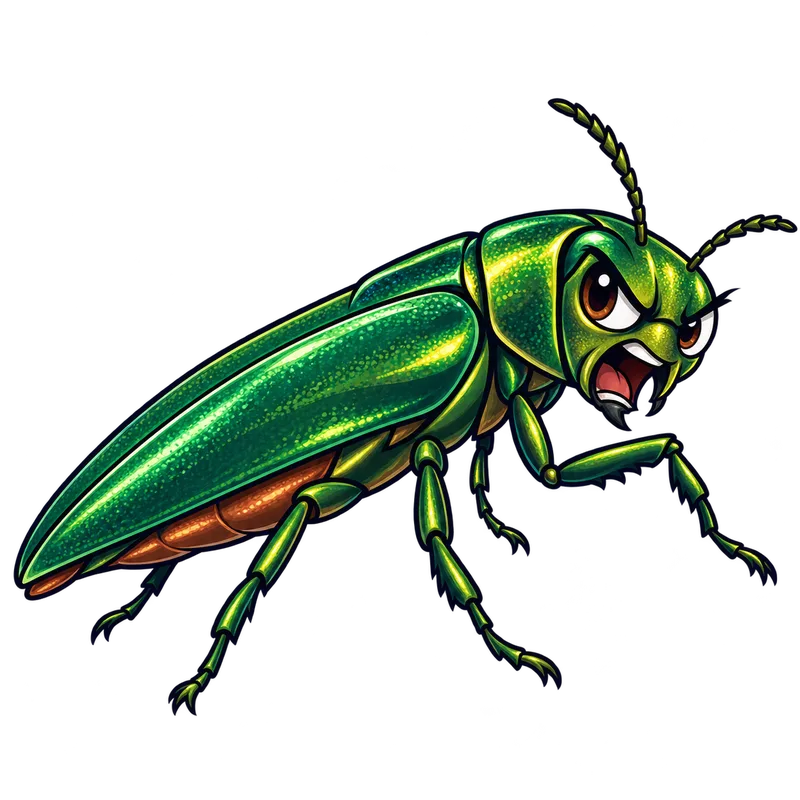
The scientific name of the emerald ash borer is Agrilus planipennis Fairmaire. It is a metallic wood-boring beetle in the family Buprestidae, and its creamy white larvae kill ash trees by tunneling through the living layers under the bark, which cuts off the flow of water and nutrients to the canopy.
What is actually going on
You are standing in the backyard with a cup of coffee, looking up at the grand old ash tree that has shaded your patio for decades, only to notice that the top branches look suspiciously bare and yellowish. A neighbor walks by, shakes their head, and mentions that those metallic green beetles might finally have found your neighborhood. You wonder what the actual scientific name of this creature is, expecting some long and complicated Latin label.
The scientific name of the emerald ash borer is Agrilus planipennis Fairmaire, though most people just call it EAB or refer to it simply as an emerald ash borer. Taxonomically speaking, it belongs to the family Buprestidae, which entomologists commonly call metallic wood-boring beetles. This classification places it in a massive group of phloem-boring insects, meaning its life cycle revolves around feeding on the living transport tissues situated right beneath a tree's bark.
While the adult beetle is the part people usually notice because of its brilliant iridescent emerald green color and small size, the real damage happens out of sight. The adult beetles cause only minor leaf chewing, but they lay eggs that hatch into creamy white, flat, ribbon-like larvae. These larvae chew winding, S-shaped galleries through the phloem and cambium layers of true ash trees, packing those tunnels tight with sawdust-like frass.
This larval feeding activity is what ultimately proves fatal to the tree. By chewing through those vital inner layers, the larvae effectively sever the tree's internal plumbing, stopping the transport of water and nutrients from the roots to the canopy. Even if the soil is damp and rich, an infested ash tree slowly starves and dehydrates from the top down. Because the insect is a regulated quarantine pest under strict government oversight, discovering one usually triggers legal reporting obligations and strict rules on moving firewood.
How to tell for sure
Spotting this pest usually requires looking for a distinct triad of symptoms rather than trying to catch the fast-moving adult beetle in the act. From a distance of a few meters, you will usually notice canopy thinning, yellowing leaves, and sudden epicormic sprouting, which means frantic new water shoots bursting out low on the trunk as the tree tries to survive its failing upper limbs.
As you move closer to the trunk at eye level, keep an eye out for vertical bark fissures caused by the tree's wood reacting to internal feeding. You might also spot patches of what foresters call blonding. This is where woodpeckers have chipped away the dark outer bark to feast on the plump white larvae underneath, leaving bright patches of inner wood exposed like a beacon.
For a definitive physical sign, look for the clean D-shaped exit hole left behind when the adult beetle finishes pupating and chews its way out. The flat side of the letter matches the flattened back of the emerging insect. If you gently peel away loose, flaky bark with a pocketknife, you will generally expose those signature serpentine tunnels packed tight with fine sawdust.
Distinguishing this specific beetle from harmless native lookalikes usually calls for a hand lens with ten times magnification to check the tiny abdominal details and back patterns. If you spot these suspicious signs in an area where the pest has not been officially recorded yet, a casual backyard guess will not satisfy the authorities. You will typically need to pack up physical specimens and send them off to local or national agriculture specialists for an official signoff.
What usually comes next
Once you confirm your shade tree is indeed a true ash belonging to the usual Fraxinus family, which you can tell by its opposite branches and compound leaves, you face a stark choice between treatment and removal. This decision usually turns on how much of the canopy is already gone. If your tree has lost more than half of its upper leaves, chemical treatments are a waste of money because the internal plumbing is too wrecked to pull the medicine up from the roots.
For trees with decent canopies left, systemic insecticides can buy you time if applied while the roots are actively drinking in the spring. You can handle basic soil drenches yourself, but powerful trunk injections demand professional gear and a licensed applicator. When canopy decline crosses that invisible line of no return, the sensible move changes from trying to save the tree to calling in a crew to take it down before it drops a heavy limb on your roof.
When to get help
Dead and dying ash wood dries out with surprising speed, turning brittle enough to snap unexpectedly near driveways, fences, and power lines. When a tree reaches this hazardous stage, tackling it with a chainsaw in your weekend clothes is a terrible idea, and you need to bring in a professional arborist with proper rigging gear.
You also need to rely on licensed professionals for high-potency treatments like trunk injections that require restricted chemicals and specialized equipment. Beyond the yard work, if you find those distinct D-shaped holes or dying branches in a county or province that has stayed clear until now, you have a clear duty to report the find right away to your state extension office or national plant health agency.