
Why do Asian lady beetles smell?
Asian lady beetles smell because they release a defensive yellow fluid from their leg joints when they are disturbed or crushed. This discharge contains compounds that create a strong, unpleasant odor designed to ward off predators. Disturbing large clusters of these bugs indoors releases enough of that musty fluid to make the room smell heavily.
What is actually going on
You walk into the living room on a crisp October afternoon, grab the TV remote, and notice a small, orange, spotted bug crawling across the cushion. When you reach down to flick it away or step on it, a strange, musty smell hits the air, followed by a faint yellowish smear on the fabric. If you have ever wondered why those harmless-looking little insects pack such an odd, pungent punch, you are not alone.
Those visitors are Asian lady beetles, and they smell because they employ a clever, if unpleasant, chemical defense mechanism when they feel threatened. Out in the garden, these insects spend their summer months quietly eating aphids and other soft-bodied pests, acting as wonderful helpers for your plants. But when autumn temperatures drop, their instincts tell them to find a cozy, protected place to spend the winter. That place is usually the inside of your warm house.
When you pinch one, squash it against a wall, or even startle it inside the nozzle of a vacuum cleaner, the beetle releases a defensive yellow fluid from its leg joints. This process discharges a mix of compounds that carry a sharp, earthy odor designed to make predators think twice before eating them. Entomologists recognize the scent as a potent warning signal, even if the exact molecular breakdown rarely concerns anyone until it happens on their favorite throw pillow.
The trouble is that your living room rug or baseboard is a terrible place for a beetle to try and deter a predator. Because these bugs gather by the hundreds or thousands inside wall voids and attics, disturbing a cluster means releasing enough of that pungent liquid to make your whole room smell like damp soil, stale peanuts, or musty basement corners. They are not trying to ruin your afternoon on purpose, but their natural survival toolkit is uniquely unsuited for indoor cohabitation.
Asian lady beetles spend the warm months as beneficial predators outdoors, feeding on agricultural and garden pests like aphids, scale insects, and spider mites. When autumn arrives and temperatures begin to drop, they shift their behavior entirely. They leave their outdoor feeding grounds and begin searching for protected overwintering sites, which frequently leads them to human structures.
They exploit microscopic gaps in siding, window frames, and unsealed door thresholds to slip inside wall voids and attics. Once inside, they congregate in large numbers. On warm winter or early spring days, indoor heat draws them out of the walls and into the living quarters. When disturbed, handled, or crushed, they release a yellow defensive hemolymph fluid from their leg joints. This discharge creates objectionable stains on fabrics and walls while emitting a strong, unpleasant odor.
How to tell for sure
Before you start worrying about what is crawling across your wall, make sure you actually have an Asian lady beetle and not a different insect entirely. Asian lady beetles are small and dome-shaped, usually measuring between five and eight millimeters long. They range in color from a pale yellow-orange to a deep, burnt red, and their wing covers can feature anywhere from zero to nearly twenty black spots.
One of the easiest ways to tell an Asian lady beetle apart from native ladybugs is the marking right behind its head. Look for a pale, whitish patch featuring a dark marking shaped like the letter M or a pair of parentheses. Native ladybugs usually lack this specific marking. You will also notice that Asian lady beetles have a strong tendency to gather in massive swarms on the sun-lit, warm exterior walls of houses during bright autumn afternoons, trying to squeeze through every microscopic gap they can find.
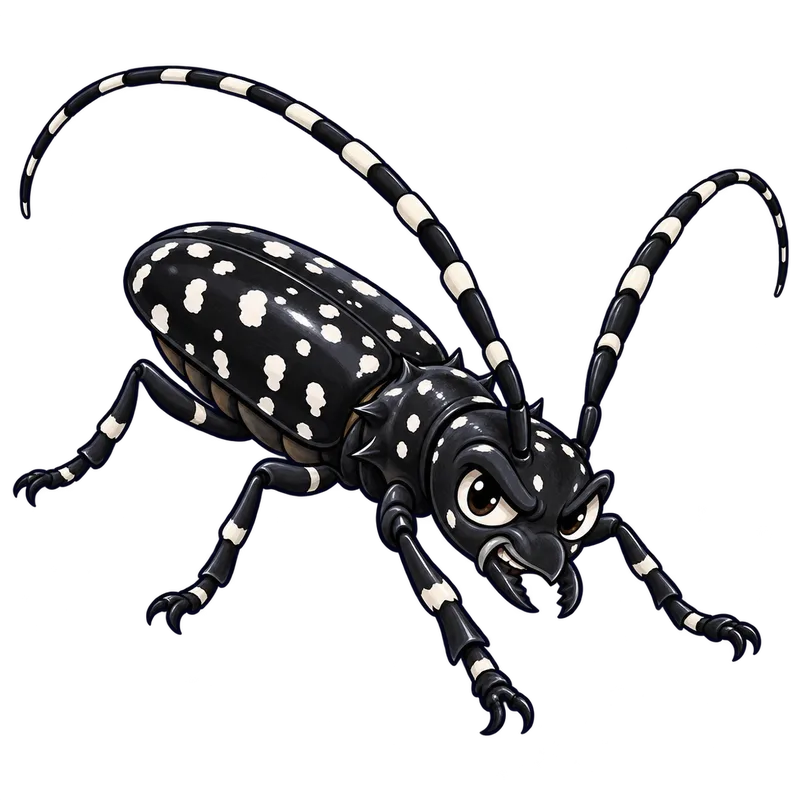
There is also a common mix-up you want to avoid. People often hear about the Asian longhorned beetle and assume it is just a giant version of the lady beetle because of the shared geographic descriptor. They are entirely different worlds. An Asian longhorned beetle is a massive wood-boring quarantine pest measuring up to forty millimeters long, equipped with prominent black-and-white banded antennae that stretch twice the length of its body, and it leaves large circular holes in hardwood trees. Your little orange house guest is just a tiny, round garden predator looking for a warm place to sleep.
What usually comes next
You are going to have to decide whether to seal your house up tight or just deal with the ones that manage to sneak past your defenses. If you spot them clustering on your siding in early autumn, your best practical move is to focus entirely on physical exclusion. Grab a tube of exterior-grade caulk and seal every crack around your window frames, door trim, and utility line entry points. Fit tight rubber or brush sweeps to the bottoms of your exterior doors, and make sure your attic and soffit vents are covered with fine wire mesh.
If they have already made it inside your living space, resist the urge to smash them with a paper towel or squash them under your shoe. That is a quick ticket to stained walls and lingering odors. Instead, grab your vacuum cleaner and gently suck them up with the hose attachment.
Once you finish vacuuming, do not leave that bag sitting inside the closet or the machine, or you will soon find out how easily they crawl back out. Immediately remove the vacuum bag, seal it tightly inside a plastic grocery bag, and carry it out to your exterior trash bin. If your vacuum uses a bagless canister, empty the contents directly into a sealed bag and take it outside right away.
If you decide to use preventative outdoor barrier sprays, remember that timing is everything. Products like microencapsulated pyrethroid sprays, such as Demand CS at zero point zero three percent concentration, must be applied strictly during the first week of October to intercept the beetles before they crawl inside your walls. Spraying in late October or November is usually a waste of time and money, because the beetles have already passed beyond the exterior barrier and settled deep into structural voids where outdoor sprays cannot reach them.
When to get help
Most of the time, managing these autumn visitors is a simple matter of caulking and vacuuming, but certain situations call for backup. If you live in a multi-story house and notice massive, overwhelming swarms of beetles clustering high up under your eaves, rooflines, or difficult-to-reach soffits, do not risk climbing a tall ladder with a can of spray. Call a licensed pest control operator who has the proper equipment and safety gear to reach those high exterior zones safely.
Always read and follow the pesticide product label strictly, as federal law requires. Never apply perimeter treatments along concrete walks, driveways, or paved surfaces where rain and storm runoff can wash active ingredients straight into local streams and waterways, and avoid spraying when flowering plants are active and drawing in pollinators. If you or someone in your household experiences severe allergic symptoms, respiratory distress, or skin irritation related to heavy indoor insect infestations, consult a healthcare professional for guidance.