
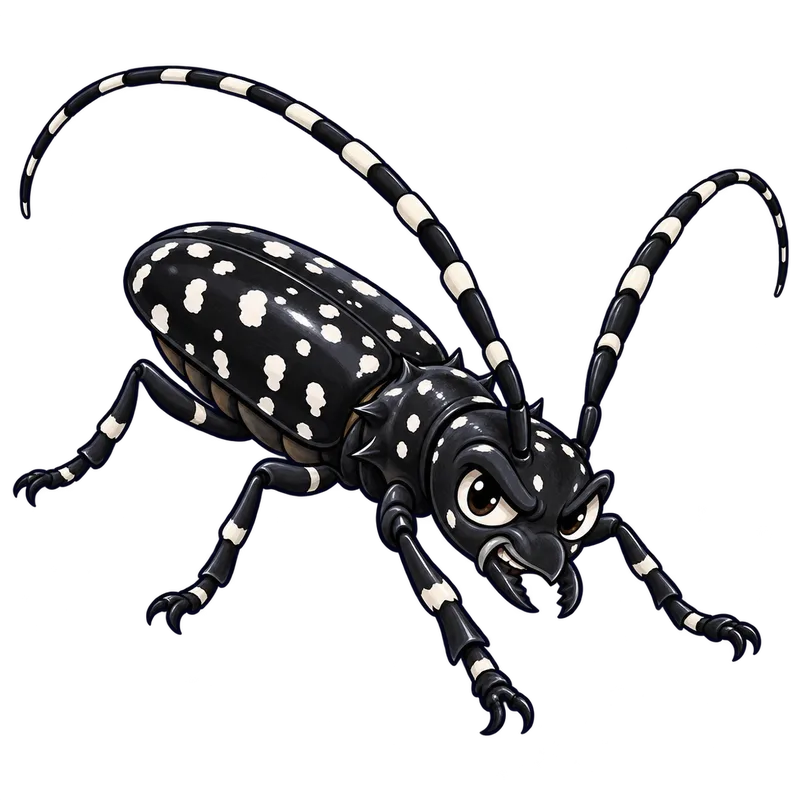
Asian longhorned beetle
Anoplophora glabripennis
- Size
- 20 to 40 mm
- Color
- Shiny jet-black with white spots
- Habitat
- Urban shade trees and broadleaf forests
- Diet
- Broadleaf hardwood trees, especially maples
- Life cycle
- Egg, larva, pupa, adult
The Asian longhorned beetle looks like something designed by an industrial designer with an excess of high-gloss black paint. Scientifically designated as Anoplophora glabripennis, an adult measures between 20 to 40 mm in body length, sporting a jet-black exoskeleton that catches the light like a luxury sedan. Scattered across the wing covers are irregular white spots that stand out starkly against that dark backdrop. If you are standing a few feet away, the most arresting feature is the pair of antennae. They stretch up to 2 times the length of the body and feature distinct alternating bands of black and white or light blue along every single segment.
Identity
When you get closer to a suspect tree, you are looking for diagnostic woodworking evidence rather than just the insect itself. The adult leaves a clean, perfectly circular emergence hole about 10 mm in diameter, which looks remarkably like someone drove a drill bit straight into the bark. Beneath the branches, you might spot coarse, shredded wood shavings and sawdust piled in bark crevices or at the base of the trunk. Female beetles also carve shallow, oval egg-laying pits into the bark to deposit eggs, and these fresh scars frequently ooze frothy white sap.
Habitat & behaviour
You will find this insect in urban shade tree canopies, residential landscapes, municipal parks, roadside plantings, and broadleaf forests. Unlike native borers that target sickly timber, this species has a frustrating preference for completely healthy, vigorous living trees. It feeds on a wide range of broadleaf hardwoods, though maples represent the primary, highest-risk target in residential landscapes. Other confirmed hosts include birches, elms, willows, poplars, horse chestnuts, and sycamores.
Adults are active during late spring, summer, and early autumn. They walk along trunks and branches, mate, and chew new egg-laying pits into the bark. Females show intense fidelity to the tree they emerged from, re-infesting the exact same host generation after generation until the internal damage becomes fatal. While you can search for signs year-round, late fall and winter provide an optimal window for visual surveys because leaf drop clears the canopy and exposes the main trunk and scaffold branches to inspection.
Visual variations
As non-social beetles, these insects do not maintain a caste system with workers or soldiers. The sexes are separate, and while both share the glossy black and white-spotted color scheme, males generally run slightly smaller in body length while sporting proportionally longer antennae relative to their bodies. Separating this species in the field can be tricky due to extreme similarity to the citrus longhorn beetle, which shares a comparable size and banded antenna pattern but often lays eggs closer to the base of the trunk or exposed roots.
Before reaching that polished adult stage, the insect lives a hidden life as a larva. The larval stage is a cream-colored to pale yellow, legless grub equipped with dark, hardened mandibles designed for chewing through tough timber. These grubs spend their time boring deep, winding galleries through the inner vascular pipeline and structural heartwood of the tree. When they are ready to transform, they pupate near the surface before chewing their way out as winged adults. The membranous hindwings tucked beneath the shiny black forewings provide strong, functional flight capability for short-range dispersal to neighbouring trees.
Why it matters
The presence of this pest means serious trouble for urban forests and shade trees, though it poses zero direct medical risk to humans or pets. It does not bite, sting, or carry pathogens, and it will not attack or infest dry structural lumber or indoor furniture. The real hazard lies in the structural compromise of living trees. As thousands of internal larval tunnels sever the tree's internal plumbing, major limbs die back and entire trunks fail, dropping heavy branches over driveways, homes, and public pathways.
If you suspect you have found an Asian longhorned beetle, a 10 mm circular exit hole, or fresh sap-oozing bark pits, private management stops immediately. This is a regulated quarantine pest subject to strict government biosecurity legislation. You must report the sighting directly to the appropriate national plant protection organization, such as the relevant agricultural department or environmental agency in your region. Private removal or chemical application is prohibited within regulated zones, and leaving wood movement unchecked risks devastating local canopies.
Similar species
 Common furniture beetleAnobium punctatum
 Old house borerHylotrupes bajulus
 Powderpost beetlesSubfamily Lyctinae
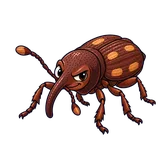 Rice weevilSitophilus oryzae
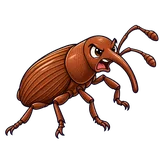 Granary weevilSitophilus granarius
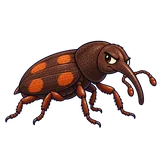 Maize weevilSitophilus zeamais