
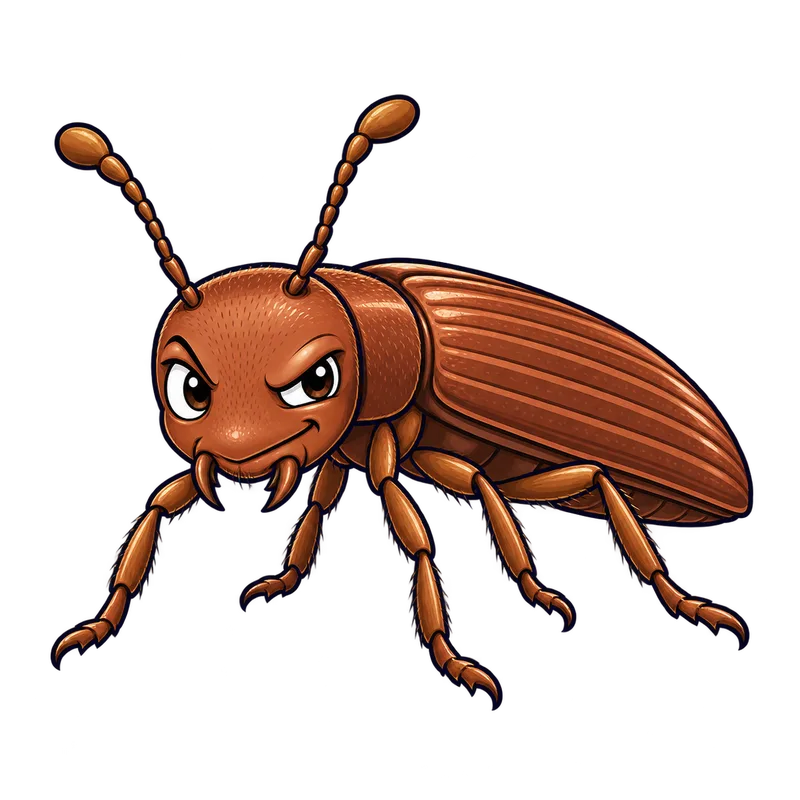
Powderpost beetles
Subfamily Lyctinae
- Size
- 1/16 to 2 inches depending on species
- Color
- Reddish-brown, dark brown, grey, or coal-black
- Habitat
- Seasoned hardwoods, softwoods, and damp structural timbers
- Diet
- Starch, sugars, and cellulose within wood
- Life cycle
- 1 to 10 years from egg to adult emergence
Powderpost beetles are not a single species, but rather a sprawling assembly of wood-boring insects split into three distinct biological families. When you notice tiny round holes punched through antique furniture, hardwood floors, or structural beams, you are looking at the handiwork of either true powderpost beetles, false powderpost beetles, or anobiine beetles, which include the infamous deathwatch beetles.
Identity
Telling them apart in the field comes down to a few anatomical quirks that you can spot with a magnifying glass or even the naked eye if you know where to look. True powderpost beetles possess a prominent head that is entirely visible when you look at the beetle from above, paired with short antennae ending in a two-segmented club. False powderpost beetles and anobiine beetles hide their heads beneath a hooded, humped thorax that resembles a monk cowl.
Size varies wildly across the group. True powderpost beetles stay modest, ranging from two to 7.5 mm. Some false powderpost beetles stretch up to 22 mm, while anobiids typically hover between 1.1 and 8 mm. Adults of all three groups are fully winged and drawn to light, which explains why you often find dead beetles clustered on sunny windowsills during the summer months.
Habitat & behaviour
These insects spend their lives hidden inside seasoned timber, operating in complete darkness until the moment they emerge as adults. Their choice of real estate depends strictly on their digestion. True powderpost beetles restrict their attacks to the sapwood of large-pored hardwoods such as oak, ash, walnut, and mahogany, alongside bamboo. They need high starch contents inside the wood cells to survive, and because softwoods like pine, fir, and spruce lack both the right pore structure and sufficient starch, softwoods remain immune to true powderpost beetles.
Anobiine beetles have a different appetite entirely. They possess enzymes that break down cellulose, allowing them to happily infest both softwoods and hardwoods. They also prefer higher moisture content in the wood, often finding a comfortable home in damp crawl spaces, cellars, and areas compromised by wood-decay fungi. False powderpost beetles fall somewhere in the middle, tackling dry or partially seasoned hardwoods and softwoods.
A common misconception is that finding holes in a timber means the insects are actively munching away right now. In reality, emergence holes represent the exit doors used by adults that have already finished their development and flown off. An infestation is active only if you spot fresh, fine powder trickling from the wood or discover new holes appearing over time.
Visual variations
The life cycle of a powderpost beetle plays out in four distinct stages, starting with a microscopic egg tucked safely inside a wood pore, a tiny crack, or an old exit tunnel. From that egg emerges a pale, C-shaped grub, which is the larval stage doing all the actual chewing and structural damage. These creamy larvae tunnel endlessly along the grain of the wood, feeding for anywhere from several months to as long as a decade depending on the species, the ambient temperature, and how much starch is left in the timber.
When the larva finally matures, it builds a small resting chamber right beneath the surface of the wood. After completing its transformation into an adult, it chews a clean exit hole and steps out into the open.
You can often figure out which family of beetles carved up your wood just by rubbing a pinch of the dust, known as frass, left behind in the galleries. True powderpost beetles leave a very fine, flour-like powder that feels entirely smooth and lacks any visible pellets. Anobiid frass feels noticeably gritty because it contains distinct, bun-shaped fecal pellets mixed in with the dust. False powderpost beetles pack their tunnels with a coarse powder that resembles laundry soap, packed so densely that it tends to hold its shape even when you pop open the wood.
Why it matters
Finding these insects can range from a minor cosmetic annoyance to a genuine structural headache, depending entirely on which family you are dealing with. Because true powderpost beetles target only the sapwood of hardwoods, and modern building standards rarely use large hardwood framing timbers, these pests rarely weaken heavy structural supports enough to cause a collapse. They will certainly ruin expensive hardwood floors, antique tabletops, and decorative moldings, but your house is generally safe from tumbling down.
Anobiine beetles present a much more serious risk. Because they readily attack structural softwoods like pine joists and subflooring, particularly in damp basements or crawl spaces, they can honeycomb the interior of framing timbers until the wood completely loses its load-bearing capacity.
Getting the identification right matters because treating wood without knowing the exact culprit usually leads to wasted time and effort. Surface finishes like varnishes and paints seal wood pores and block liquid treatments, while fumigation kills existing insects inside the wood but leaves zero residual protection against future attacks. If you spot beetle damage in load-bearing structural members, or if timber feels spongy and hollow underfoot, professional assessment by a licensed pest control operator or a structural engineer is necessary to determine whether the wood needs reinforcement or outright replacement.
Similar species
 Rice weevilSitophilus oryzae
 Granary weevilSitophilus granarius
 Maize weevilSitophilus zeamais
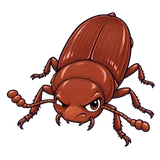 Red flour beetleTribolium castaneum
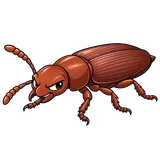 Confused flour beetleTribolium confusum
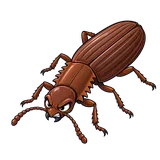 Sawtoothed grain beetleOryzaephilus surinamensis