
Carpenter bee holes vs wood-boring beetle holes: what differs?
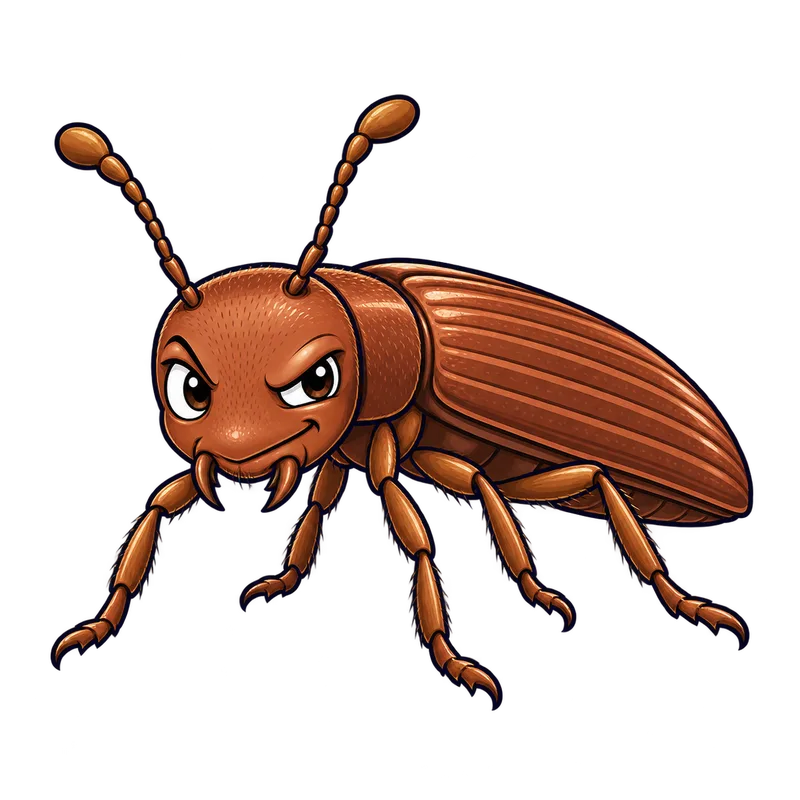
Carpenter bee holes and wood-boring beetle holes differ primarily in their size, the type of debris they leave, and whether the insect actually eats the wood. Carpenter bee holes are clean-cut and measure about three-eighths to one-half of an inch across, while true powderpost beetle holes are tiny and narrow as one-thirty-second of an inch.
What is actually going on
Picture stepping out onto the back porch on a warm spring afternoon to lean against the wooden railing, only to notice a perfectly clean, round hole bored right into the wood, like someone took a power drill to your house. Naturally, you wonder what made it and whether your entire deck is about to turn into sawdust. When you spot mysterious holes in structural timber or outdoor furniture, the culprit usually boils down to one of two suspects: carpenter bees or wood-boring beetles. But they operate in entirely different ways, and confusing the two can send you down the wrong path entirely.
The most important distinction is that carpenter bees do not actually eat wood. The female uses her powerful jaws simply to excavate a neat nursery tunnel where she can lay her eggs, discarding the coarse wood shavings outside. Wood-boring beetles are a completely different story. Their destructive work happens underground or, rather, inside the timber. The larvae spend months or even years chewing through the interior fibers for food. What you see on the surface is not an entrance, but an emergence hole left behind when the mature beetle finally chews its way out to the world.
So, finding a carpenter bee hole is like spotting a front door where a tenant is actively coming and going, while finding a beetle hole is like discovering an exit door at a stadium after everyone has already left. Carpenter bees want a sheltered home for their next generation, while wood-boring beetles have already finished their main course of destruction by the time you spot their escape hatches. Knowing this mechanical difference saves you from panicking over the wrong threat or treating a pest that is no longer even inside the wood.
How to tell for sure
Differentiating these pests usually comes down to measuring the opening and inspecting what is left behind. Carpenter bee holes are remarkably uniform and clean-cut, measuring about three-eighths to one-half of an inch across. If you can slide an entire ballpoint pen casing straight into the hole, you are usually looking at a carpenter bee entrance. Wood-boring beetle holes are much smaller and vary by family. True powderpost beetles leave tiny, shot-like holes as narrow as one-thirty-second of an inch, while other beetles leave round or slightly oval openings up to three-eighths of an inch. If only the very metal tip of a pen refill fits, you are likely dealing with a beetle.
Frass, which is the powdery debris left behind, serves as another reliable clue. Take a pinch of the dust beneath the hole and rub it between your fingers. Carpenter bee debris feels like coarse wood shavings or pencil scrapings, and it is usually accompanied by yellow or dark pollen stains. True powderpost beetles leave behind a substance that feels just like talcum powder or baking flour. Anobiid beetles leave a gritty powder mixed with tiny, distinct, pellet-like droppings that resemble miniature footballs or coffee beans.
Wood choice also matters quite a bit. Carpenter bees usually target bare, unpainted softwoods like cedar, pine, and redwood on exterior eaves, siding, and deck railings. Wood-boring beetles are pickier based on their species. Some species require the open pores of hardwoods like oak or ash, while others happily attack softwoods in framing and subflooring. If the wood is painted or treated, carpenter bees generally bypass it, whereas certain beetles emerge right through finished surfaces from wood that was already infested before construction.
What usually comes next
Deciding what to do next depends on whether the insects are actively using the wood right now. For carpenter bees, you typically treat active holes in the evening when the insects are inside, wait a couple of days for the treatment to take effect, and then seal the hole permanently with a wooden dowel and exterior wood glue or caulk. Painting or sealing the surrounding wood surfaces helps deter them from returning next season.
Dealing with wood-boring beetles requires a closer look at whether the infestation is current. You can test this by clearing away old dust and sealing the holes with putty or paint, then checking back later in the season. If fresh, bright powder and new holes appear, the infestation is active. Localized damage in a single piece of trim often calls for simply replacing the wood with kiln-dried timber. If the infestation is widespread across structural framing, or involves borates applied to bare wood, a conversation with a licensed pest control professional is usually the smartest route to protect the integrity of the building.
When to get help
Some situations go beyond a simple DIY weekend project and require outside expertise. If you notice beetle emergence holes spread widely across load-bearing timbers, floor joists, or roof supports, you need to bring in a professional applicator. Heavy structural damage can compromise the load-bearing capacity of your home, and widespread infestations sometimes require specialized treatments like whole-structure fumigation or pressure-injected borates that only licensed contractors are equipped to handle.
Real estate transactions also call for professional intervention, as formal timber pest inspections are necessary to evaluate structural safety and satisfy lender requirements. If you or someone in your household experiences unusual health symptoms, skin reactions, or suspected insect bites near the affected wood, consult a licensed clinician or your regional poison control center right away, as pest identification should never rely on skin marks alone. Always remember that any pesticide product label is the law, and you should never invent custom chemical mixtures or exceed the application rates printed on the container.