
What damage do cucumber beetles cause to young plants?
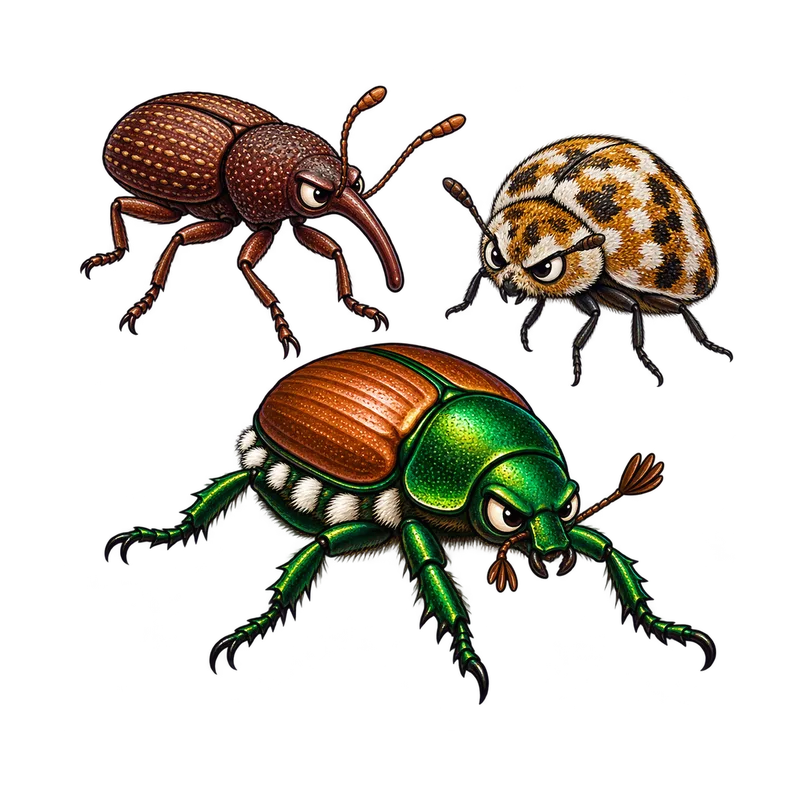
Cucumber beetles damage young plants through direct feeding and by spreading bacterial wilt. Adult beetles chew ragged holes in leaves and gnaw on tender stems, which can easily kill fragile seedlings. They also transmit a lethal bacterium that clogs the plant plumbing and causes the entire plant to collapse.
What is actually going on
Picture walking out to your garden patch on a warm morning in early summer, coffee cup in hand, only to find your brand-new cucumber and zucchini seedlings looking like they survived a miniature lawnmower attack. You look closer and spot small, cheerful-looking yellow beetles with black stripes or dots sitting right on the chewed-up leaves. It feels like a minor annoyance at first, but these little visitors bring a devastating one-two punch that can wipe out a whole bed of young plants before they ever start climbing.
Cucumber beetles cause damage through two completely different pathways. First, they engage in direct mechanical feeding. The overwintered adult beetles wake up hungry in the spring and immediately target tender seedlings, chewing ragged holes in the leaves, gnawing on the young stems, and sometimes girdling the main stalk completely. Think of a delicate, two-inch cucumber seedling like a human toddler. A small injury that a mature, established vine would shrug off can easily be fatal to a fragile baby plant with almost no mass or stored energy.
The second threat is actually the worse of the two. These beetles carry a bacterium in their digestive tracts that causes bacterial wilt, a lethal vascular disease. When the beetle chews on a leaf or stem, it deposits those bacteria straight into the plant wounds. The microbes multiply rapidly inside the water-transporting vessels, clogging the plumbing until individual vines and eventually the entire plant suddenly collapse and die. The beetle acts like a burglar who not only steals your food but also leaves the front door wide open for a hurricane.
How to tell for sure
You are usually dealing with one of two main species in North America, depending on what sort of pattern is on their backs. The striped cucumber beetle features alternating black and yellow longitudinal stripes along its wing covers, while the spotted cucumber beetle displays a yellowish-green body dotted with 12 distinct black spots. Both measure roughly six millimeters long and can be spotted with the naked eye, though using a hand lens helps when you are inspecting the undersides of leaves or looking for tiny egg clusters near the base of the stems.
People often confuse this damage with other common garden troubles, which can send you down the wrong treatment path entirely. Flea beetles also chew on young plants, but they leave tiny, round shot-holes in the foliage rather than the larger, irregular patches and stem notches left by cucumber beetles. You also want to look out for squash bugs and squash vine borers. Squash bugs cause a wilting that looks a lot like bacterial wilt, while vine borer larvae tunnel straight inside the stems to cause sudden plant collapse. If your vine is wilting overnight, check the base of the stem for entry holes before you assume you have a beetle-borne bacterial infection.
What usually comes next
Managing these pests on young plants takes careful watching since your room for error is tiny, especially once disease gets involved. Agricultural extension guides usually set the treatment limit for direct feeding at one beetle for every ten feet of crop row. When you want to stop bacterial wilt from spreading, that limit drops all the way down to a single beetle per one hundred feet. A very small population can force your hand if you garden where bacterial wilt is already established.
Keeping bugs away through smart physical habits is your best defense while the plants are still small. You can drape lightweight garden fabric over the beds right after planting to keep the insects away from the foliage. Bury the edges of the material in the dirt so the pests cannot crawl underneath. Just keep in mind that you need to take those covers off as soon as the first flowers open. Leaving the fabric on past that point stops the bees from getting inside, which ruins your chances of ever getting a harvest.
When your daily check shows that beetles got past your barriers and hit the danger limit, you can pick from several registered products based on your gardening style. Organic growers often rely on azadirachtin, kaolin clay, neem oil, or pyrethrins. Kaolin clay leaves a dusty coat that keeps the beetles away, while neem oil and pyrethrins kill them on contact. Should you prefer synthetic chemicals, you will find options like carbaryl, imidacloprid, or permethrin, and every single one demands strict obedience to its safety notes and harvest wait times.
When to get help
Pesticide label directions are the law for a very good reason. Never use more than the directed amount, never put a product on a crop not listed on the packaging, and remember that commercial spraying decisions belong to a licensed professional. If you decide on a broad-spectrum spray like carbaryl, you have to watch the clock. Carbaryl kills bees very easily, which means you should never apply it while plants are blooming or when daytime pollinators are busy in the garden.
There are also hard limits to what you can figure out on your own in the dirt. You can spot the adult beetles without any special tools, but simply looking at a dying vine cannot tell you if it has bacterial wilt, a fungal wilt, or root rot. Whenever you need a precise answer for a strange crop failure, your safest route is to cut a piece of the sick stem and mail it to a university plant clinic for testing.
Lastly, if you live somewhere with strict agricultural rules, like parts of Canada or overseas locations where certain leaf beetles are quarantined, stay alert for strange species and call your local plant health agency right away if you spot something unusual.