
Is an ash tree with emerald ash borer damage always beyond saving?
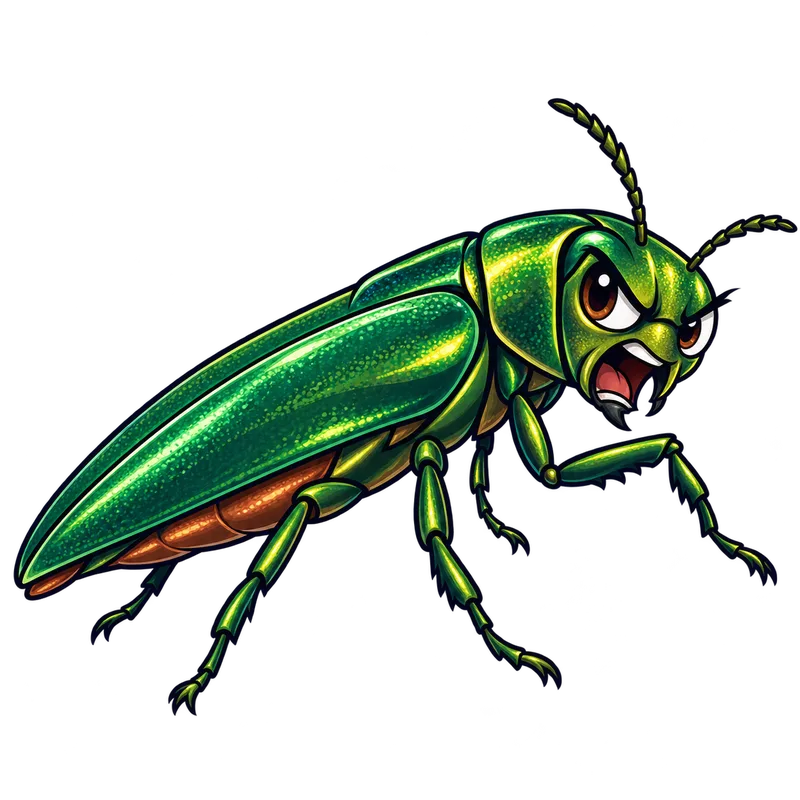
No, an ash tree with emerald ash borer damage is not always beyond saving. The outcome depends on how much vascular damage has already occurred beneath the bark. If the damage is caught early and the internal highways remain open, the tree can still function and absorb chemical treatments.
What is actually going on
Picture standing in your yard on a warm spring morning, looking up at the magnificent ash tree that has shaded your patio for twenty years. You notice a few thin, wispy branches at the very top where lush leaves used to be. It is easy to assume that once an emerald ash borer moves in, the tree is already a goner and you might as well call the timber cutters today.
The short answer is no, an ash tree with emerald ash borer damage is not always beyond saving. The outcome depends entirely on how much vascular damage has already occurred beneath the bark.
The culprit here is the larval stage of a slender, metallic green beetle measuring 7.5 to 13.5 mm long. When these larvae hatch, they tunnel into the inner bark and carve winding, serpentine galleries. Think of this inner bark tissue as a bustling highway network responsible for moving water and nutrients up from the roots to the topmost leaves. As the larvae feed, they tear up this highway system. If the damage is caught early, the tree can still function and absorb treatments. If the larvae have chewed a complete ring around the trunk, cutting off all flow, the tree starves from the inside out and cannot be saved.
How to tell for sure
Before panicking or buying treatments, you need to confirm what is actually happening on your tree. Do not guess based solely on a single wilted leaf or a patch of rough bark.
Look closely at the upper canopy first, as progressive dieback and leaf yellowing usually start at the very top and work their way down. As the tree struggles, it usually tries a desperate survival trick by pushing out bushy, green shoots near the base of the trunk or right out of the root collar. These basal sprouts are a clear sign of severe stress higher up.
Next, inspect the bark for vertical fissures measuring 5 to 10 cm long where the tree has split over larval galleries. If woodpeckers have been visiting, you might spot light-colored patches on the bark where the birds have stripped away the outer layers to feast on the hidden grubs underneath.
The most telltale sign of all is the exit hole left behind when adult beetles chew their way out in late spring. These holes are usually distinctly D-shaped and measure 3 to 4 mm in diameter. If you spot round holes instead, you are likely looking at a different pest entirely, which attacks entirely different trees rather than your ash.
What usually comes next
Once you have figured out what is happening, you face a straightforward choice depending on how far the damage has gone. If the tree still has most of its upper leaves and shows only minor warning signs, you usually have a decent window to save it with chemical treatments.
These products work by getting right into the tree's internal plumbing. You can apply them as a soil drench using imidacloprid around the base during the spring months, typically in April or May, when the roots are actively drinking. For larger shade trees or heavy local infestations, a trained professional can perform direct trunk injections using emamectin benzoate or Bidrin. Contact sprays featuring permethrin, bifenthrin, carbaryl, or cyfluthrin can also be sprayed directly on the bark in early May and early June to stop adult beetles before they lay new eggs.
Timing is everything in this business. Because these treatments rely on working sapwood to carry the active ingredients up to the branches, they only work if the internal highways are still open. If the bark is already sloughing off in chunks or most of the top is dead, systemic treatments will not do a thing because the tree cannot circulate liquids anymore. At that point, saving the tree is simply impossible, and you must avoid moving untreated firewood out of regulated biosecurity areas so you do not spread the bugs further.
When to get help
Certain situations involving an ash tree infestation move past typical yard upkeep and call for official or professional intervention.
If your tree has lost a huge portion of its crown, carries dead limbs, or features peeling bark, it has lost its structural strength and can turn dangerously brittle very quickly. Falling branches or a dropping trunk pose an immediate hazard to nearby homes, power lines, and anyone walking through the yard. You should bring in a certified arborist to check the structural safety and take down dead or hopeless trees right away.
You also need professional backup when dealing with treatments that demand specialized tools, such as high-pressure trunk injections using emamectin benzoate. On top of that, if you find emerald ash borer in a neighborhood where it has not been seen before, check your local laws. Biosecurity rules in many areas require you to report new finds to agricultural authorities, such as the Canadian Food Inspection Agency in Canada or USDA-APHIS in the United States, to help stop the rapid spread of the pest through firewood and nursery plants.