
Do adult carpet beetles or larvae damage fabrics?
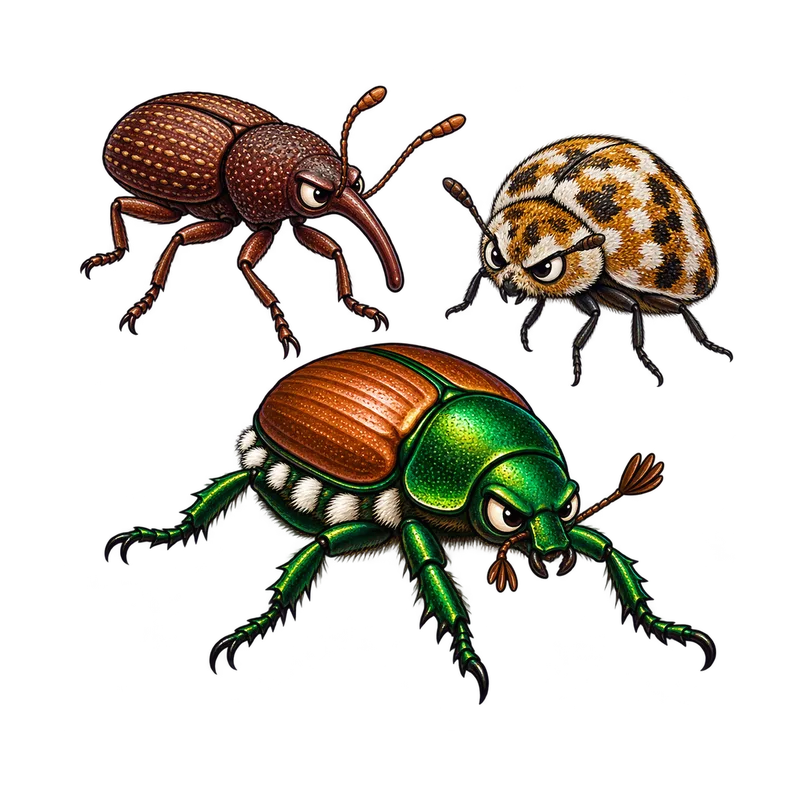
Only the larval stage of carpet beetles damages fabrics, while the adults feed exclusively on plant pollen and flower nectar. The hungry hairy grubs chew natural animal fibers containing keratin, such as wool, silk, fur, and leather.
What is actually going on
Imagine walking over to your sunny living room window on a bright spring afternoon and spotting half a dozen small, speckled beetles crawling lazily against the glass. Naturally, your mind races straight to your favorite wool sweater folded in the dark closet down the hall. You picture those little bugs munching away, turning your wardrobe into Swiss cheese.
Here is the twist: those adult beetles on your windowsill are completely innocent. They do not eat fabrics at all. In fact, adult carpet beetles are basically lost outdoor tourists. They want nothing to do with your clothes, your carpets, or your upholstery. Once they turn into adults, their only goal in life is to fly outside, bask in the warmth, and feed exclusively on plant pollen and nectar from flowers.
The real culprit is the larval stage of the insect, and you will rarely see them out in the open. The larvae are small, hairy, carrot-shaped grubs that despise light. They spend their time hiding in the darkest, most undisturbed corners of your house, such as beneath heavy furniture, along carpet edges, inside floor cracks, or deep within air conditioning ducts.
Unlike the adults, the larvae have powerful chewing mouthparts and a specialized digestive system capable of breaking down keratin. Keratin is the tough, fibrous structural protein found in natural animal fibers like wool, fur, feathers, silk, hair, leather, and animal bristles. If you find fabric damage in your home, hungry larvae did the work weeks or months ago while the adults were busy sunning themselves outside or looking for a spot to lay more eggs.
How to tell for sure
Pinpointing the pest usually starts with looking closely at the damage itself. Carpet beetle larvae usually browse randomly over fabrics, chewing broad, irregular, continuous grazed areas or creating single large structural holes in heavy textiles. If you find clean cotton or synthetic garments with holes, usually something else is going on, because these materials lack keratin. However, larvae will readily graze on cotton or synthetic fabrics if those items happen to be soiled with human perspiration, body oils, food spills, milk, fruit juices, or urine. They can even bore mechanically through a clean cotton cover just to get at the feather stuffing inside an old pillow.
You can usually tell carpet beetles apart from clothes moths by looking for three clear evidentiary markers. First, carpet beetle larvae do not spin silken feeding tubes, webbing sheets, or protective cases. If you see fine silk webbing draped over your damaged woolens, you are usually looking at clothes moth activity instead.
Second, carpet beetles leave behind translucent, bristly cast skins that look like tiny, empty, hairy winter coats dropped after a meal. Third, they leave behind hard, salt-grain-sized fecal pellets, known as frass, that often match the color of the digested fabric.
If you want to look closer at the insects themselves, a simple 10x magnification lens usually helps. You can use it to check the scale patterns on adult beetles or examine the tufts of hair on the rear of the larvae. If you spot tiny, hairy, brown grubs along with shed skin husks tucked beneath your baseboards, you have your answer.
What usually comes next
Deciding how to tackle a carpet beetle issue usually depends on how far it has spread. If you find just one damaged sweater or a small rug, you can normally handle it yourself with deep cleaning and high heat.
Start with a thorough vacuuming routine. Go over your carpets, rug edges, baseboard cracks, and heating vents regularly to clear out the accumulated lint, human hair, pet dander, and dead bugs that keep the larvae fed. For washable woolens, silks, and other natural fabrics, wash them in hot water or send them to the dry cleaner. High heat and cleaning fluids kill every life stage of the pest while washing away the body oils and food residues that attract them in the first place.
For fragile items that cannot take a normal wash, freezing is a solid option. Seal the affected items tightly inside plastic bags, squeeze out the extra air, and put them in a freezer kept at zero to minus four degrees Fahrenheit for at least 48 to 72 hours. Once you take them out, let the items warm up slowly inside the sealed bag for 24 hours to keep room moisture from condensing on the delicate fibers.
When you are ready to pack away clean clothes for the season, skip those old cedar chests that have lost their scent. Stick to airtight plastic bins, heavy plastic bags, or tightly sealed containers. If you decide to use chemical sprays or dusts in your storage spaces, always read and follow the product label carefully. Apply ready-to-use residual sprays only to closet floors, baseboard joints, floor cracks, and shelves, and never spray insecticides directly onto clothing, garments, or bedding.
When to get help
Sometimes a quick do-it-yourself fix is simply not enough. If an infestation spreads across wall-to-wall carpeting, structural subfloors, duct networks, or historic fabric collections, you will usually want to call in a professional pest control operator.
Health concerns also matter here. Carpet beetle larvae do not bite people, but their tiny hairs and shed skins carry proteins that can trigger an allergic skin reaction. This issue often looks like intensely itchy bumps, eye irritation, a runny nose, or chest tightness in sensitive individuals. Because skin marks and allergies can come from many different sources, do not try to diagnose them on your own. Anyone dealing with severe symptoms or ongoing skin irritation needs to speak with a medical clinician, urgent care clinic, or regional poison control center.
You also need to watch out for outdoor sources. Old bird nests, bee hives, and wasp nests hidden in attics, chimneys, or eaves are common spots where carpet beetles breed before wandering inside. If you spot a bird nest on your property, you must wait until the nesting season ends to remove it, keeping regional wildlife protection laws in mind. Finally, keep pets and kids away from treated floor edges and baseboards until liquid sprays dry entirely, and store all pest control products safely away from animals.