
What are the signs of larder beetle larvae indoors?
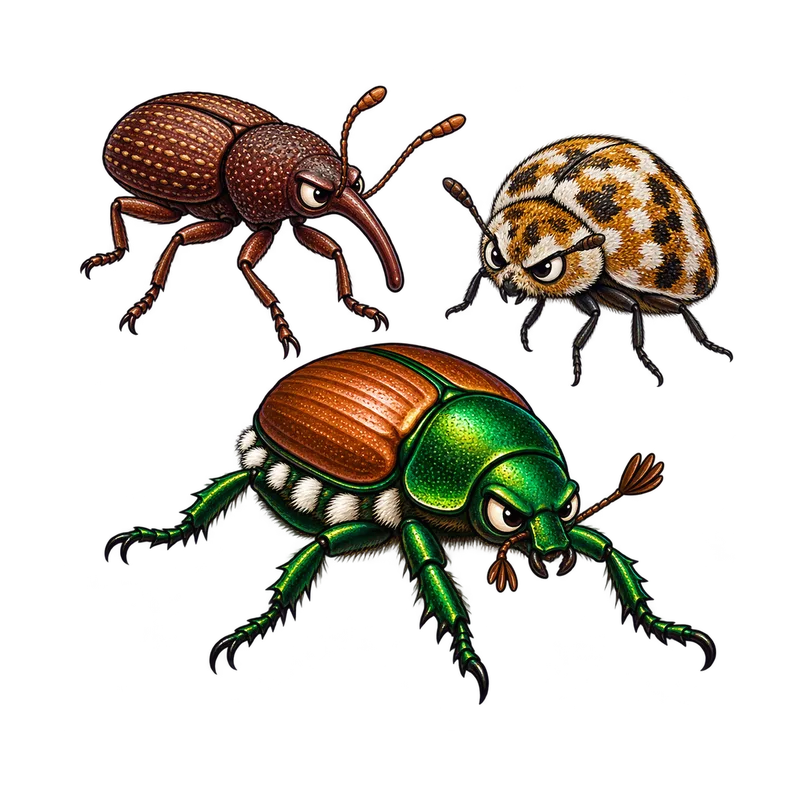
Larder beetle larvae indoors look like fuzzy, dark brown, bristly creatures with a tapered tail, measuring up to half an inch long with two tiny upward-curving hooks at the back end. Their presence indicates an active indoor population feeding on a hidden source of animal protein like pet food, dead insects, or leather. You may also spot hollow, cast larval skins and small round holes in nearby soft wood or insulation.
What is actually going on
You are standing in the kitchen on a sunny morning, barefoot, and you spot a tiny, dark, bristly creature making a determined march across your baseboards. It looks like a miniature, hairy pipe cleaner with a tapered tail, measuring up to half an inch long. That is not a stray carpet pest or a common pantry worm. You are looking at a larder beetle larva, and its presence usually means it has been feeding on something rich in animal protein tucked away out of sight, perhaps a forgotten bag of dog kibble in the pantry or a pile of dead cluster flies trapped inside your wall voids over the winter.
People often assume these insects are eating their way through the structural framing of the house because they leave small, round holes in wooden shelves or rigid foam insulation. In reality, the larvae do not digest wood or cellulose at all. When they reach full size after feeding for weeks, they wander off to find a safe, quiet spot to transform into pupae. Driven by an evolutionary instinct to keep their siblings from eating them while they are helpless, they use their chewing mouthparts like tiny drill bits to carve out a private bunk room in soft wood, cork, books, or insulation. They are not eating your house, but they are remodeling it just enough to make their transition into adult beetles.
The adult beetles themselves are oval, about a quarter to a third of an inch long, and dark brown or black with a distinct pale yellowish band across the front half of their wing covers that features six dark spots. If you are only finding a single adult wandering around in spring, it might just be a stray that wandered in from the outdoors. But if you are spotting hairy larvae or multiple adults, you are dealing with an active indoor population that has found a steady supply of high-protein organic matter.
How to tell for sure
To confirm you actually have larder beetle larvae rather than other common household bugs, you need to look closely at a few specific physical traits. Live larvae are usually elongate, tapered, and colored reddish-brown to dark brown. They are densely covered in short and long stiff hairs, which gives them that fuzzy, bristly look. The most reliable diagnostic feature is at the very back end of the body, where you will find a pair of tiny upward-curving hooks called urogomphi. If you do not see those two little tail hooks, you are likely looking at a different insect, such as a carpet beetle larva.
You will usually find secondary physical evidence around the infested area. As the larvae grow, they shed their exoskeletons multiple times. These cast skins look like hollow, bristly brown ghosts of the larvae and tend to pile up in cracks, beneath baseboards, or near feeding sites alongside tiny fecal pellets.
The food source itself tells a clear story. Larder beetle larvae require concentrated animal protein to survive. They will not infest clean cotton, synthetic shirts, or uninfested bags of plain grain flour. Instead, they target dry pet food, animal hides, furs, feathers, taxidermy mounts, cured or dried meats, and high-protein cheese. In many residential settings, the breeding reservoir is hidden away in attics or wall partitions where dead overwintering insects like boxelder bugs or stink bugs, or even dead rodents, have accumulated over the colder months.
What usually comes next
Once you spot those bristly creatures, your next move is simple detective work. You have to track down the exact high-protein stash keeping them alive. Start poking around the pantry where you keep bags of dog kibble, or inspect leather goods, furs, and any mounted animal heads hanging on the wall. If your kitchen and pantry look clean and nothing in the cupboards makes sense, look up. Check your baseboards, subflooring, and ceiling light fixtures right beneath attics or chimneys, because those larvae love to drop down from overhead spaces where dead cluster flies or mice piled up months ago.
Your vacuum cleaner is your best friend for physical cleanup right now. Grab the crevice attachment and suck up every live larva, adult beetle, and discarded skin you can find along baseboards, floor cracks, and dark corners. Right after you finish, pull out the vacuum bag or empty the canister straight into a heavy plastic bag, tie it shut, and walk it out to the exterior trash bin so nothing crawls back inside.
For food and other vulnerable items, you need to change how you store them. Ditch flimsy cardboard boxes and paper bags, and move everything into thick plastic, glass, or metal containers with tight rubber seals that block out scents and keep beetles from chewing their way in. If you have smaller items or woolens you suspect might harbor pests, try a simple thermal trick instead of chemicals. Pop the items into your home freezer for a full day to kill off any hidden bugs, or heat small heat-tolerant objects if that fits the material. Skip the aerosol bug bombs you see at the store, because those foggers never reach inside wall cavities, floor gaps, and deep crevices where the larvae hide.
When to get help
You can usually handle a larder beetle issue on your own with a deep cleaning, a proper trash day, and some sturdy storage bins. Still, some setups require professional muscle. If those larvae keep pouring out of unreachable ceiling voids, closed wall partitions, or light fixtures that would force you to tear apart your walls to reach the source, call a licensed pest control operator to find and clear out that hidden nest safely.
You will also want backup if the root cause is a pile of dead rodents stuck inside subflooring or wall cavities that you cannot safely reach or pull out yourself. On top of that, if the beetles trace back to protected wildlife living in your attic or chimney, like bats or nesting birds, federal and state laws require specialized handling and licensed exclusion work rather than DIY fixes.
Keep in mind that larder beetle larvae do not bite, sting, or carry human diseases. Even so, breathing in or touching those stiff larval hairs and old shed skins can trigger skin irritation or allergic contact dermatitis if you happen to be sensitive. Never try to diagnose a skin reaction or a mark on your body by yourself. If someone in the house develops a persistent rash or skin trouble, have them checked out by a clinician, urgent care staff, or your local poison control center right away.