
Carpet beetle vs pantry beetle: what source points to each?
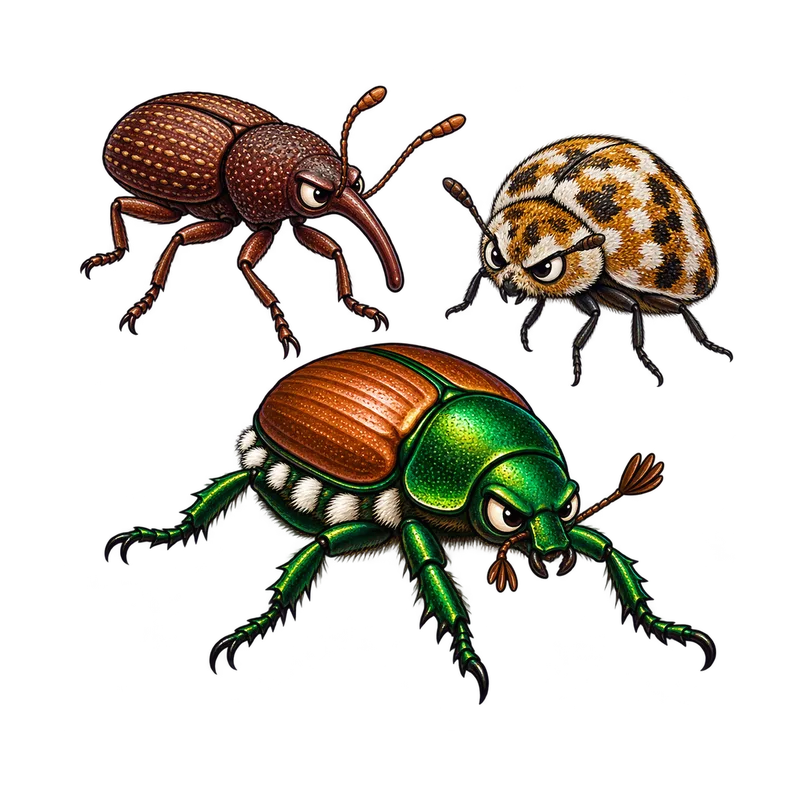
A carpet beetle infestation starts from animal-based proteins and fibers like wool and stray pet hair, while a pantry beetle outbreak centers on botanical starches and grains found in dry food storage. Pinpointing the culprit depends on examining the physical evidence left behind, such as chewed textiles or infested boxes of flour.
What is actually going on
Imagine you pull an old wool sweater out of a storage box in the back of the closet, and instead of wearing it to dinner, you find irregular holes and tiny, bristly cast-off skins rolling out of the cuffs. Or maybe you reach for a box of pasta in the pantry and notice tiny beetles crawling across the shelf while flour spills from the packaging like fine dust. People often lump these two household pests together as generic bugs, but the source points you to entirely different problems. A carpet beetle infestation starts from animal-based proteins and fibers, while a pantry beetle outbreak centers on botanical starches, grains, and dry food storage.
The confusion usually happens because these insects are small, brownish, and annoyingly good at hiding in dark corners. Carpet beetle larvae look for keratin, a tough protein found in wool, fur, feathers, leather, and stray pet hair accumulating along baseboards or under heavy furniture. They do not spin webbing, leaving behind bare, chewed fibers and tiny fecal pellets shaped like salt grains. Pantry beetles, on the other hand, target your kitchen stores. They feed on flour, cereal, spices, birdseed, and pet kibble. Some pantry species even eat low-nutrition items like bookbindings and dried flowers, thanks to internal yeast cells that supply them with B-vitamins, but their ground zero is almost always a box or bag of food.
It is easy to assume these insects will stay strictly in their lanes, but rules can blur when bugs get desperate or opportunistic. Certain carpet beetle larvae are surprisingly flexible scavengers and will wander into a forgotten bag of pet food if wool is scarce. Conversely, some pantry beetles can show up in unusual places like leather goods or old furniture stuffing. Still, looking at the primary damage gives you a reliable starting point. If the casualty is a wool rug or a cashmere scarf, you are dealing with carpet beetles. If the damage is confined to a box of crackers or a bag of flour, you have pantry beetles.
How to tell for sure
Pinpointing the culprit usually depends on examining the physical evidence left behind. With carpet beetles, you are usually looking at the larval stage rather than the adults. The larvae are small, carrot-shaped, or rounded creatures covered in dense hair, sometimes called woolly bears. They avoid light and crawl deep into dark crevices. When they grow, they leave behind hollow, hairy skins that look like tiny husks. Adult carpet beetles are small, oval insects that you usually spot crawling on windowsills in the spring because they are drawn to daylight and outdoor flowers.
Pantry beetles come in a few common varieties, usually divided into two groups. You might find small, reddish-brown flat beetles scuttling across a pantry shelf, or slightly larger, humpbacked brown beetles that fly toward indoor lights at night. If you inspect a pantry beetle infestation closely with a magnifying glass, you can often separate them by their features. Cigarette beetles have smooth wing covers and saw-toothed antennae that look like tiny carpenter saws, while drugstore beetles have distinct grooves along their wing covers and a three-segmented club at the end of their antennae.
One important distinction is the webbing rule. If you find silken tubes, sheets, or hanging cases made of silk mixed with food or fabric particles, the pest is usually a clothes moth rather than a carpet beetle or a pantry beetle. Carpet beetles never spin silken webbing. If you see a static spill of flour on a dark shelf that actually seems to be slowly shifting on its own, you might be looking at grain mites, which form a moving dust over high-moisture food products.
What usually comes next
Once you figure out whether the source is your wardrobe or your pantry, you have to make one practical decision about how to handle the items you want to save. For pantry beetles, the choice is straightforward: inspect every dry food package in the cabinet, toss out anything with holes, larvae, or clumpy frass into a sealed outdoor bin, and vacuum out the shelves. Transfer remaining dry goods into rigid glass, metal, or heavy plastic containers with tight rubber gaskets to keep future pests from chewing their way in.
For carpet beetles, the work moves to textiles and hidden dead zones. Vacuum thoroughly along baseboards, under furniture, inside heating ducts, and behind molding where lint and pet hair collect. Wash infested machine-washable garments in hot water, or take delicate woolens to the dry cleaner. If you want to treat smaller household items, woolens, or dry goods without harsh chemicals, you can use the household freezing method. Enclose the items in a polyethylene plastic bag, press out the excess air, seal it tightly, and place it in a freezer set to zero degrees Fahrenheit or lower for at least a few days, allowing the items to return to room temperature inside the sealed bag afterward to prevent moisture condensation.
Never spray pesticides directly onto clothing, bedding, or food products. If you decide to use a labeled crack-and-crevice spray along empty closet baseboards or bare pantry shelves, always follow the EPA-registered product label instructions and let the surfaces dry completely before putting anything back.
When to get help
There are moments when a cleanup by yourself is not enough and you need to bring in outside support. If you suspect an infestation of the high-priority Khapra beetle in imported spices, bulk grain stores, or shipping containers, you should isolate the material immediately and contact national agriculture authorities because it is a regulated quarantine pest.
Widespread or heavy infestations across multi-family housing complexes, commercial food processing facilities, or historic museum archives require a licensed pest control operator for structural treatments, industrial insect growth regulators, or professional thermal chamber processing.
Health concerns also dictate when to step back. The barbed larval hairs shed by carpet beetles can cause severe contact dermatitis, skin rashes, and respiratory irritation or asthma-like symptoms when inhaled. Similarly, the shed skins and waste from grain mites can trigger severe allergies or occupational asthma. For persistent skin lesions, unexplained rashes, severe allergic reactions, or respiratory distress, consult a qualified clinician, urgent care center, or regional poison control center right away.