
Red flour beetle vs confused flour beetle: what is different?
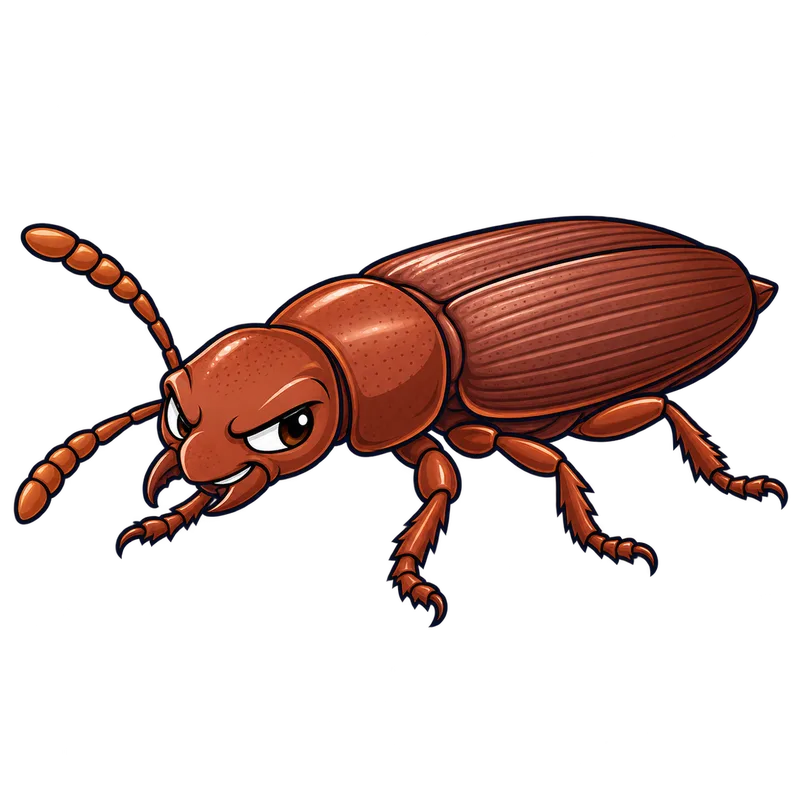
Red flour beetles and confused flour beetles differ mainly in their flight ability and body structure. The red flour beetle is an active flier with antennae ending in an abrupt three-segmented club, while the confused flour beetle cannot fly at all and has antennae that widen gradually across four segments.
What is actually going on
You are standing in the kitchen on a muggy afternoon, reaching into the back of the pantry for a bag of flour to bake a weekend pie. When you pull the bag forward, you notice tiny, reddish-brown bugs scurrying across the shelf liner. They look identical at first glance, measuring roughly an eighth of an inch long, and they have already turned your baking supplies into a greyish, foul-smelling mess. You are likely dealing with stored-product beetles, but figuring out whether you have the red flour beetle or the confused flour beetle takes a closer look than your bare eyes can usually manage.
At their core, both of these creatures belong to the same family of darkling beetles and share a lazy approach to eating. They cannot chew through the hard, intact outer shell of a sound whole grain. Instead, they act as secondary pests, relying on cracks, milling machines, or primary pests to break open grains, seeds, and cereals before they can move in and feed.
The confusion between the two species is practically built into their names. The confused flour beetle got its moniker because early entomologists kept mixing it up with its close relative. While they look nearly identical to the naked eye, they behave quite differently once you understand their habits. The red flour beetle is an active flier that loves warm climates and will take to the air before a summer storm. The confused flour beetle cannot fly at all and prefers cooler, temperate regions.
How to tell for sure
If you want to know which beetle has invaded your pantry, you usually need a hand lens with ten times magnification or a stereo microscope, because the differences live in tiny structural details. Start by looking at the antennae. The red flour beetle features antennae that end in an abrupt, three-segmented club, looking a bit like a thin handle attached to a bulbous head. The confused flour beetle has antennae that widen gradually across the final four segments, creating a smooth, cone-like shape much like a widening flashlight beam.
Next, check the shape of the thorax, which is the middle section of the body right behind the head. When viewed from above, the sides of the thorax on a red flour beetle are slightly curved. On a confused flour beetle, those sides are straighter and run more parallel to one another. You can also watch what they do when disturbed on a warm day. If a tiny reddish-brown beetle takes off and flies toward a kitchen window or pantry light, it is usually a red flour beetle. If it simply scurries away like a grounded pedestrian, it is likely a confused flour beetle. Do not try to identify them by bites or stings, because neither species attacks human skin or structural wood.
What usually comes next
Spotting these bugs means you are dealing with a local pocket of pests that needs hunting down and clearing out. Begin your search by checking every corner of the pantry, watching out for torn or poorly sealed packages that leave fine trails of dust on the shelves, much like a salt shaker leaking from a crack. Do not restrict your hunt to flour alone. These insects will move right into cornmeal, cereals, crackers, cake mixes, pasta, spices, chocolate, nuts, dried pet food, and even the natural seed filling found in stuffed toys or decorative drafts stoppers. As soon as you find the main infested items, seal them up securely inside heavy plastic bags and carry them straight out to an exterior trash bin.
For dry goods that show no obvious damage yet might still harbor hidden pests, you can use a simple thermal method without reaching for chemicals. Put the dry food into your regular home freezer for four to five days, or keep them at minus four degrees Fahrenheit for a full week inside sealed polyethylene bags. Squeeze out as much air as you can before zipping the bag shut to keep ice from forming, and leave the packages to warm back up to room temperature while still sealed for twenty-four hours to stop condensation from spoiling your ingredients. Finish everything off by vacuuming the shelves thoroughly, scrubbing them with hot soapy water, and moving all future dry goods into rigid containers made of glass, hard plastic, or metal with tight-fitting lids.
When to get help
Most household pantry problems clear up completely with careful sorting, thorough cleaning, and freezing, which means chemical treatments are rarely required. Still, certain situations mean you should call in outside help. If you notice a sharp, unpleasant chemical smell or your baked goods taste distinctly stale, that is the result of protective compounds given off by the beetles themselves. While those chemicals certainly ruin the flavor of your cooking, the beetles do not carry infectious diseases. Even so, people who are sensitive to heavy flour dust contaminated by these insects can develop allergic responses, including asthma, runny noses, or skin irritation. If anyone in your home deals with ongoing breathing issues or allergy flare-ups after coming into contact with infested grain dust, reach out to a healthcare professional without delay.
When faced with a massive infestation inside a commercial food plant, grain mill, bakery, or a large museum holding valuable organic collections, put down the household cleaning supplies and hire a licensed pest control operator. A professional technician can use integrated management techniques properly and handle structural work or fumigation that goes far beyond what you can safely do at home.