
Can carpet beetle larvae feed on stored animal-based materials?
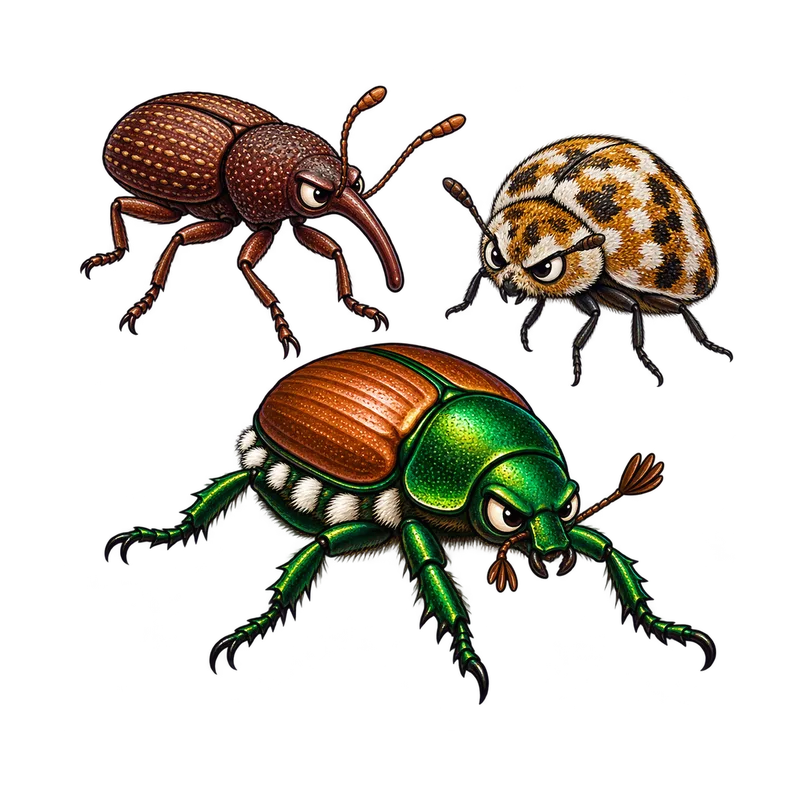
Yes, carpet beetle larvae feed voraciously on stored animal-based materials that contain keratin and natural proteins. Their specialized digestive systems allow them to consume wool, silk, fur, feathers, leather, and animal hair. They will also chew through synthetic or plant-based fabrics if those items are stained with food spills, perspiration, or body oils.
What is actually going on
You pull an old wool sweater out of a storage bin in the back of the closet, expecting it to be ready for the first chilly autumn evening, only to find irregular holes eaten straight through the fabric. Your first thought is probably clothes moths, but when you look closer, you notice tiny, bristly, carrot-shaped crawlers moving along the shelf. Can carpet beetle larvae really feed on stored animal-based materials like this?
Yes, they do so voraciously. Carpet beetle larvae feed on stored materials of animal origin containing keratin and natural proteins, including wool, silk, fur, feathers, leather, animal hair, bristles, mohair, taxidermy mounts, and dead insects. Adult carpet beetles, by contrast, do not feed on fabrics at all, living strictly on outdoor plant pollen and nectar, or not feeding at all depending on the specific species, while their only indoor job is to mate and lay eggs in dark, undisturbed places.
When female adult beetles enter homes, often hitching a ride on cut flowers or flying in from outdoor nests, they deposit up to 100 eggs near organic food sources. The resulting larvae have specialized digestive systems capable of processing tough animal proteins like keratin and collagen. Because of this, they target natural textiles, upholstery padding, and museum displays. They will also attack pantry items and animal feeds, feeding on processed grain products, milk powders, seeds, nut meats, and dry pet foods.
You might wonder why your favorite cotton shirt or polyester blend jacket got damaged if these bugs only eat animal products. Pure synthetic fabrics like polyester and nylon, along with clean plant-based fibers like cotton and linen, are resistant to direct larval digestion. However, larvae will readily chew through a cotton cover to reach internal feather or hair fillings. Furthermore, if cotton or synthetic garments are stained with body oils, perspiration, food spills, milk, or urine, the larvae will feed heavily on those soiled areas, chewing through the underlying fabric in the process.
How to tell for sure
Figuring out what is chewing through your textiles usually comes down to spotting a few physical clues. Adult carpet beetles are tiny, measuring only two to three millimeters long, and often look like miniature, speckled ladybugs sitting quietly on a windowsill. The larvae are the ones doing the damage. They are brownish or blackish, roughly carrot-shaped, and usually covered in stiff hairs and bristles with distinct tufts on their rear ends.
Unlike clothes moths, carpet beetle larvae do not spin silken webs, tubes, or cases to hide inside. Instead, they crawl around freely and leave behind two major giveaways, translucent, hairy shed skins left over from molting, and tiny, salt-grain-sized fecal pellets. If you use a 10x magnification hand lens, you can inspect larval abdomen segments for those dense lateral bristly bundles, or look at the scale patterns on adult beetles to tell species apart.
Damage patterns also help separate the culprits. While clothes moths create numerous small, scattered holes concentrated in dark folds and pockets, carpet beetle larvae usually leave larger, continuous single holes or ragged, grazed areas across carpets or garments.
What usually comes next
Once you confirm that carpet beetles are present, your main practical choice generally focuses on whether you are facing a single item or a wider hidden reservoir. If the damage stays limited to one wool blanket, a solitary sweater, or a throw pillow, you can typically handle it yourself through targeted washing and temperature control. Vacuuming wool rugs, baseboards, floor crevices, and the dark zones beneath heavy furniture helps clear out wandering larvae, as long as you promptly empty the vacuum container or toss the bag outside.
For belongings you think might be infested, non-chemical freezing is usually the safest method. You can wrap the piece in a clean sheet, slide it into a polyethylene plastic bag, press out the air, and seal it shut with tape. Put that sealed bag in a deep freezer kept at minus 20 degrees Celsius for 3 to 7 days, then allow the bag to warm up slowly to room temperature over 24 hours before opening it so condensation collects on the outside of the plastic instead of the fabric. Alternatively, controlled heat treatments can destroy every life stage, although you must carefully balance the risk of heat damage to delicate materials.
When to get help
There are moments when a do-it-yourself fix falls short. You should contact a professional pest control company if you face a massive, multi-room, or whole-house invasion where larvae crawl out from wall voids, subfloors, or heating ducts. Priceless heirloom garments, antique rugs, and taxidermy mounts also demand commercial freeze chambers or expert care by trained conservators to prevent permanent ruin.
On the medical side, if you or a family member suffers from severe allergic skin reactions, skin bumps that look like bites, breathing trouble, or asthma symptoms from contact with larval hairs, you need to speak with a clinician or seek medical advice right away. Keep in mind that carpet beetles never bite or sting, and those skin issues stem from allergies to the barbed hairs dropped by the larvae. Finally, if the root of the problem traces back to active bird, bat, or rodent nests in attics, chimneys, or eaves, note that clearing out wildlife must follow local protection laws and happen outside breeding seasons, frequently requiring a licensed wildlife professional.