
Why are adult carpet beetles on windows while larvae are hidden?
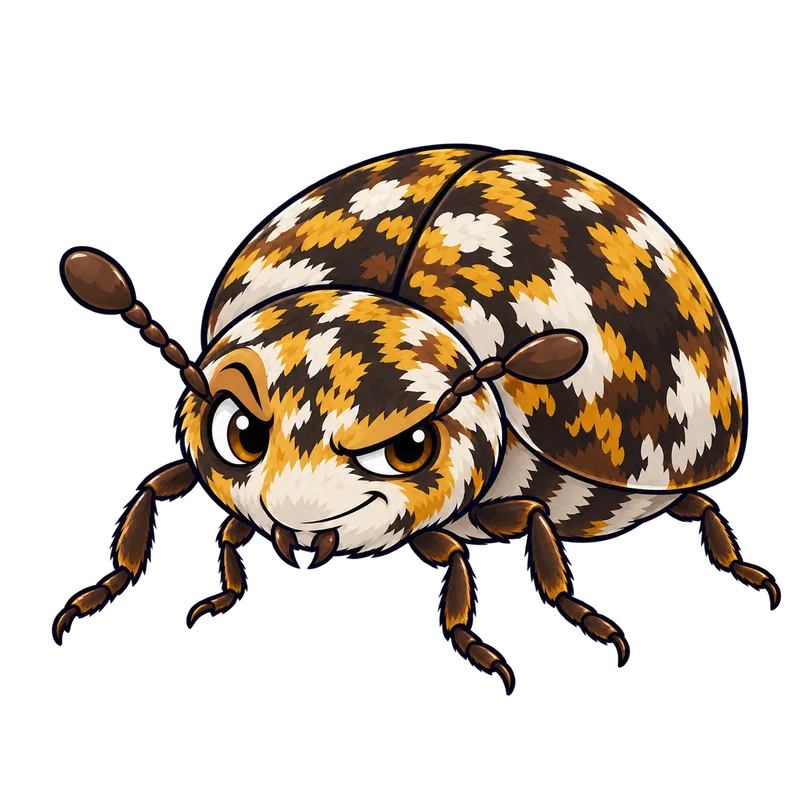
Adult carpet beetles gather on windows because sunlight draws them toward the outdoors to feed on flower pollen and nectar. Their offspring, the fuzzy larvae, actively avoid light and hide in dark, undisturbed places to feed on animal proteins like wool, fur, feathers, and hair.
What is actually going on
Picture walking into your living room on a bright spring morning and noticing several small, mottled bugs crawling slowly along the window sill, desperate to get outside. Meanwhile, your favorite wool sweater in the dark wardrobe upstairs is quietly developing holes. It feels like two completely different problems, but they are actually two chapters of the exact same life cycle. Adult carpet beetles gather at windows because they are drawn to sunlight, and they want to fly outdoors to feed on flower pollen and nectar. Their offspring, the fuzzy larvae, do the exact opposite. They actively avoid light and hide in dark, undisturbed places to feed on animal proteins like wool, fur, feathers, and hair.
The adult beetles on the window glass are not the ones damaging your fabrics. They do not care about your clothes, rugs, or upholstered furniture at all. Their only goals at that stage are finding a mate, sipping nectar outside, and heading back inside to lay eggs near a dark, protected food source. Once those eggs hatch, the tiny larvae emerge as light-shunning hermits. They crawl into the deepest, quietest parts of your home, such as the baseboards, cold air ducts, and the undersides of heavy furniture where pet hair, lint, and woolen fibers collect.
Why does this split happen? It comes down to a complete biological shift between the juvenile and adult stages. The larvae need protein and keratin, which are structural proteins found in animal fibers, to grow and molt. Once they mature through the pupal stage, their bodies and instincts change entirely. The newly emerged adult is driven by a biological switch that makes it seek out the open sky and floral food sources. Finding adult beetles on a sunny window does not mean you have a minor nuisance near the glass. It serves as your home's early warning alarm, telling you that a hidden population of larvae is feeding somewhere out of sight.
How to tell for sure
Before you start tearing your house apart, confirm what you are actually dealing with. Varied carpet beetles usually measure about one-eighth of an inch long and have a rounded shape covered in a mix of white, brown, and yellowish scales. Black carpet beetles usually range from one-eighth to a quarter of an inch, with a shiny, solid black body and brownish legs. As older adult beetles lose their colorful scales from rubbing against dust and structural gaps, they can look like simple dark bugs, which often leads people to misidentify them.
The larvae usually look quite different from the adults. A varied carpet beetle larva grows to about three-sixteenths of an inch, appearing fuzzy with alternating light and dark brown transverse stripes and tiny tufts of hair at the rear. Black carpet beetle larvae usually grow larger, reaching up to half an inch, with a distinct carrot shape, reddish-brown coloring, and a long brushy tail of bristles.
You usually will not catch larvae wandering around in the open. Instead, you will find their cast-off skins, which look like hollow, hairy ghost versions of the insects left behind after a molt. People often mistake these empty shells for a swarm of live bugs. If you notice irregular, grazed holes in woolens or fine rugs rather than the neat, localized holes accompanied by silken tubes that clothes moths leave behind, carpet beetles are usually the culprit. Keep in mind that pure synthetic carpets and clothing made of one hundred percent nylon or polyester are normally immune to larval attack unless those fabrics are soiled with body oils, sweat, or food spills.
What usually comes next
Deciding what to do next means following the link between the sun-loving adults on the glass and the hidden larvae in the shade. Since the bugs tapping against your window hatched from somewhere close by, squishing them only deals with half the trouble. You still have to track down where the offspring are living and grazing. Begin with a thorough vacuuming around carpet edges, along baseboard gaps, and in the dark zones under heavy couches where stray lint and pet fur pile up. Give extra attention to woolen garments tucked away in dim closets or storage bins.
If you pull out infested sweaters, blankets, or small rugs, running them through a hot wash cycle or sending them to the dry cleaner will wipe out everything from eggs to mature bugs. For things that cannot handle high heat, dropping them into plastic bags and freezing them at zero degrees Fahrenheit for a few days usually gets the job done. Just remember to let those items warm back up slowly inside their sealed bags so moisture does not form on delicate threads.
When treating the house itself, keep liquid bug sprays away from clothes, bedding, and places where family members or pets lounge. If you decide to use a residual spray for crawling insects, put it down only as a thin line along baseboard cracks and closet seams, then wait for it to dry completely before anyone walks nearby. Should you find the larvae in your pantry munching on dry cereal or pet kibble instead of wool, forget about baseboard treatments and focus on tossing out the ruined food while moving dry groceries into airtight glass or plastic jars.
When to get help
Most minor run-ins with carpet beetles yield to deep cleaning, careful laundering, and smart storage. Still, some scenarios mean calling in someone else to handle the job. When the bugs spread across multiple rooms, take over wall-to-wall carpeting, or breed inside sealed wall cavities, subfloors, or deep air ducts, reach out to a licensed pest control operator.
Calling an expert also makes sense when the pests threaten expensive family heirlooms, museum pieces, antique upholstery, or taxidermy collections where homemade fixes could ruin things for good. On the health side, the barbed hairs and cast-off skins of the larvae can cause skin irritation or breathing trouble that feels like a bad allergy for sensitive people. When anyone in your house deals with ongoing skin bumps or trouble breathing, talk to a doctor or visit a clinic instead of treating it as a standard bug problem.