
Black carpet beetle larvae vs varied carpet beetle larvae: what differs?
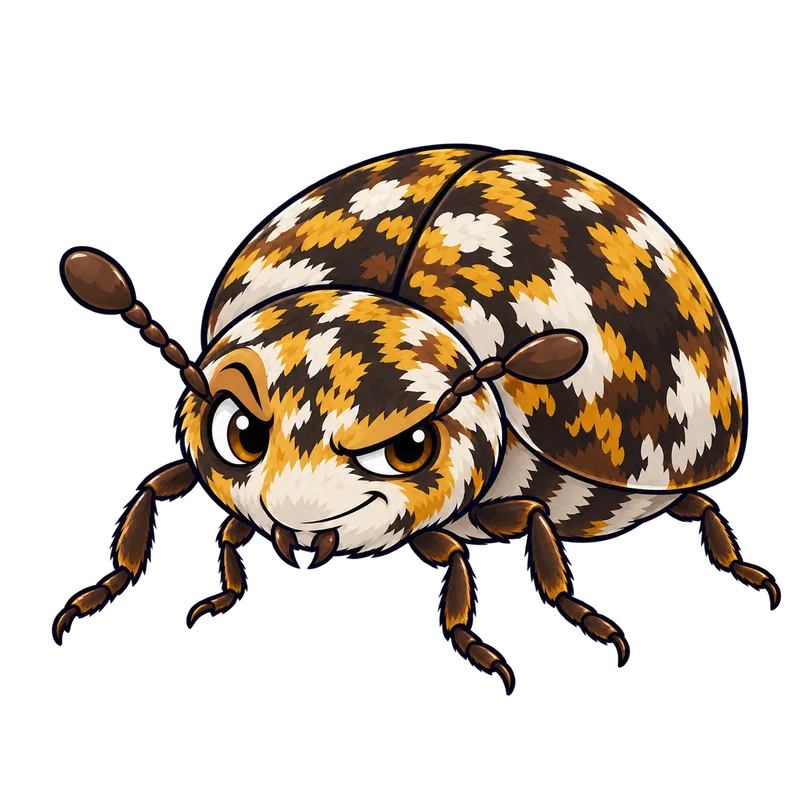
Black carpet beetle larvae and varied carpet beetle larvae differ in their size, shape, and pattern. Black carpet beetle larvae grow up to half an inch long with a tapered body and a brushy tail, while varied carpet beetle larvae measure about three-sixteenths of an inch with a teardrop shape and brown stripes.
What is actually going on
Imagine you are putting away your winter sweaters in the spring, and you pull out an old wool cardigan only to find a cluster of clean-edged holes near the hem. You shake the sweater out, and a tiny, fuzzy creature drops onto the floor. You might wonder what on earth has been chewing through your wardrobe. When you start looking closer around the dark corners of the closet, you realize you are dealing with carpet beetles, but the little crawler in your hand does not quite look like the pictures you saw online.
The short answer is that you are likely looking at either a black carpet beetle larva or a varied carpet beetle larva, and they differ significantly in size, shape, and pattern. While both belong to the family of scavenger beetles that specialize in breaking down tough animal proteins, their immature forms look like entirely different insects. The black carpet beetle larva grows up to half an inch long, looks like a tapered, hair-covered carrot, and has a long, brushy tail of bristles at the back. On the other hand, the varied carpet beetle larva is a stubby little creature measuring only about three-sixteenths of an inch, featuring alternating light and dark brown bands and a teardrop shape that is noticeably broader at the rear.
People often assume that adult beetles are the culprits ruining their clothes, but the adults actually feed strictly on flower pollen outdoors or do not feed at all. All the destructive munching on your woolens, furs, and feathers is committed exclusively by the growing larval stage. You might wonder how two beetles so closely related ended up looking so different in their juvenile phase. Evolution gave them distinct shapes and survival strategies, with black carpet beetle larvae even possessing a sneaky habit of wandering into the kitchen pantry to snack on cereal grains and flour, while their varied cousins prefer sticking to fabrics or scavenging in outdoor bird nests.
Another common point of confusion involves the damage itself. People frequently blame carpet beetles for the silken webbing found on ruined garments, but carpet beetle larvae never spin silk or protective cases. If you see webbing or hanging cocoons, you are looking at the handiwork of clothes moth caterpillars instead. Carpet beetles simply crawl about in the dark, grazing across the surface of natural fibers or chewing irregular holes, leaving behind tiny, salt-like droppings and hollow, translucent shed skins that often linger long after the live bugs have moved on.
How to tell for sure
Telling these two larvae apart usually comes down to a quick visual inspection, and a simple magnifying glass helps immensely. If you are examining a specimen, look first at the overall shape and length.
If the creature is relatively long, reaching up to half an inch, and features a smooth, shiny reddish-brown to blackish body that tapers down toward a distinct, brush-like tail of brown bristles, you usually have a black carpet beetle larva on your hands. It looks somewhat like a tiny, bristly carrot scooting across your baseboards.
If the creature is much smaller, measuring only about three-sixteenths of an inch, and looks like a stubby, teardrop-shaped woolly bear with a wider backside and narrow front, you are usually dealing with a varied carpet beetle larva. These smaller larvae typically display prominent alternating light and dark brown transverse stripes across their backs. Crucially, they do not have a single long tail brush. Instead, they usually carry three pairs of dense, dark bristly hair tufts near their rear end that can fan out when the insect feels threatened.
Do not rely on finding live bugs to confirm an infestation, either. You will usually spot their cast-off skins tucked into floor cracks, closet edges, or beneath heavy furniture before you see a living larva.
What usually comes next
Once you figure out what you are dealing with, you have to decide how to save your stuff without wrecking your clothes or blowing your budget on pointless sprays. The smartest move is to focus on physical cleanup and temperature control instead of grabbing a can of bug killer.
If you find an active infestation hiding in your closet, your vacuum cleaner is your best friend. Go over the baseboards, shelf edges, floor cracks, heating ducts, and the dark spaces under heavy furniture where dust bunnies and pet hair gather, and then take the vacuum bag straight out to the big trash bin outside. For clothes you can wash, run them through a hot water cycle or drop them off at the dry cleaner to wipe out every single egg, larva, and adult while washing away the body oils and food spots that attracted them in the first place.
When you are trying to save delicate sweaters or family heirlooms that cannot handle rough washing, your freezer is usually the safest tool you have. Wrap the item in a clean cotton sheet, tuck it into a heavy plastic bag, squeeze out the extra air, and seal the whole thing shut with tape. Put that sealed bag into a deep freezer that stays at negative four degrees Fahrenheit and leave it there for at least seven days straight.
Once that week is up, do not rip the plastic open right away. Let the bagged bundle sit at room temperature for a full day before you touch the contents. This waiting period makes sure that any moisture from the warm room air settles on the outside of the plastic instead of soaking right into your freezing wool.
When to get help
There are moments when cleaning the closets yourself just will not cut it, and you need to bring in someone who does this for a living.
If anyone in your house starts breaking out in weird rashes, itching constantly, or having trouble breathing like coughing or sneezing near the bugs, check in with a doctor or head to an urgent care clinic. The microscopic, barbed hairs that carpet beetle larvae shed can spark nasty allergic reactions, and breathing in those tiny floating fragments is something you want to take seriously.
You should also look for professional pest control when an infestation spreads across multiple rooms or units in a building. These larvae crawl easily through hidden wall spaces and pipe gaps, meaning an apartment or a large house can have an entire network of pests moving behind the drywall that a household vacuum will never reach. Plus, if you are trying to protect expensive antique rugs, taxidermy mounts, or irreplaceable family garments, hand the job over to professional conservators or licensed pest control operators who have the proper gear for safe heat treatments or commercial freezing. Always remember that any chemical treatments need a licensed professional working strictly by the product label, and you should never spray pest control chemicals directly onto clothing or bedding.