
Why are carpet beetle larvae found along baseboards?
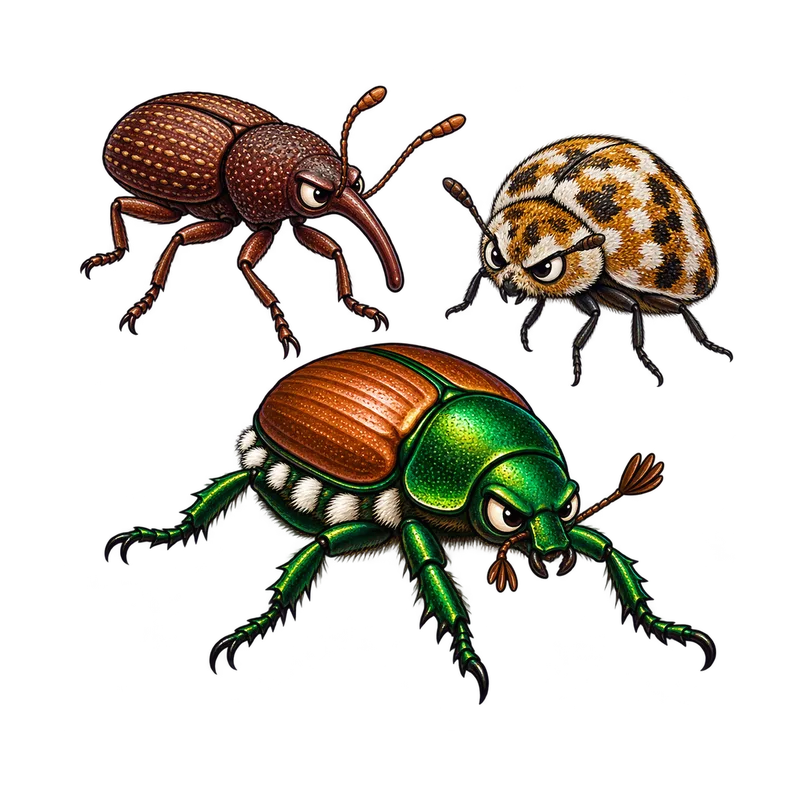
Carpet beetle larvae accumulate along baseboards because that narrow gap acts as a natural collection zone for hair, dander, and wool fuzz. These scavenging pests also actively avoid light and prefer the physical contact of tight enclosures.
What is actually going on
You are moving the living room sofa to vacuum behind it, a chore you put off for six months, and there they are. A dozen tiny, fuzzy, carrot-shaped bugs crawling right along the baseboard molding where the carpet meets the wall. It feels like finding a minor crime scene in your own house, and you immediately wonder how they got there and why they chose that exact perimeter.
Carpet beetle larvae accumulate along baseboards because that narrow micro-gap acts as a natural collection zone for everything that falls to the floor. Normal air currents, foot traffic, and routine cleaning push pet dander, human hair, wool carpet fuzz, sloughed skin scales, and dead insect fragments right under the trim. Since these larvae are scavengers specialized in feeding on dry animal products and keratin, those hidden baseboard channels provide an endless, undisturbed buffet.
There is also a matter of simple biology at play. These larvae actively avoid light, a trait called negative phototaxis, and they prefer the physical contact of tight enclosures. While adult beetles fly toward window glass or feed outdoors on spring flowers, they lay their eggs in dark, quiet places. Once those eggs hatch, the young larvae stay out of sight, using the floor perimeters as both a home and a transit corridor. Sometimes, they are even migrating outward from a hidden reservoir like an old bird nest in the attic or a dead rodent in a wall void, using structural cracks behind the trim to reach your living spaces.
How to tell for sure
You do not need a laboratory microscope to figure out what you are looking at, though a basic magnifying glass usually helps if you want to inspect the details. Homeowners usually spot slow-moving, hairy, teardrop or carrot-shaped larvae that measure anywhere from 3 to 12 mm long, depending on the species. You might also notice hollow, papery, light-brown shells left behind as the larvae shed their skins, alongside tiny salt-grain-sized fecal pellets.
A common point of confusion is whether these insects are biting you in your sleep. Carpet beetle larvae do not possess piercing-sucking mouthparts, meaning they cannot bite humans or pets. If you wake up with red, itchy bumps and assume you have bed bugs, finding these hairy larvae along the baseboard usually points to setal dermatitis. That is just an allergic reaction to contact with the sharp, barbed hairs and shed skins of the larvae, not an insect attack.
You can usually separate them from clothes moths quite easily. Moth larvae spin visible silken tubes or carry portable cases with them, leaving scattered holes across garments. Carpet beetle larvae never spin silk, and they leave behind broad, irregular grazed areas rather than neat holes. If you are seeing small, solid black beetles crawling on your sunny windowsills in the spring, those are usually the adult stage of the black carpet beetle trying to head outdoors, confirming you have an active population somewhere in the house.
What usually comes next
Once you spot them along the baseboard, your first practical move should be physical removal instead of a rush to buy harsh chemicals. Grab a vacuum cleaner equipped with a narrow crevice tool and go hard after every inch of baseboard, closet perimeter, and heavy furniture edge. You want to lift out all that trapped organic lint, hair, and dust that has been feeding the population.
Right after you finish vacuuming, take the vacuum bag or empty the dust canister straight into a heavy plastic trash bag, seal it tightly, and carry it out to your exterior garbage bin. Leaving that debris inside your indoor trash can gives surviving larvae an easy escape route right back onto your floors. If you suspect specific woolens, rugs, or soft items are infested, you can usually seal them in plastic bags and place them in a chest freezer at zero degrees Fahrenheit for a few days to kill all life stages safely.
When people think about chemical control, they often make the mistake of spraying insecticides directly onto clothing, bedding, or mattress surfaces. Never do that. Any residual sprays or dusts belong strictly in cracks, crevices, and baseboard junctions, and children and pets must stay away until those treatments dry completely.
When to get help
Most household infestations usually stay manageable with thorough cleaning, targeted vacuuming, and proper laundering of vulnerable fabrics. However, certain situations call for backup. If you are dealing with a widespread infestation spanning an entire multi-story house or apartment building, DIY methods rarely keep up with the spread.
You should also bring in a licensed professional if the primary breeding source is hidden deep inside inaccessible wall voids, high attic spaces, or subfloors where you cannot reach it. The same goes for high-stakes situations involving valuable historic textiles, heirloom wool carpets, or museum specimens that require specialized preservation techniques.
Keep in mind that if your inspection points toward an attic or chimney origin, removing wild bird or rodent nests must comply with local wildlife protection laws and seasonal regulations. If skin rashes and severe itching persist among your household members, consult a primary care clinician or dermatologist for proper medical guidance rather than guessing at home remedies.