
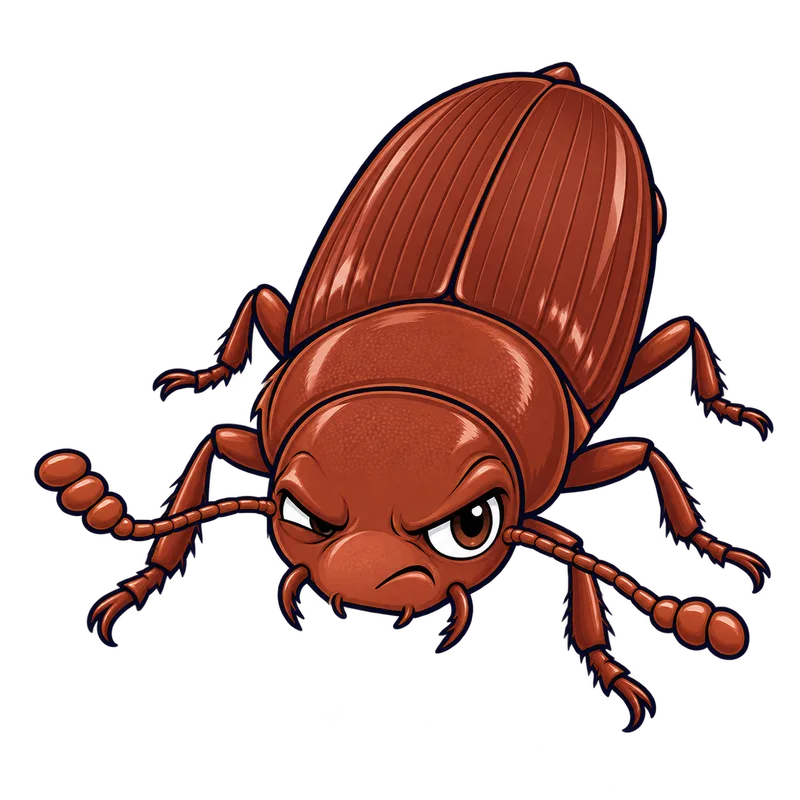
Red flour beetle
Tribolium castaneum
- Size
- About 1/4 inch long
- Color
- Uniform reddish-brown
- Habitat
- Heated food processing plants, warehouses, and residential pantries
- Diet
- Processed or damaged grain products, flour, and cereals
- Life cycle
- 23 days to over 90 days from egg to adult
You are probably looking at this creature because you found a reddish bug making a home in your baking supplies. To the naked eye, the red flour beetle appears as a tiny, oblong insect crawling across a bag of flour or milling about near a warm kitchen light. If you bring a 10x hand lens into the picture, certain diagnostic features snap into focus. The antennae terminate abruptly in a distinct 3-segmented club, setting it apart from other grain-munching pests. The sides of its thorax show a slightly curved margin rather than straight walls.
Identity
Its compound eyes are notched, and if you count the joints on its legs, you will find a 5-5-4 tarsal formula. That means 5 segments on the front legs, 5 on the middle legs, and 4 on the back legs. Unlike weevils, this beetle lacks a snout or beak entirely, and its head remains clearly visible from above. Adults measure about 1/4 inch long and display a uniform reddish-brown coloration across their bodies.
Habitat & behaviour
This beetle prefers the climate-controlled comfort of heated structures, which is why it thrives year-round in residential pantries, grocery stores, and commercial flour mills. It cannot pierce sound, undamaged whole grain kernels. Instead, it relies on processed or already damaged food items, making it a secondary pest. You might find it in flour, cake mix, pasta, spices, chocolate, dried pet food, birdseed, and even forgotten botanical specimens.
Activity ramps up during warm hours. Unlike some of its relatives, the adult red flour beetle is fully winged and actively capable of flight, particularly before a storm or during high temperatures. This tendency to fly explains why you might spot them near kitchen light fixtures, having ventured out from a nearby pantry shelf. They are cosmopolitan insects found globally, though they are notably more abundant in warm temperate, subtropical, and tropical regions.
Visual variations
The life cycle moves through complete metamorphosis, starting from an egg and progressing through larval and pupal stages before reaching adulthood. Females lay up to 450 microscopic, sticky eggs directly onto food commodities over several months. These eggs typically get coated with adhering flour dust, making them nearly invisible against a white backdrop.
From those eggs emerge slender, cylindrical larvae. These worm-like grubs are creamy-yellow to light brown, measuring up to 1/4 inch long when fully grown, and they show a distinct preference for the germ of seeds. The terminal abdominal segment of the larva ends in 2 dark, pointed projections called urogomphi.
Once the larva finishes feeding, it transforms into a naked, white-to-yellowish pupa without spinning a cocoon. This pupa gradually transitions toward a reddish-brown shade just before the adult emerges. Adult males and females look morphologically identical, and the species does not maintain social castes. Adults are unusually long-lived for insects in this category, surviving anywhere from 18 months to more than 3 years.
Why it matters
Finding these beetles in your kitchen does not mean your house is falling apart, as they do not bite, sting, or cause any structural damage to wood, drywall, or furniture. However, they ruin the food they touch. Heavy infestations impart a greyish tint to grain and release quinone secretions that create a foul, musty odor and a displeasing taste in the contaminated food, which encourages mold growth.
While the beetles themselves are not toxic to humans or pets, exposure to dense flour dust laden with beetle parts and secretions can trigger IgE-mediated allergic responses and contact sensitivity in sensitive individuals. Precise identification matters because effective management relies on knowing whether you are dealing with a flying, pantry-dwelling beetle or a structural wood-boring insect, and some strains have even developed resistance to common pesticides like malathion. When dealing with persistent commercial infestations or severe health reactions, bringing in a professional or consulting a clinician provides the right path forward.
Similar species
 Confused flour beetleTribolium confusum
 Sawtoothed grain beetleOryzaephilus surinamensis
 Drugstore beetleStegobium paniceum
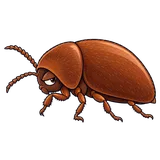 Cigarette beetleLasioderma serricorne
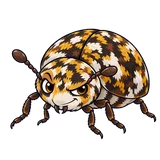 Varied carpet beetleAnthrenus verbasci
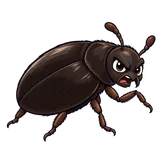 Black carpet beetleAttagenus unicolor