
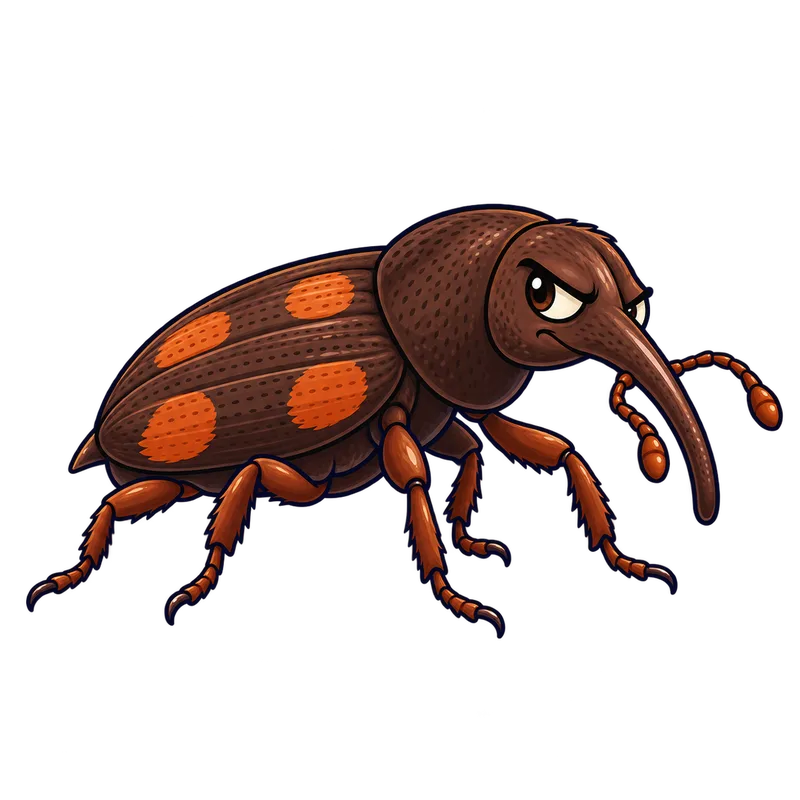
Maize weevil
Sitophilus zeamais
- Size
- About 1/8 inch (3.18 mm) long
- Color
- Reddish brown to black, four reddish or yellowish spots
- Habitat
- Stored whole grains, also standing corn before harvest
- Diet
- Whole kernels of corn, wheat, oats, barley, sorghum, rice
- Life cycle
- One month per generation, adults live 7 to 8 months
The maize weevil (Sitophilus zeamais) is a small snout beetle in the true weevil family Curculionidae, and the place you would actually meet one is a bag of whole corn, a bin of animal feed, or a forgotten box of pasta at the back of the pantry. The useful fact is not exotic at all: it does not merely eat grain, it grows up inside it, hidden in a single kernel from egg to adult.
Identity
What you can see without equipment is a minute dark beetle with a nose. That nose is the rostrum, a slender downward curved extension of the head with tiny chewing jaws at the tip. It looks like a needle and gets treated like one, but it is a drill for grain, not a sting and not a blood straw. A hand lens changes the picture: four reddish or yellowish spots across the wing covers, two on each side, and a shell that looks worked over rather than smooth.
Under that lens, check the shield behind the head, the pronotum. On this weevil it is covered in coarse round pits, while the wing covers carry deep parallel grooves. Those round pits are not trivia. They are one of the cleaner ways to separate it from the closest lookalike, which matters later when someone insists every little brown beetle in the cupboard is the same animal.
Habitat & behaviour
This is a pest of whole, sound kernels. Corn is the namesake host, but wheat, oats, barley, sorghum and rice all serve, and even hard processed goods like macaroni can harbor it. Loose flour is not its world, because the larva needs something solid enough to live inside. Think kernel, not dust.
The habit that surprises people is flight. The hind wings under the wing covers work, and adults use them well enough to reach standing corn before harvest. So an infestation can arrive already sealed inside the grain, rather than marching in from the neighbor shelf like a pantry beetle with luggage. Indoors, in a warm bin or pantry, breeding can continue all year.
The female chews a small cavity into a kernel, lays one egg inside and seals the opening. Over her life she can repeat that 300 to 400 times, which is an impressive output for an insect that looks like a punctuation mark. In warm conditions the cycle from egg to adult takes about 1 month, and adults commonly live 7 to 8 months, with some past 2 years. Fast young plus long lived parents is how a small oversight becomes a population.
Visual variations
The egg remains hidden from view because the female seals it directly within her drilled cavity in the grain. Inside that individual kernel, the larva develops as a plump, white, legless grub shaped like the letter C, sporting a brown head while it hollows out its feeding space. The pupa stays equally safe within that same grain shell, transitioning through its pale transformation before the adult stage.
That secluded youth explains why a cupboard infestation often feels so sudden. Grain owners rarely spot crawling larvae the way they would with typical moth caterpillars chewing through dry flour. The first visible sign is usually the adult beetle itself, alongside the smooth, round exit hole it cuts through the hull upon emergence. When the corn appears untouched until neat little boreholes and tiny beetles appear, that is simply the hidden life cycle reaching its final chapter.
There is no complex colony structure here, meaning no distinct workers, soldiers, or queens to sort through. The visible transformation is straightforward: a grub developing out of sight, a quiet pupa, and finally a hard-bodied adult equipped with a snout, four pale marks, and fully functional flight wings.
Why it matters
Begin with the comforting news: maize weevils never bite, never sting, carry no diseases, and present no physical danger to household pets. They ignore wooden framing, structural elements, and furniture entirely. The damage remains strictly agricultural and culinary, reducing whole kernels to hollow shells, ruining grain weight, and spoiling food stores. In a home kitchen, that simply means throwing out a compromised box of pasta or dry corn. In agricultural storage, the financial toll climbs rapidly.
A minor household discovery usually calls for sealing infested packages in thick plastic bags, then placing suspect dry goods in a freezer set to -4 degrees Fahrenheit (-20 degrees Celsius) for 4 to 7 days to halt all life stages. Large scale problems in farm bins, processing facilities, or grain elevators require the expertise of licensed professionals, and any chemical intervention must strictly follow the written product label without homemade mixtures or improvised doses.
Accurate identification becomes crucial when separating this pest from similar looking insects. The granary weevil serves as a frequent mixup, yet that species lacks functional wings and features elongated oval pits on its thorax instead of round ones. The rice weevil looks nearly identical, sharing the same size, spotted wing covers, and round pits, which means telling them apart requires magnification and practice, even though the management approach remains identical. Common flour beetles are much simpler to sort out since they lack a snout entirely and cannot breach intact grain. If the insect possesses a distinct nose and the corn shows clean round drill holes, the necessary course of action becomes clear.
Similar species
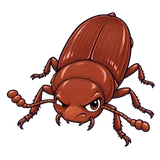 Red flour beetleTribolium castaneum
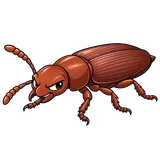 Confused flour beetleTribolium confusum
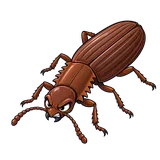 Sawtoothed grain beetleOryzaephilus surinamensis
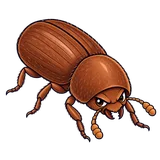 Drugstore beetleStegobium paniceum
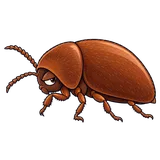 Cigarette beetleLasioderma serricorne
 Varied carpet beetleAnthrenus verbasci