
What damage do Japanese beetles cause?
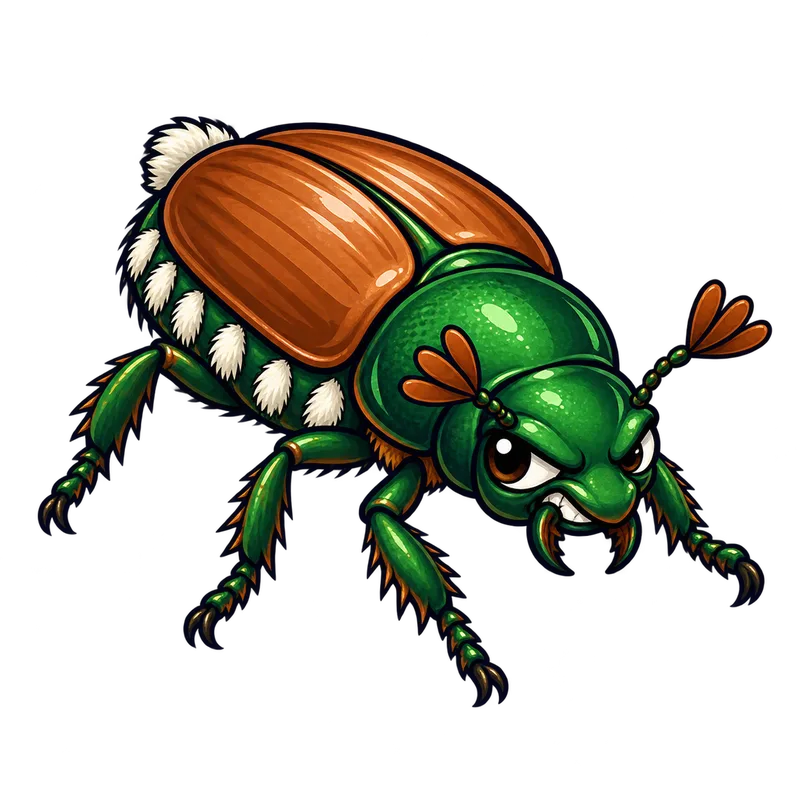
Japanese beetles cause damage both above and below the ground, turning leaves into delicate windowpanes and clipping sweet corn silks. Underground, their grubs chew through fibrous grass roots so that turf feels spongy and can be peeled back like a loose rug. Wildlife can also tear up the lawn to dig up the grubs.
What is actually going on
You walk out to the back patio with your morning coffee, ready to admire the neat, deep green squares of your lawn and the heavy blossoms on your prize rosebushes. Instead, you find your favorite roses looking like they survived a shredder, with every leaf reduced to a fragile, translucent web of veins. Over by the garden bed, your sweet corn looks like someone took kitchen scissors to the tassels, and a patch of grass near the sidewalk gives a strange, unsettling squish under your sneakers. You are not dealing with a run-of-the-mill garden mishap. You have Japanese beetles, and they have brought their entire extended family.
The damage these pests cause is split neatly into two distinct acts, running above and below the ground. When adult beetles emerge in late June or July, they spend their daylight hours turning your favorite ornamentals and fruit crops into lace. They chew out the soft green tissue between the tough vascular veins of leaves, leaving behind what looks like a delicate windowpane. If you grow sweet corn, they cluster on the fresh silks, clipping them right down to the husk and preventing proper pollination, which leaves you with barren cobs missing half their kernels.
Meanwhile, the females lay eggs in the soil, and the resulting offspring go to work on the other end of the plant. These C-shaped, milky-white grubs live in the top few inches of dirt and chew through fibrous grass roots with relentless appetite. As they prune away the root system, your turf loses its ability to soak up water and nutrients. The grass takes on a drought-stressed look even after a soaking rain, feels soft and spongy when you walk across it, and can be easily peeled back from the soil like a loose area rug.
To make matters worse, that underground feast draws in local wildlife. Raccoons, skunks, moles, and crows catch the scent of a writhing grub buffet and tear up the turf to dig them out. That secondary destruction often wrecks more lawn than the actual insect feeding ever did. You get hit twice, once on the leaves and once at the roots, making this one of the more frustrating dual-threat pests in the yard.
Spotting the culprits is usually straightforward because adults are rarely shy about their dining habits. An adult Japanese beetle measures around three-eighths to a half-inch long, sporting a shiny metallic green head and thorax paired with coppery-bronze wing covers. You will usually find them swarming in broad daylight on the sun-exposed upper foliage of favored plants like roses, sassafras, and linden trees. If you approach them, they tend to drop sluggishly or fly away in awkward bursts.
Looking below the soil surface requires a bit more physical effort, but it is the only way to confirm a grub problem before the lawn dies off in patches. Grab a flat spade and cut out a square foot of sod about two to three inches deep in an area where the grass is looking sickly. Peel back the turf like a hinge and count the plump, grayish-white grubs curled into tight C-shapes in the soil. You will usually find a distinct brown head capsule and three pairs of small legs on each larva.
Numbers matter here because a healthy lawn can handle a few insects without blinking. You are usually looking at a treatment threshold of five to ten grubs per square foot in non-irrigated lawns. If your turf is heavily watered, fertilized, and maintained, it can often tolerate more than twenty grubs per square foot before showing distress above ground.
Do not trust store-bought pheromone traps to tell you how bad the infestation is. Those devices use chemical lures that act less like monitors and more like an open dinner invitation, drawing far more beetles from surrounding properties into your yard than they ever catch in the bag. If you do use them, keep them well away from the plants you actually want to protect.
How to tell for sure
Once you confirm you have an active infestation, your main choice boils down to deciding whether you are fighting the beetles in the air or the grubs in the soil, because trying to fix both at once with haphazard sprays rarely works. If your primary headache is defoliated rose bushes and skeletonized leaves in midsummer, treating the soil will not save your foliage today. Conversely, if your lawn is spongy and yellowing in late summer, spraying adult beetles in the tree canopy is a waste of time because the damage is already happening underground.
Pick your battle based on where the real harm is occurring. If the lawn is holding its color and your main annoyance is a few chewed leaves on a mature shade tree, you can usually let nature take its course without panicking. Established trees and shrubs can withstand a heavy round of leaf skeletonization without dying. On the other hand, if you are finding patches of dead turf that roll up like carpet, or if you are trying to establish young saplings that cannot afford to lose their leaves, you need to step in with targeted control.
Decide if you are willing to practice patience with biological options like milky spore or beneficial nematodes, which require specific soil temperatures and time to establish, or if you prefer a direct chemical approach aimed at the right window of the insect lifecycle. Avoid the trap of buying every remedy on the garden center shelf. Focus on the single zone causing the most heartbreak right now and direct your efforts there.
What usually comes next
There are moments when gardening fixes run out of road and you need to hand the problem over to someone with heavy duty equipment or specialized knowledge. If you manage a large commercial landscape, a golf course, or a sprawling sports turf where grub populations are destroying extensive root systems across acres, call in a professional turf management service. They have the mapping tools, the large scale application rigs, and the precise timing schedules to handle vast areas efficiently.
You should also look for professional help when dealing with massive ornamental shade trees whose canopies tower far beyond the reach of a homeowner pump sprayer. Treating tall trees for severe defoliation requires professional power mist blowers and specialized safety gear to manage insecticides properly. Also, if local regulations or specific product labels designate certain systemic grub treatments as restricted use chemicals, you must hire a licensed applicator to apply them legally.
When to get help
On a final safety note, if you or anyone in your household experiences unusual health symptoms, skin irritation, or suspected pesticide exposure from handling garden chemicals incorrectly, do not guess at remedies. Contact your local poison control center or seek medical advice immediately.