
How is vine weevil controlled?
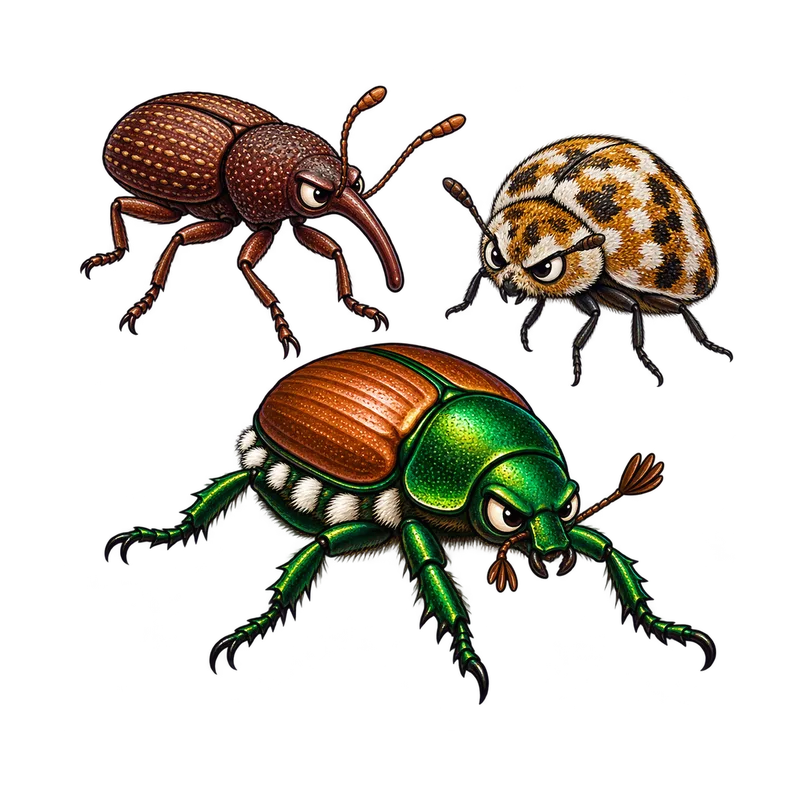
Vine weevils are controlled by targeting both the leaf-chewing adults and the root-destroying grubs. You can stop adult beetles with sticky barrier bands or hand-pick them at night, while underground larvae are best managed by applying microscopic roundworms called entomopathogenic nematodes to wet soil, depending on current ground temperatures.
What is actually going on
Picture walking out to your favorite potted rhododendron with a flashlight on a warm June night. You spot a dull black beetle chewing neat, crescent-shaped notches out of the leaf margins. It looks annoying rather than catastrophic, so you go back inside and forget about it. That small oversight is usually how a vine weevil infestation gets started, because the real destruction is happening out of sight beneath the soil.
Controlling vine weevils means dealing with two entirely different creatures wrapped into one life cycle. The adults walking around on your leaves at night are all flightless females, and they reproduce through an arrangement where every single beetle lays up to 200 unfertilized eggs in the surrounding soil without needing a mate. Those eggs hatch into plump, legless white grubs with light brown heads. While the adults chew on foliage for cosmetic effect, the subterranean larvae chew through fibrous roots and strip the bark right off the main root crown.
This underground stem girdling cuts off the plant water supply and nutrient transport. In a container or a raised bed where root volume is tight, just a few grubs can sever every functional root, causing the plant to collapse virtually overnight in late summer or early spring. If you only look at the leaves, you are treating the symptom while the root system disappears.
How to tell for sure
Telling what you are dealing with usually comes down to knowing where to look and what features to check. Adult vine weevils measure about 8 to 10 mm long with a broad snout and fused wing cases marked by faint, dirty-yellow patches. Because they cannot fly and hide during daylight under pot rims, mulch, or plant debris, finding them usually requires that midnight flashlight patrol.
If you suspect larvae are chewing roots underground, dig gently into the potting media or soil around the base of a wilting plant. You are looking for a C-shaped, off-white grub up to 12 mm long with a reddish-brown head capsule. A quick way to confirm what you have is to check for legs, because vine weevil grubs are strictly legless. If you find small white grubs with six distinct thoracic legs, you are looking at scarab beetle larvae instead, which behave differently.
A ten-times hand lens can help you separate weevil grubs from other soil dwellers, but telling this specific species apart from other closely related root weevils usually requires a lab inspection of internal mouthparts. If your plants are showing clean marginal leaf notches alongside sudden wilting, you have a very strong indicator of vine weevil activity.
What usually comes next
Deciding how to fight back usually hinges on whether you are targeting the adults above ground or the grubs below it, because spraying leaves with standard chemicals often backfire. Adult vine weevils have developed widespread resistance to common insecticides. Spraying broad-spectrum chemicals onto foliage often wipes out native generalist predators, such as ground beetles and rove beetles, that naturally hunt down weevil eggs and young grubs. That imbalance frequently triggers a worse pest population surge than what you started with.
The most reliable biological control for the soil-dwelling larvae is applying entomopathogenic nematodes, which are microscopic roundworms that swim through wet soil films and enter host grubs to release lethal symbiotic bacteria. Species selection is dictated entirely by soil temperature. You would use Steinernema kraussei in cool spring or autumn soils ranging from 5 to 20 degrees Celsius, and switch to Heterorhabditis bacteriophora when soils warm up above 12 to 20 degrees Celsius.
Before mixing nematodes, you can place a drop under a hand lens to verify they are alive by watching for active J-shaped wriggling. The media must be pre-moistened, and applications should happen at dusk or under heavy overcast skies because ultraviolet light kills the nematodes in minutes.
For non-chemical control of the adults, physical exclusion works remarkably well. Because the beetles must crawl to reach host plants, wrapping main stems or pot rims in sticky barrier bands or smooth Teflon tape stops them cold. For container plants that are already wilting, the most direct remedy is often unpotting the plant, washing the media away, manually picking out every grub, and repotting into fresh, clean soil.
When to get help
Severe vascular crown girdling on large, established woody ornamentals cannot be reversed once the bark is stripped away completely around the stem base, and those plants generally need to be removed and discarded along with their infested soil. If you are managing a commercial nursery, greenhouse, or large landscape operation, the scale of the infestation and the legal regulations surrounding restricted-use media incorporation chemicals or large-scale pesticide applications mean you should consult a licensed professional applicator or your local agricultural extension service.
Any time you suspect an unusual plant pathogen, or if you need precise identification of closely related root weevil species that look identical to the naked eye, bringing physical specimens to a diagnostic laboratory ensures you take the right path instead of guessing.